

-
Products


-
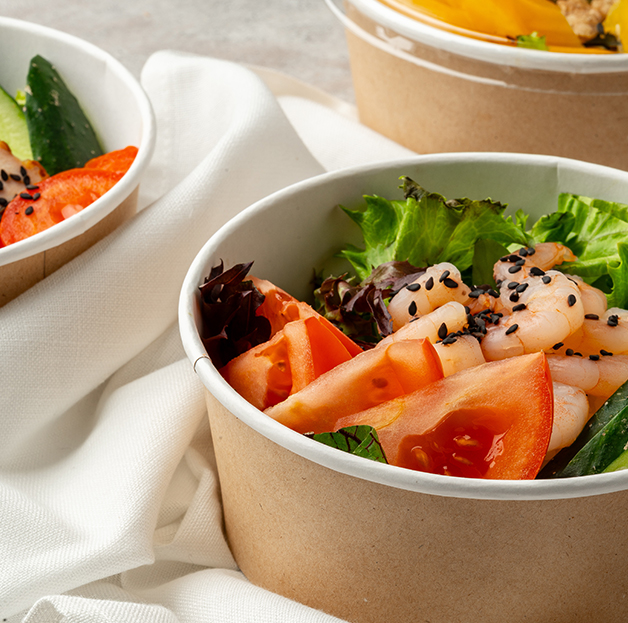
Food Packaging Solution
Mission & PhilosophyRenmin Eco-Tech adheres to the philosophy of green, innovation, and responsibility, placing customers at the center and valuing dedicated professionals. We aim to integrate sustainability and eco-consciousness into every product.
 Green Innovation Leading the Future
 -
Our Story
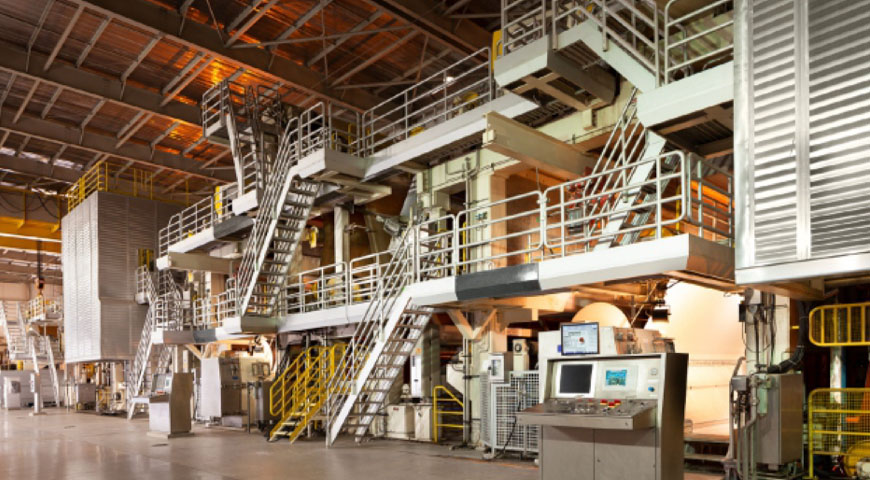
Why Choose Us?Hangzhou Renmin Eco-tech Co., Ltd, situated in the picturesque city of Hangzhou, Zhejiang, is a leading paper product research, development, and sales company. Established in 2004, we specialize in eco-friendly solutions such as Base Paper Rolls, PE Coated Paper Rolls, Paper Cup Fans, Paper Bowl and Box Fans, Die-cut Sheets, etc, for food packaging, and Aluminum Foil Film laminated paper.
 Coming From China, Marketing To The World.
 -
News
 Aluminum Foil Paper Bowls: Structure, Performance & Foodservice Applications
What Aluminum Foil Paper Bowls Actually Are — And Why the Laminate Structure Matters Aluminum foil paper bowls are composite containers built from two bonded materials: a structural paperboard base t...
 English
 中文简体
中文简体 Français
 Español
 عربى
عربىIndustry News
Understanding Industrial Compostable vs Home Compostable: A Guide to Australian Standards
Content
- 1 Introduction
- 2 The Australian Compostability Framework
- 3 The two key standards are:
- 4 Industrial Compostable (AS 4736)
- 5 Key Requirements of AS 4736
- 6 Composting Conditions
- 7 Key Requirements of AS 5810
- 8 Composting Conditions
- 9 Labelling
- 10 Key Relationships and Practical Implications
- 11 PFAS Are Prohibited Across Both Standards
- 12 Why Both Standards Exist
- 13 Practical Guidance for Businesses and Consumers
Introduction
As sustainable packaging gains momentum across Australia, you may have noticed two distinct certification labels appearing on products ranging from coffee cups to bin liners. One label features a leaf; the other shows a compost bin. While both claim compostability, they refer to very different end-of-life scenarios. This article explains the key differences between industrial compostable (AS 4736) and home compostable (AS 5810) certifications in the Australian market, the rigorous testing requirements behind each standard, and why choosing the right certification matters.
The Australian Compostability Framework
Australia maintains two of the highest compostability standards in the world. These standards are managed by the Australasian Bioplastics Association (ABA), the peak certification body for compostable products in Australia and New Zealand. The ABA’s independent verification program ensures that certified products break down safely and effectively in real-world composting environments.
The two key standards are:
AS 4736-2006: Biodegradable plastics suitable for composting and other microbial treatment — designed for industrial composting facilities
AS 5810-2010: Biodegradable plastics suitable for home composting — designed for backyard compost systems
These schemes serve as the Australian equivalent of European certifications for industrial and home compostability and are required by waste managers, municipalities, and major retailers in Australian and New Zealand markets.
Industrial Compostable (AS 4736)
What It Means to Be Industrially Compostable
Industrial compostable packaging refers to materials designed to break down in commercial composting facilities under controlled conditions. These facilities maintain carefully managed environments to accelerate decomposition, including elevated temperatures, regulated humidity, and targeted microbial activity. Most commercial compost facilities can sustain the ideal conditions required for plant-based plastics like PLA to fully decompose.
Key Requirements of AS 4736
The standard operates on a four-pillar framework that mirrors international benchmarks such as EN 13432 and ASTM D6400:
1. Biodegradation. At least 90% of the material must be converted into carbon dioxide, water, and biomass within 180 days. This ensures the plastic truly breaks down at the molecular level rather than merely fragmenting.
2. Disintegration. Within 12 weeks, at least 90% of the material must disintegrate into pieces smaller than 2 millimetres. This prevents large fragments from remaining visible in the final compost.
3. Environmental safety. The resulting compost must have no toxic effect on plants and must pass ecotoxicity testing. The standard also imposes strict limits on heavy metal content.
4. No harmful residues. Certified products must leave no microplastics or toxic residue behind.
Composting Conditions
Industrial composting requires sustained thermophilic temperatures of 55–70°C for several weeks to effectively break down certified bioplastics. The high heat accelerates microbial activity, enabling materials to decompose much faster than in ambient conditions.
Labelling
Products certified to AS 4736 display a leaf symbol on their label. This logo signals that the product should be disposed of in a commercial composting facility or, where permitted, in municipal FOGO (Food Organics Garden Organics) bins — but never in a home compost bin.
Home Compostable (AS 5810)
What It Means to Be Home Compostable
Home compostable packaging is specifically formulated to break down in the less-controlled environment of a backyard compost system. These materials decompose at ambient temperatures, typically 20–30°C, without requiring the elevated heat of industrial facilities. A product that meets AS 5810 certification is inherently more forgiving and can break down even in a simple home compost bin.
Key Requirements of AS 5810
While the fundamental criteria remain the same as AS 4736, the testing environment is drastically different, and the timeframe is extended:
1. Biodegradation. At least 90% of the material must biodegrade — the same threshold as AS 4736.
2. Disintegration. The material must physically break down during the composting process. Due to the lower temperatures and less stable conditions of home composting, the test period is extended to a maximum of 12 months.
3. Ecotoxicity. The finished compost must be non-toxic to both plants and earthworms. Notably, the earthworm test is included in AS 5810 — a feature that distinguishes it from some other certification schemes.
4. Organic content. The material must contain more than half organic material.
5. PFAS restriction. Products must not contain fluorinated chemicals (PFAS/PFOA/PFOS).
Composting Conditions
Home composting involves variable conditions: temperature fluctuates with the seasons, moisture levels are less controlled, and microbial activity is less intense. The test period accounts for these variables, allowing up to 12 months for complete degradation.
Labelling
Products meeting AS 5810 display a compost bin symbol on their label. This logo indicates the product can be placed directly into a home compost bin.
AS 4736 vs AS 5810: At a Glance
Feature AS 5810 (Home Compost) AS 4736 (Industrial Compost)
Composting environment Backyard / home compost bin Commercial composting facility
Temperature Low (20–30°C) High (55–70°C)
Disintegration timeframe Up to 12 weeks 12 weeks
Biodegradation timeframe Up to 12 months 180 days
Material flexibility Stricter — requires thinner, softer materials that break down easily at ambient temperatures More flexible — can accommodate thicker films and more additives
Logo Home compost bin symbol Leaf symbol
Earthworm testing Included Not required
Who uses it Households Waste management companies, food service businesses
Source: Orizonbags comparison
Key Relationships and Practical Implications
A Product Certified to AS 5810 Will Also Meet AS 4736
Due to the extreme and stringent requirements of the AS 5810 standard, any product that meets the home compostable standard will also meet the industrial standard — it is simply capable of breaking down under more forgiving conditions. However, the reverse is not necessarily true. An industrial compostable product may not break down at home because it is designed to require elevated temperatures to decompose.
Certification Does Not Guarantee FOGO Acceptance
Even with AS 4736 certification, certified products may not be accepted in all FOGO (Food Organics and Garden Organics) programs. Different councils have varying policies, and some have announced plans to phase out compostable packaging from green bins due to contamination concerns. Always check with your local council for specific requirements.
PFAS Are Prohibited Across Both Standards
Products seeking ABA certification must not contain fluorinated chemicals. The Australian Packaging Covenant Organisation (APCO) has launched an action plan to phase out PFAS in fibre-based food contact packaging, reinforcing this requirement.
Why Both Standards Exist
Most countries rely solely on an industrial composting standard (like Europe’s EN 13432). Australia, recognising the value of home composting in diverting organic waste from landfill, established AS 5810 to encourage household participation. However, producing compostable products for home use is more challenging — they must pass additional tests for decomposability at ambient temperatures, and consumer education remains critical to ensure proper disposal.
Practical Guidance for Businesses and Consumers
For businesses: Always verify that your products carry the appropriate ABA certification — either the leaf logo for industrial compostability or the compost bin logo for home compostability. Without third-party verification, compostability claims are not legally defensible in Australia. Consumer education about proper disposal is equally crucial.
For consumers: Look for the official ABA certification logo before purchasing a compostable product. Understand where your local council accepts compostable packaging, as policies vary significantly across municipalities.
For importers and suppliers: Decide which end-use environment your products will encounter. If your target customers are households with home compost systems, AS 5810 is the correct certification. If your products are destined for commercial waste streams or food service, AS 4736 is required.
Your email address will not be published. Required fields are marked *

We're Here To Help.

Copyright © HANGZHOU RENMIN ECO-TECH CO.,LTD. All Rights Reserved
Eco Friendly Food Packaging Solution Food Paper Packaging Manufacturer
