






 English
 中文简体
中文简体 Français
 Español
 عربى
عربى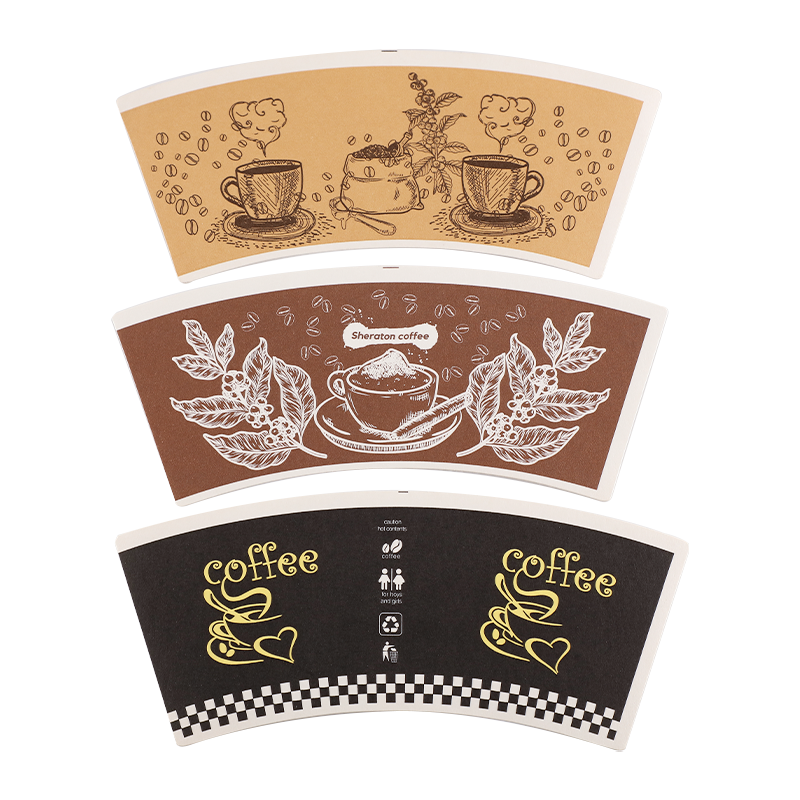


What Distinguishes a Well-Cut Fan from a Poor One
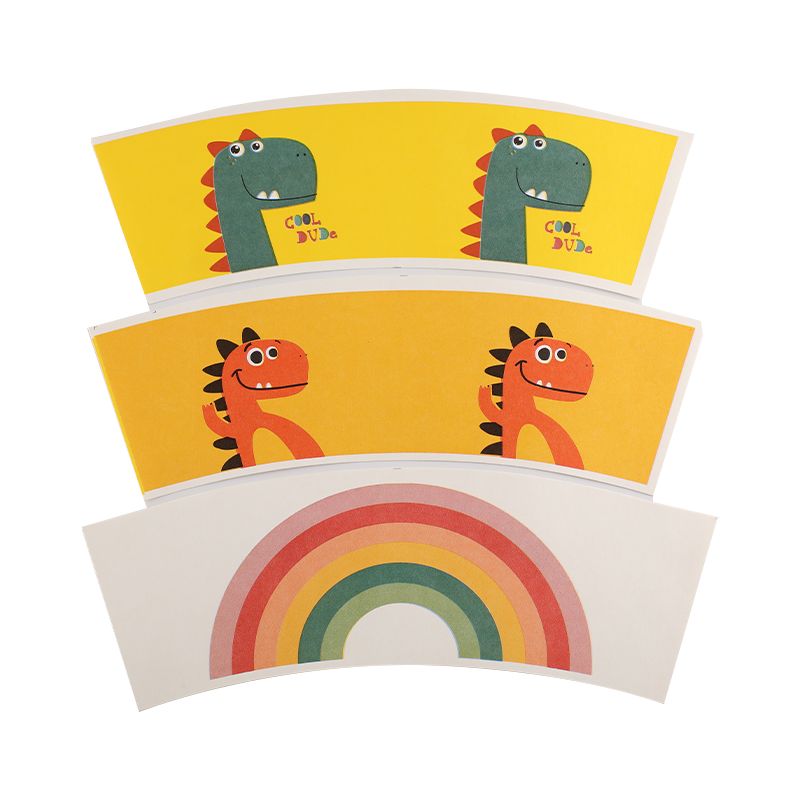
A paper cup fan is the pre-cut, pre-printed blank that wraps around the sidewall of a finished cup. Its quality is largely determined at the die-cutting stage. Dimensional accuracy — typically held to ±0.2 mm on critical edges — is the single most important factor for smooth, leak-free seaming on automated cup-forming machines. Even a minor deviation in the arc angle or seam overlap area causes misalignment during high-speed forming, leading to skewed side seams and increased rejection rates.
Edge quality matters equally. Clean, burr-free cuts prevent fiber lifting during heat sealing, which is the primary cause of microscopic gaps along the side seam. Suppliers who run worn or poorly maintained dies produce fans with ragged edges that look acceptable to the eye but fail under fill-and-seal conditions.
Single-Wall vs. Double-Wall Fan Design
Single-wall paper cup fans are the industry standard for cold drinks and short-hold hot beverages. The wall thickness is determined entirely by the base paper grammage, typically 170–230 gsm. Double-wall cups require two separate fan blanks — an inner fan and a corrugated or smooth outer sleeve — which are assembled during forming to create an air gap that provides thermal insulation without a separate cardboard sleeve.
For foodservice operators looking to cut costs on hot-cup formats, specifying a heavier single-wall fan (210–230 gsm) with a ripple outer sleeve fan is often more economical than a full double-wall construction, while still achieving adequate hand-hold comfort.
Printing on Fan Blanks: Flexo vs. Offset
Most paper cup fans are printed before die-cutting, either by flexographic or offset lithographic methods. The choice affects both cost and output quality:
- Flexo printing is faster and better suited for large runs with solid color blocks and simple brand graphics. Ink costs are lower, and the process handles the slightly absorbent surface of PE-coated paper well.
- Offset printing delivers sharper halftones and finer detail — preferred when photo-quality imagery or tight color registration is required. However, offset inks must be verified for food-contact compliance, as migration through the paper substrate is a real risk at elevated temperatures.
Regardless of method, inks and coatings applied to the food-contact side must meet applicable regulatory standards. For export markets, this typically means FDA 21 CFR or EU 10/2011 compliance documentation from the ink supplier.
Storage and Humidity Control for Fan Blanks
Fan blanks are more moisture-sensitive than raw rolls because the cut edges expose paper fiber directly to ambient humidity. Converters and cup-forming plants should store paper cup fans in conditions of 45–65% relative humidity and 18–25°C. Stacks exposed to high humidity absorb moisture unevenly, causing the edges to expand faster than the center — a defect known as wavy edging — which jams fan-feed mechanisms and causes machine downtime.
Fans should be kept in their original packaging until loading into the forming machine hopper. Running fans that have been opened and left overnight in a humid warehouse is a common but avoidable source of forming-line inefficiency.
Sustainable Fan Options Gaining Traction
Buyer pressure and extended producer responsibility legislation in the EU and parts of Asia are accelerating the shift away from PE-coated fans toward recyclable or compostable alternatives. The two most commercially viable options currently are:
- PLA-coated fans — bioplastic coating derived from corn starch; industrially compostable and accepted in most paper recycling streams when coating weight is kept below 10 gsm.
- Aqueous barrier-coated fans — water-based dispersion coatings that provide adequate moisture resistance for cold drinks while remaining fully repulpable in standard recycling facilities.
Both alternatives require forming-machine temperature adjustments compared to conventional PE fans, so converters should request technical forming parameters from their material supplier before switching grades mid-run.