

 English
 中文简体
中文简体 Français
 Español
 عربى
عربى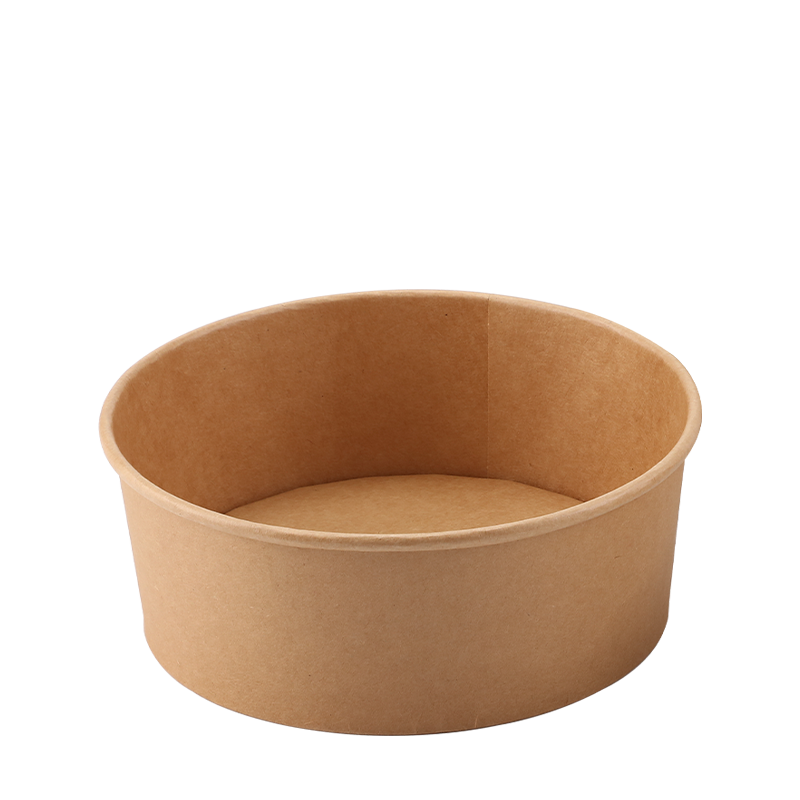
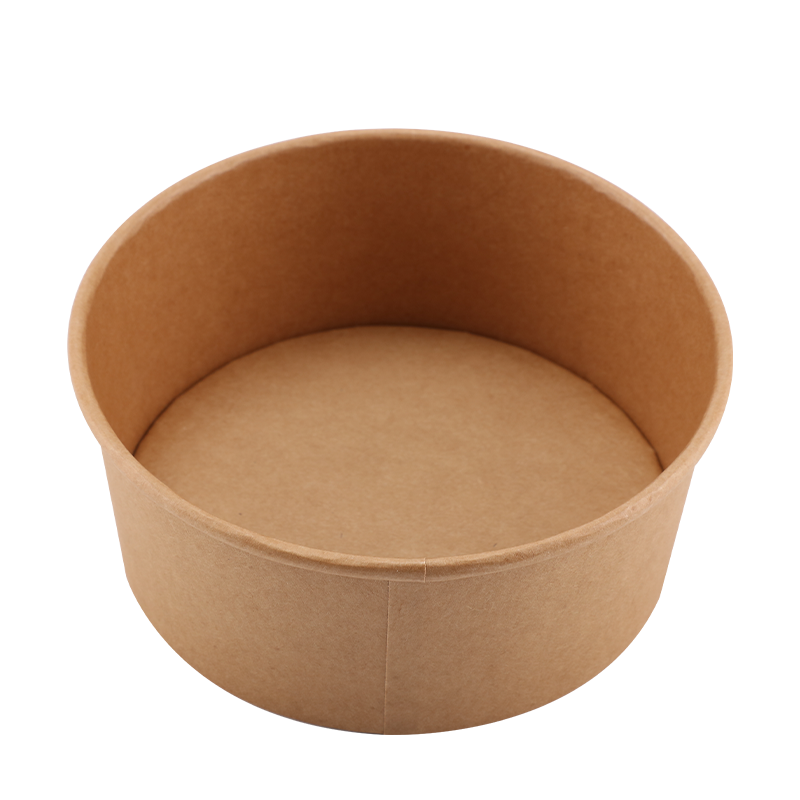
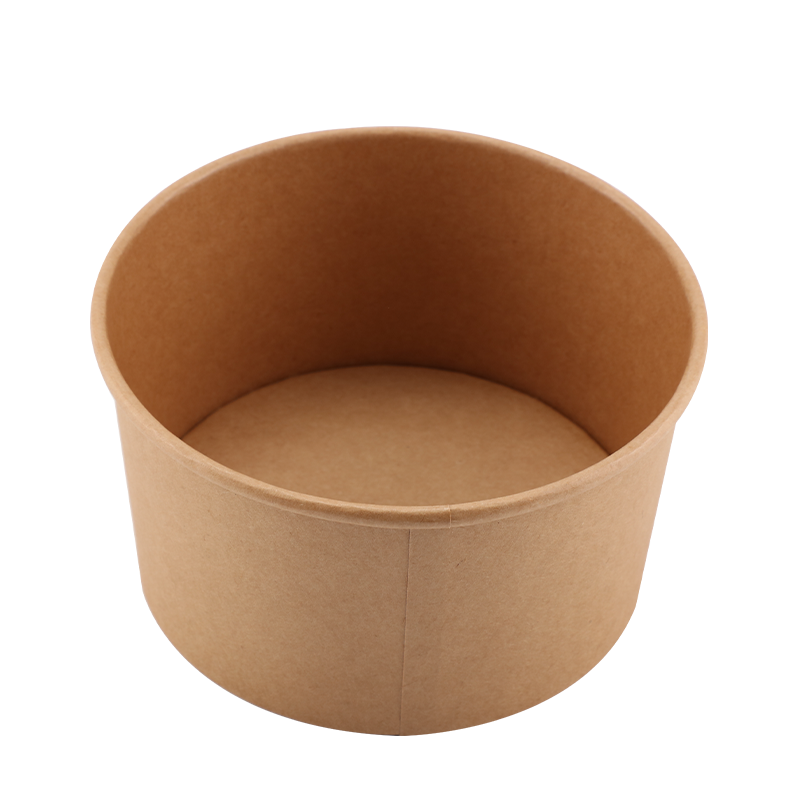
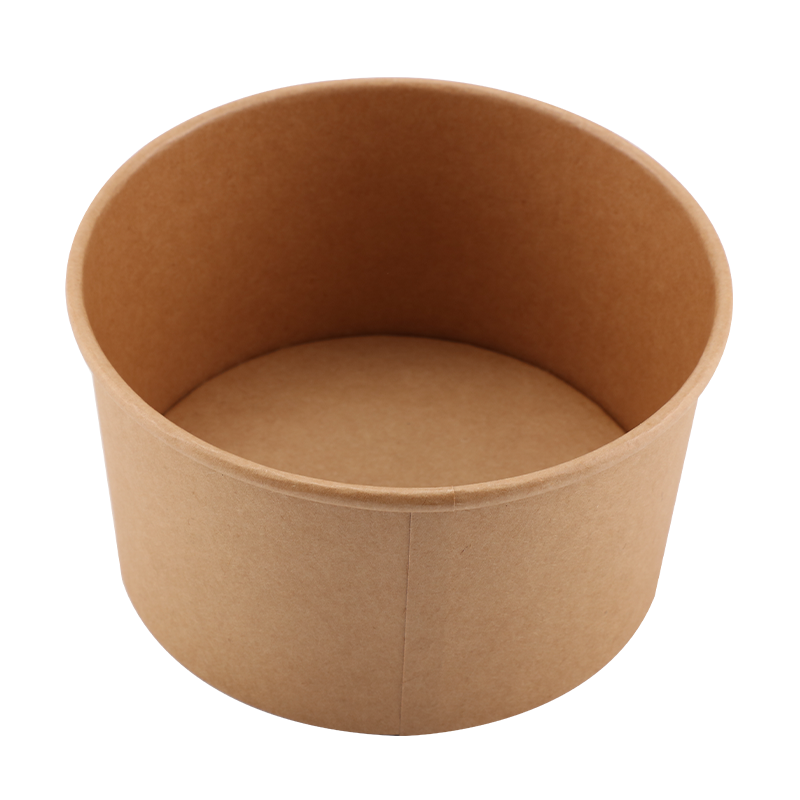


Why Salad Bowls Demand a Different Paper Construction Than Hot Food Containers
At first glance, a salad bowl and a hot soup container share the same basic architecture — food-grade paperboard with a moisture barrier lining. In practice, they face entirely different material stresses, and specifying the wrong construction for cold, fresh food applications leads to predictable performance failures that affect both product quality and customer experience.
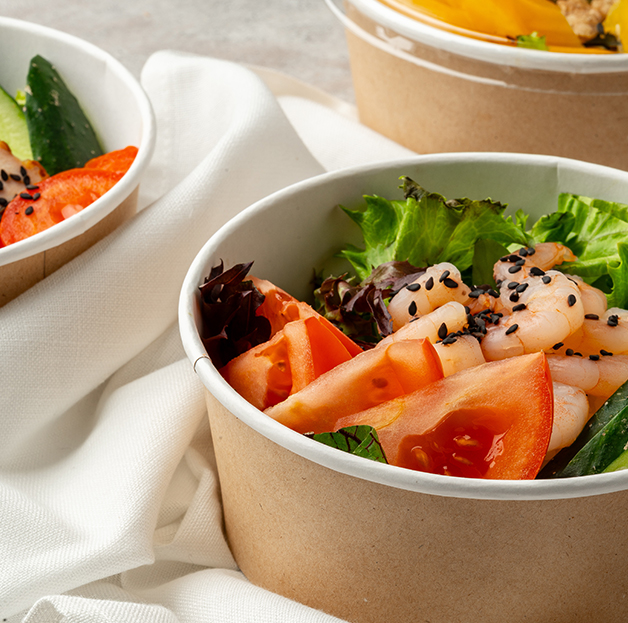
Hot food containers are engineered primarily to manage steam and radiant heat: moisture moves outward from the hot food through the container wall, and the bowl must resist softening under sustained thermal load. Salad bowls face the opposite challenge. Fresh salads, fruits, and poke bowls release cold moisture, acidic dressings, and oils that migrate laterally through the bowl base and sidewall under static load — a stress mode that heat-optimized paperboard constructions are not calibrated to resist.
The key structural differences in salad-specific paper bowl construction include:
- Higher base-weight paperboard — Salad bowls typically specify paperboard at 280–400 gsm, heavier than equivalent-volume hot cup constructions, to provide a denser fiber matrix that resists cold moisture migration over extended hold times of 30–90 minutes common in delivery applications.
- Oil-resistant inner lining — Vinaigrette dressings, tahini sauces, and avocado-based toppings contain lipid compounds that penetrate standard moisture-only PE coatings over time. Salad bowl linings are formulated with verified oil and grease resistance (OGR) — a specification distinct from simple water resistance.
- Wider base footprint — The bowl geometry distributes the weight of dense ingredients — grains, legumes, proteins — across a larger base area, reducing the point-load pressure that causes base failure in narrow-bottomed container designs.
Capacity Planning for Salad Bowl Operations: Matching Size to Menu Format
Salad bowl sizing is more complex than beverage cup sizing because portion weight varies dramatically across menu formats — a 32oz bowl filled with leafy greens weighs a fraction of the same volume filled with a grain-heavy poke bowl. Operators need to align bowl capacity with both visual fill expectations and structural load ratings.
| Bowl Size | Typical Content Weight | Best Application | Recommended Lid |
|---|---|---|---|
| 12 oz | 150–250 g | Side salads, fruit cups, snack portions | PET flat lid |
| 16 oz | 250–380 g | Single-serve salads, light pasta portions | PET dome or flat lid |
| 24 oz | 380–550 g | Main course salads, poke bowls, grain bowls | PET dome lid or kraft paper lid |
| 32 oz | 550–750 g | Large meal bowls, loaded poke, pasta mains | Kraft paper lid with adhesive seal |
| 50 oz | 750 g+ | Sharing portions, catering buffets, meal prep | Kraft paper lid or PET dome lid |
For delivery-focused operations, bowl selection should also account for stacking stability in delivery bags. Wider-base bowls in the 24–32oz range stack more securely in insulated delivery bags than tall, narrow formats, reducing the risk of content spillage during transit — a factor that directly influences customer review scores on third-party delivery platforms.
PET Clear Lids vs. Kraft Paper Lids: Performance and Positioning Trade-offs
The lid choice for a salad paper bowl is not merely a functional decision — it communicates brand positioning, affects food presentation at point of sale, and carries distinct sustainability implications. Understanding the operational trade-offs between PET clear lids and kraft paper lids allows operators to make informed decisions aligned with their service model and customer expectations.
PET Clear Lids
PET lids provide full visual transparency, allowing customers to inspect bowl contents without opening the lid — a significant advantage at grab-and-go counters, salad bar displays, and refrigerated retail cabinets where purchase decisions are visually driven. Dome-profile PET lids accommodate mounded toppings such as croutons, seeds, or piled greens without compressing the presentation. The material's rigidity also provides structural support to the bowl rim during stacking in display cases.
The primary limitation of PET lids is their sustainability profile. Standard PET lids are recyclable in markets with established PET collection infrastructure but are increasingly subject to EPR fees in EU and UK markets. For operators building a sustainability narrative around their packaging, the visual impact of a plastic lid can undermine messaging even when the bowl itself uses a PLA or recyclable coating.
Kraft Paper Lids
Kraft paper lids align with natural, artisan, and sustainability-positioned brands. Their opaque surface provides a premium print canvas for branding, ingredient listings, or QR codes linking to nutritional information — a growing requirement for foodservice operators supplying corporate lunch programs and health-focused café chains. Kraft lids with PE or PLA lining provide adequate moisture resistance for salads with wet dressings over typical delivery hold times.
The functional trade-off is the absence of visual transparency, which eliminates grab-and-go display utility and requires a separate labeling strategy for retail or self-service environments. For kitchen-to-customer delivery models where the bowl is assembled and sealed out of customer sight, this limitation is operationally irrelevant.
Oil and Grease Resistance in Salad Bowl Linings: Testing Standards Buyers Should Know
Oil resistance is the single most important lining performance parameter for salad bowl applications, yet it is one of the least consistently specified in procurement processes. Many buyers default to requesting "food-grade PE lining" without specifying an oil resistance grade — a gap that allows wide variation in real-world performance between suppliers.
The industry standard test for oil and grease resistance in paper-based food packaging is the Kit Test (TAPPI T559), which applies a series of castor oil/heptane/toluene solutions of increasing aggressiveness (Kit 1 through Kit 12) to the coated surface and measures penetration time. For salad bowl applications involving oily dressings, the relevant performance benchmarks are:
- Kit 3–4 — Minimum acceptable for light dressings (vinaigrette, lemon-oil) with short hold times under 20 minutes
- Kit 5–7 — Appropriate for medium-weight dressings (tahini, pesto, Caesar) with hold times up to 60 minutes
- Kit 8–10 — Recommended for high-oil applications (avocado bowls, fatty protein toppings) or delivery hold times exceeding 60 minutes
When sourcing salad paper bowls for delivery-intensive operations, requesting the specific Kit Test rating of the bowl lining — rather than a generic food-grade certification — provides a measurable basis for performance comparison across suppliers and prevents field failures caused by under-specified packaging.
Rolled Rim Engineering: Why the Bowl Edge Determines Lid Seal Reliability
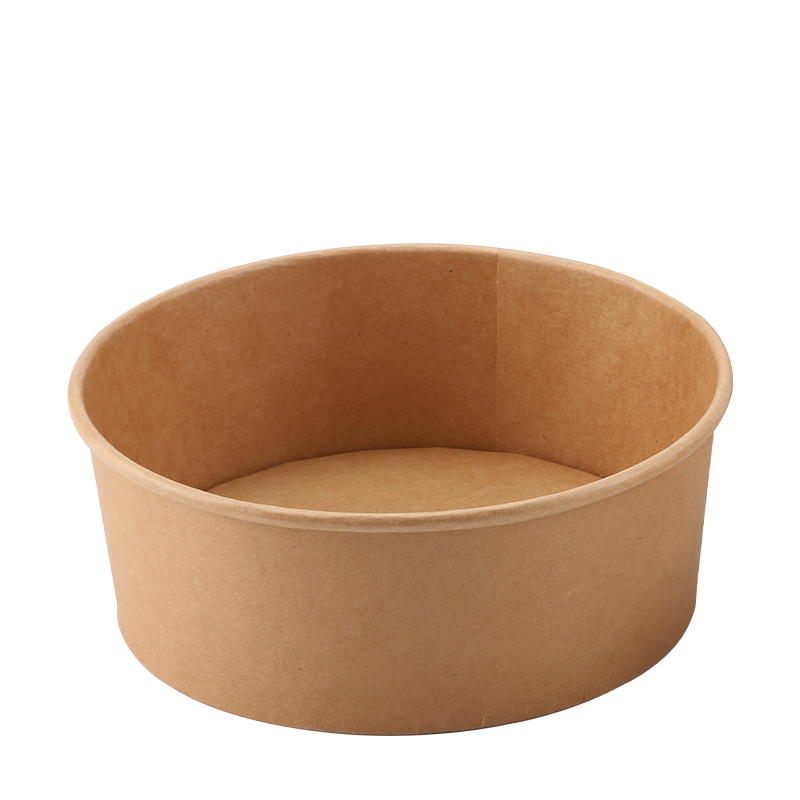
The rolled rim is the most mechanically complex feature of a paper bowl and the one most directly responsible for real-world leak performance. Despite its small physical scale, the rim's geometry, dimensional tolerance, and finish quality determine whether a bowl-lid combination holds a reliable seal through the full delivery or display cycle — or fails unpredictably under transit stress.
A well-engineered rolled rim performs four simultaneous functions:
- Lid engagement surface — The outer diameter of the rolled rim must fall within a tight tolerance (typically ±0.5 mm) to engage consistently with the lid's inner channel. Dimensional variance beyond this range results in either loose-fitting lids that detach under lateral force or over-tight fits that damage the rim during lid application — both failure modes that manifest as leaks.
- Structural stiffening — Rolling the rim converts the open edge of the bowl sidewall from the weakest point in the structure to one of the stiffest, distributing hand-grip pressure evenly around the bowl mouth and preventing the oval deformation that breaks lid seals in transit.
- User ergonomics — A smooth, fully enclosed rolled rim eliminates the sharp paper edge that causes finger cuts and provides a comfortable grip surface for consumers eating directly from the bowl — a common use pattern for poke bowls and desk-lunch salads.
- Coating integrity at the edge — The rolling process must enclose the raw cut edge of the paperboard, preventing the uncoated fiber cross-section from direct contact with food or moisture. Incomplete rolling that leaves exposed raw fiber at the rim edge is a food safety concern and a common cause of rim softening failure.
Salad Bowl Packaging for Meal Prep and Retail: Specification Differences from Foodservice
The growth of meal prep delivery services and refrigerated retail grab-and-go salad programs has created a distinct set of salad bowl requirements that differ significantly from immediate-service foodservice applications. Operators and procurement teams sourcing bowls for these channels need to evaluate specifications against a different performance baseline.
Key differentiated requirements for retail and meal prep applications include:
- Extended refrigeration hold performance — Retail salad bowls may remain in a refrigerated cabinet for 12–72 hours before purchase, compared to the 30–90 minute window of delivery applications. Over this extended period, cold moisture from fresh produce continuously contacts the bowl interior. Lining integrity must be validated at refrigeration temperatures (2–5 °C) over the full shelf-life window, not only at ambient conditions.
- Tamper-evident sealing — Retail environments require clear visual evidence that a bowl has not been opened prior to purchase. Heat-sealed film overwraps, breakable tab lids, or adhesive label seals across the lid-rim junction are the standard solutions, with the choice depending on the retail partner's requirements and the operator's sealing line capabilities.
- Label adhesion on coated surfaces — Ingredient, allergen, and best-before labels must adhere reliably to the coated outer surface of the bowl at refrigeration temperatures. PE and PLA-coated surfaces have lower surface energy than uncoated board, which reduces adhesive bond strength. Requesting adhesion test data at 4 °C for the specific label stock and adhesive being used prevents in-store label detachment complaints.
- Stacking load rating — In refrigerated display cabinets, filled bowls are typically stacked 2–4 units high. The bowl base must be rated to support this compressive load without deforming, as base collapse shifts the lid seal geometry and causes leaks that contaminate adjacent products — a significant liability in retail environments.