





 English
 中文简体
中文简体 Français
 Español
 عربى
عربى
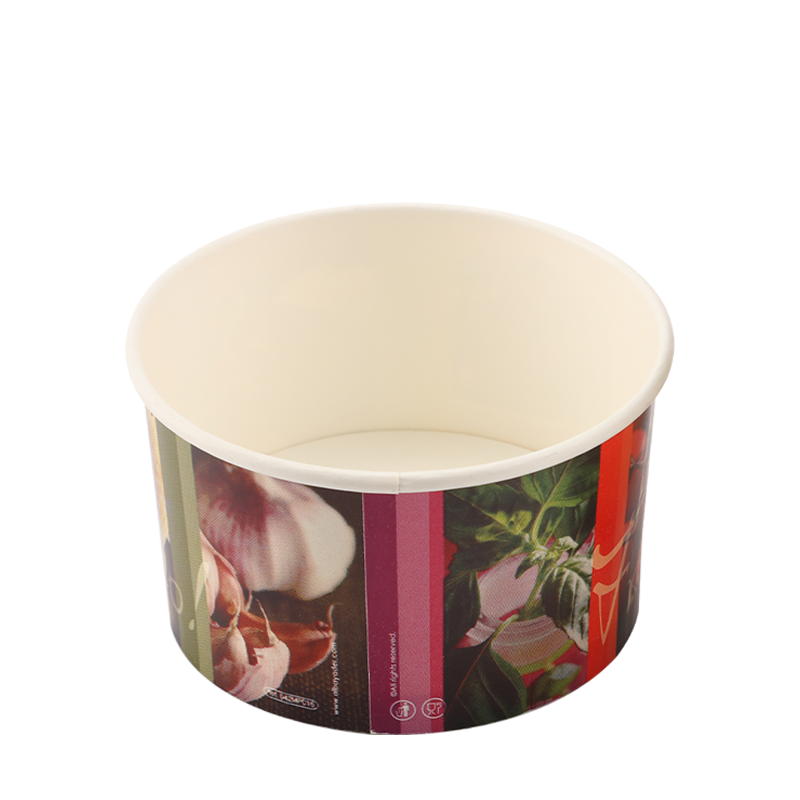
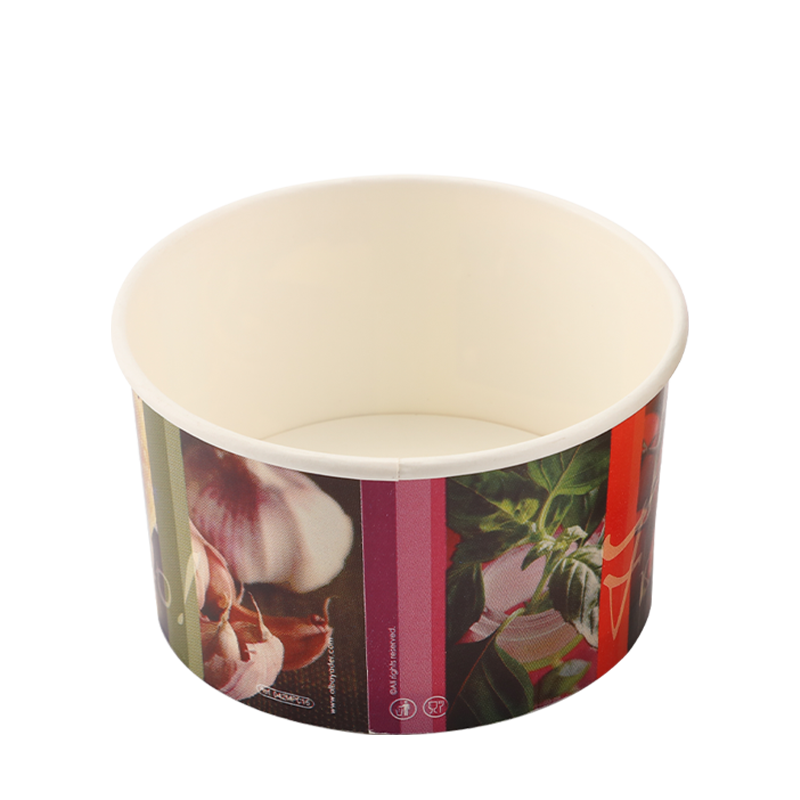
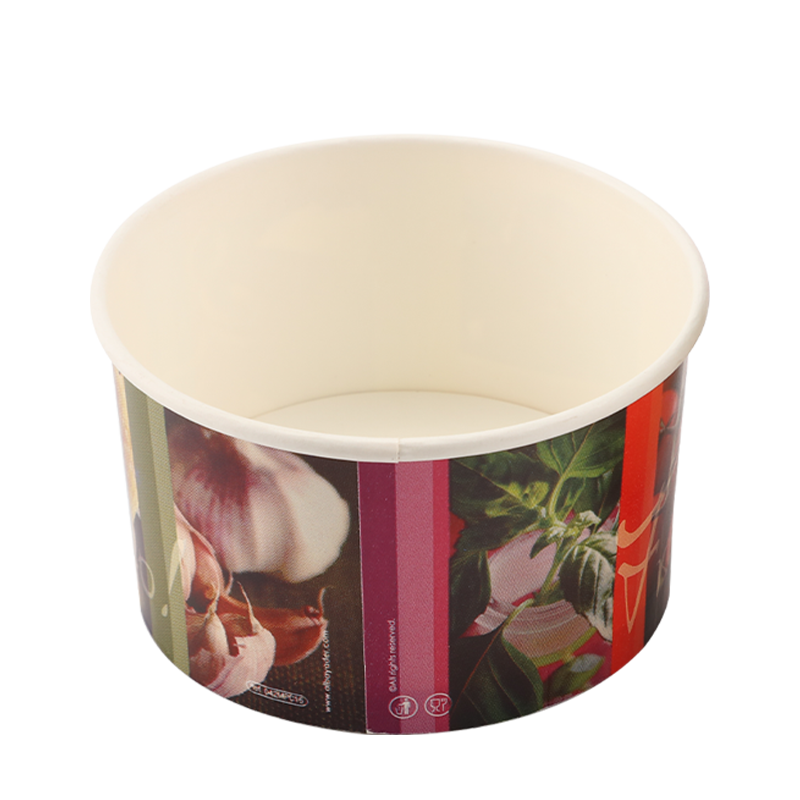
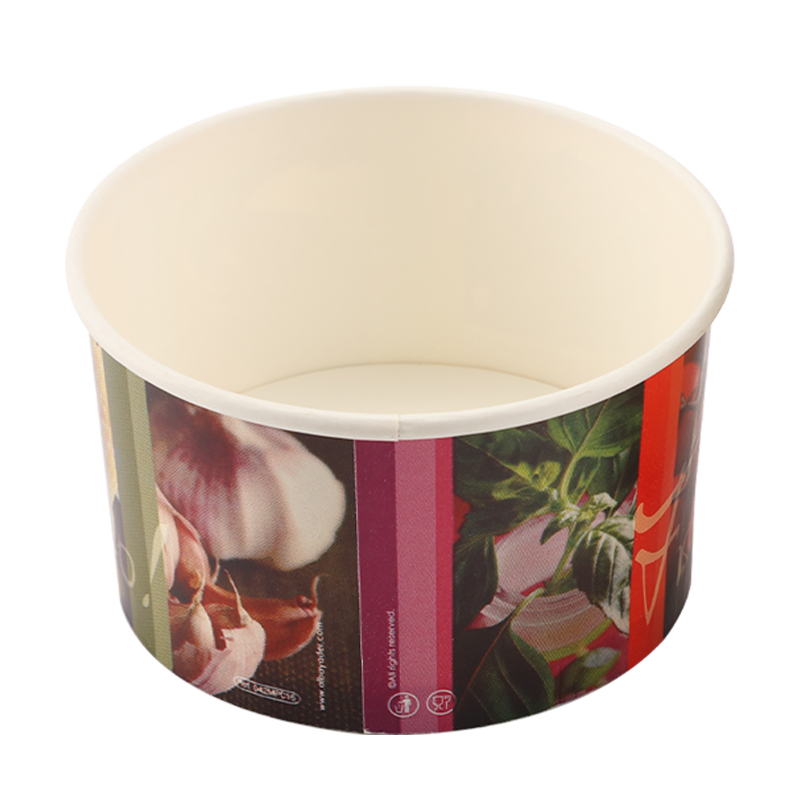



Why Ice Cream Cups Require a Different Paper Construction Than Cold Drink Cups
At first glance, ice cream cups and cold drinking cups appear to share the same basic structure — food-grade paperboard with a moisture-resistant lining. In practice, however, they are engineered for fundamentally different stress conditions, and substituting one for the other leads to predictable failures.
Cold drink cups are designed to resist lateral moisture migration: condensation forms on the outside, and liquid presses outward from the inside. Ice cream cups face a different challenge — compressive load from dense, semi-frozen product. A single scoop of hard-pack ice cream can exert significant downward and outward force on the cup wall, particularly during hand-scooping. To handle this, ice cream cup paperboard is typically specified at a higher caliper and grammage (often 260–380 gsm), and the sidewall angle is designed to be steeper to resist barreling under load.
Additionally, ice cream cups must maintain rigidity across a wider temperature range. A cup filled with gelato at −18 °C and then held in a warm hand at 35 °C experiences rapid thermal cycling that accelerates delamination between the paper substrate and the PE or PLA lining — a failure mode that demands tighter adhesion standards in manufacturing.
Smooth Interior Lining: The Detail That Affects Product Release and Presentation
One of the most practically important — and least discussed — specifications for ice cream paper cups is interior surface smoothness. Unlike beverages, which simply pour out, ice cream and frozen yogurt are scooped and presented. A rough or uneven interior lining causes the product to adhere to the cup wall, leading to:
- Torn or pitted product surface when the cup is peeled away — a significant presentation problem for gelato shops and premium dessert brands
- Residue left on the cup interior, increasing apparent product waste
- Customer difficulty in eating the last portion, which directly impacts perceived value
A calendered paper surface combined with a uniformly applied PE or PLA coating — applied at consistent thickness without pinholes or bubbles — ensures clean product release. When evaluating suppliers, requesting a cross-section coating weight test (typically expressed in g/m²) and a surface roughness measurement (Ra value) provides an objective basis for comparison rather than relying on visual inspection alone.
Size Selection for Ice Cream Operations: Matching Volume to Service Format
Ice cream cup sizing follows a different logic than beverage cups. Because ice cream is sold by the scoop rather than measured by fluid ounces, operators must account for overrun (the air whipped into ice cream during production, which increases apparent volume by 20–100%) and the density differences between product types. The table below provides a practical guide:
| Cup Size | Approximate Scoop Yield | Best For |
|---|---|---|
| 3 oz | 1 mini scoop | Tasting samples, hotel amenity portions, kids' menus |
| 5 oz | 1 standard scoop | Single-serving gelato, frozen yogurt bars |
| 8 oz | 2 scoops or 1 large portion | Ice cream parlors, dessert cafés, sundae servings |
| 12 oz | 3 scoops or large parfait | Specialty dessert shops, sorbet with toppings |
| 16 oz | 4 scoops or loaded sundae | Takeaway dessert combos, catering events |
Operators running self-serve frozen yogurt or sorbet stations should also account for tare weight variance: when pricing by weight, cup weight must be factored out consistently, making a standardized cup size and weight across all stations essential for accurate billing.
Lid Compatibility for Ice Cream Cups: Display, Transit, and Hygiene Considerations
Unlike beverage lids, which are chosen primarily for spill prevention, lids for ice cream cups serve three distinct operational purposes — each requiring a different lid profile:
Dome Lids for Takeaway Presentation
Dome lids are standard for takeaway ice cream cups, providing headspace above the rim to accommodate a mounded scoop, whipped cream, or toppings without compressing the product. The dome height varies by supplier — typically 25–45 mm — and must be specified relative to the intended portion size. A dome that is too shallow will crush soft-serve or fresh fruit toppings; one that is too tall creates excess dead space and increases packaging cost per unit.
Flat Lids for Pre-packed Retail and Display Cases
For pre-portioned cups sold through refrigerated display cases or retail channels, flat lids allow for cleaner stacking and better label visibility. A tamper-evident flat lid with a peelable foil or snap-fit perforated ring adds a hygiene assurance layer that is increasingly required by food safety standards in export markets including Japan and the EU.
No-Lid Open Cups for In-Store Consumption
For dine-in formats — gelato shops, dessert counters, cafeteria stations — lids are omitted entirely, and the cup's rolled rim becomes the key quality indicator. A uniform, tightly finished rim prevents edge splitting when a spoon is pressed against the cup wall, which is the most common point of structural failure in thin-walled ice cream cups.
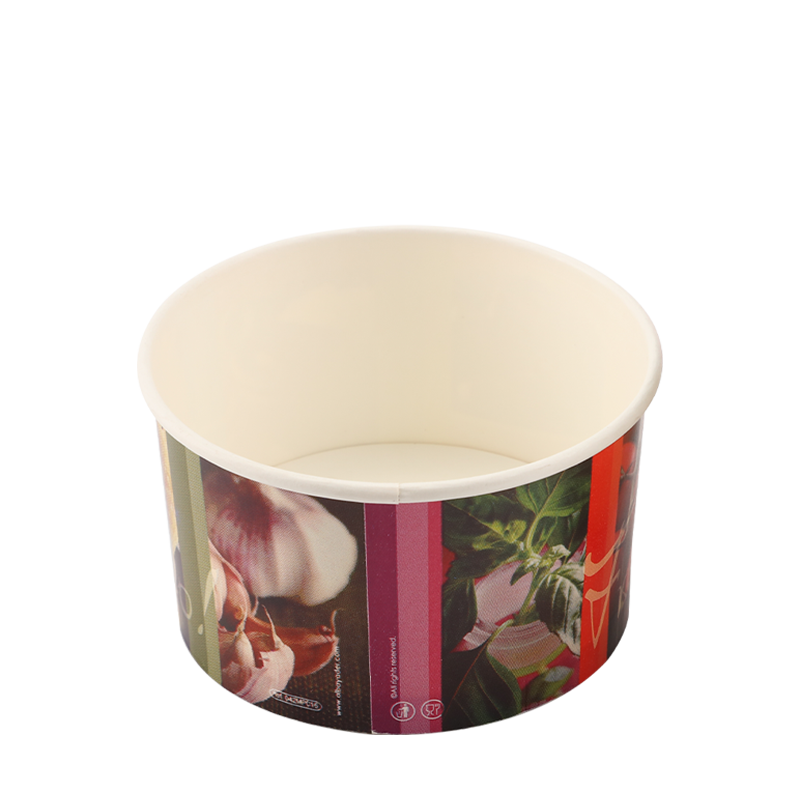
Print Design Best Practices for Ice Cream Cup Branding
Ice cream is a high-visual-impact category — purchase decisions are heavily influenced by how the packaging looks at the point of sale. Custom-printed ice cream paper cups therefore carry more brand value per unit than almost any other disposable foodservice item. Several print design principles are specific to this format:
- Design for the fan blank, not the finished cup — All artwork is printed flat on the cup fan (the die-cut paper blank) before the cup is formed. Colors and shapes that appear symmetrical on the flat blank will distort slightly when wrapped into a cone. Experienced cup manufacturers provide brand-specific fan templates with perspective correction guides to prevent this.
- Cold-resistant ink adhesion — Cups moving between freezer storage (−18 °C) and ambient service environments undergo repeated thermal expansion and contraction. Inks must be tested for adhesion under these cycling conditions; poorly specified inks crack or flake, creating food safety and aesthetic concerns.
- Matte vs. gloss coating — A gloss overprint varnish intensifies color vibrancy and is popular for premium gelato brands. Matte finishes are gaining traction for artisan and eco-positioned brands as they project a more natural, handcrafted aesthetic. Both options must use food-contact-safe overprint varnish formulations.
- Seam placement planning — Every cup has a vertical seam where the fan edges overlap. Logos and key design elements should be positioned to avoid spanning the seam, as slight registration shifts at this point can create visible breaks in continuous graphic elements.
PLA-Coated Ice Cream Cups: Realistic Expectations for Foodservice Operators
PLA-coated ice cream cups are increasingly listed in procurement catalogs as a sustainable alternative to PE-lined options, and the market for them has grown steadily as brands respond to consumer preference data. However, operators adopting PLA cups should understand several performance boundaries that differ from conventional PE cups:
- Temperature ceiling — PLA begins to soften at approximately 40–55 °C under load. For pure ice cream service this is not a concern, but if the same cup is used for warm toppings such as hot fudge or caramel sauce, PLA-lined cups can deform at the base. Separate cup specifications for warm-topping applications are advisable.
- Compostability requires infrastructure — PLA cups certified to EN 13432 or ASTM D6400 biodegrade fully only in industrial composting facilities at sustained temperatures above 58 °C. In home compost bins or standard landfills, degradation timelines are not meaningfully different from conventional plastics. Operators should communicate this accurately to avoid greenwashing liability.
- Storage conditions matter — PLA is more sensitive to humidity and heat during storage than PE. Cups stored in high-humidity warehouses without adequate packaging can experience pre-use degradation of the lining. Sealed case packaging and climate-controlled storage are recommended for PLA cup inventory.
- Price premium — PLA raw material costs remain higher than PE, typically adding 8–20% to the unit price depending on order volume and regional supply chain dynamics. This premium has been narrowing as PLA production capacity expands globally, but buyers should model this into their packaging cost structures.
For operations with access to certified industrial composting collection — a growing reality in major European cities and select U.S. municipalities — PLA ice cream cups represent a genuinely lower end-of-life environmental impact and a credible sustainability claim for customer-facing communications.