

-
Products
-
Food Packaging Solution
Mission & PhilosophyRenmin Eco-Tech adheres to the philosophy of green, innovation, and responsibility, placing customers at the center and valuing dedicated professionals. We aim to integrate sustainability and eco-consciousness into every product.
 Green Innovation Leading the Future
 -
Our Story
Why Choose Us?Hangzhou Renmin Eco-tech Co., Ltd, situated in the picturesque city of Hangzhou, Zhejiang, is a leading paper product research, development, and sales company. Established in 2004, we specialize in eco-friendly solutions such as Base Paper Rolls, PE Coated Paper Rolls, Paper Cup Fans, Paper Bowl and Box Fans, Die-cut Sheets, etc, for food packaging, and Aluminum Foil Film laminated paper.
 Coming From China, Marketing To The World.
 -
News
 Aluminum Foil Paper Bowls: Structure, Performance & Foodservice Applications
What Aluminum Foil Paper Bowls Actually Are — And Why the Laminate Structure Matters Aluminum foil paper bowls are composite containers built from two bonded materials: a structural paperboard base t...
 English
 中文简体
中文简体 Français
 Español
 عربى
عربىIndustry News
Cold Drinking Paper Cups: Materials, Sizes & Buying Guide
Content
- 1 What Makes Cold Drinking Paper Cups Different from Other Disposable Cups
- 2 Common Size Ranges and When to Use Each
- 3 PE Lining vs. PLA Lining: Choosing the Right Interior Coating
- 4 Key Quality Indicators When Evaluating Cold Cup Suppliers
- 5 Sustainability Trends Reshaping the Cold Cup Market
- 6 Custom Printing Options for Brand Differentiation
- 7 How to Calculate the Right Order Volume
What Makes Cold Drinking Paper Cups Different from Other Disposable Cups
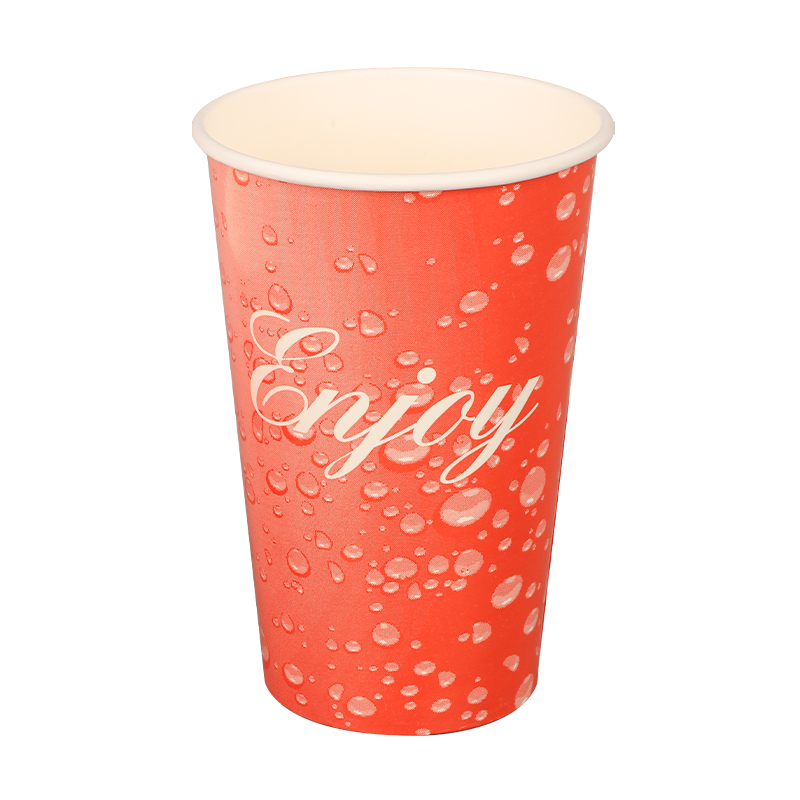
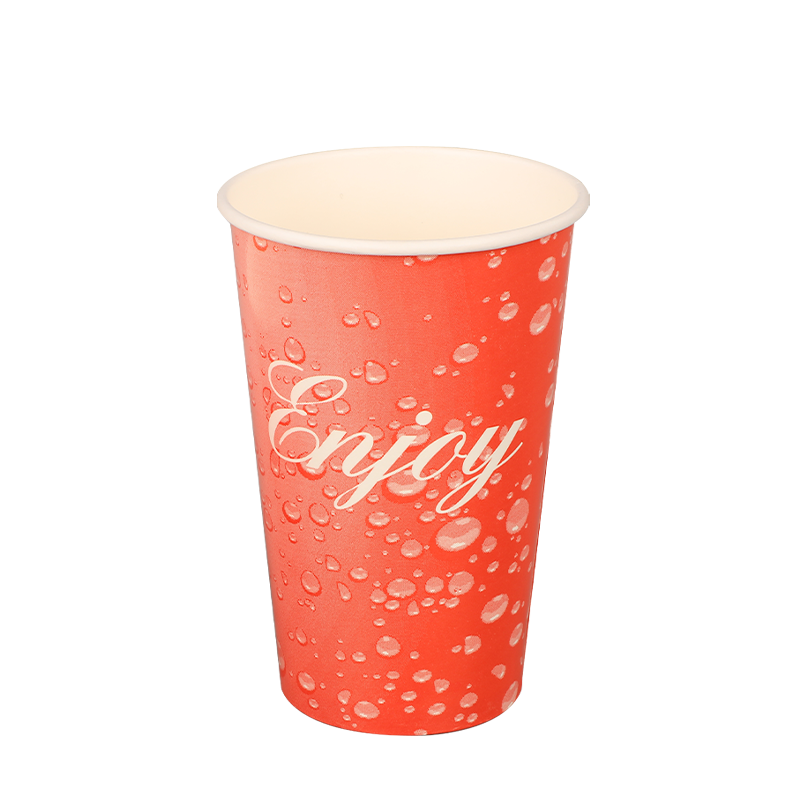
Cold drinking paper cups are engineered specifically for beverages served at low temperatures. Unlike hot cups, which use a single-layer construction with heat-resistant coatings, cold cups are designed with a PE (polyethylene) or PLA (polylactic acid) lining on the interior surface. This moisture barrier prevents condensation from softening the paperboard wall, keeping the cup structurally sound throughout the drink's lifecycle.
The distinction matters in practice. A standard hot cup placed under a cold beverage will begin to degrade within minutes as condensation penetrates the paper fibers. Cold cups maintain their grip, shape, and print quality even when holding iced drinks for extended periods — a critical performance requirement for foodservice operations serving smoothies, iced coffees, sodas, and cold juices.
Common Size Ranges and When to Use Each
Cold drinking paper cups are available across a wide volume spectrum. Selecting the right size reduces waste, improves portion control, and optimizes cost per serve.
| Cup Size | Volume | Typical Application |
|---|---|---|
| Small | 8–12 oz | Kids' drinks, juice bars, sample servings |
| Medium | 16–22 oz | Standard QSR cold beverages, iced coffee |
| Large | 24–32 oz | Fountain drinks, smoothies, bubble tea |
| Extra Large | 44–64 oz | Convenience stores, stadium concessions |
PE Lining vs. PLA Lining: Choosing the Right Interior Coating
The interior lining is the most consequential material decision when sourcing cold drinking paper cups. Two options dominate the market, each with trade-offs across cost, recyclability, and performance.
PE-Lined Cold Cups
Polyethylene-lined cups remain the industry standard. PE lining costs 15–25% less than PLA alternatives and provides excellent moisture resistance across a broad temperature range. The drawback is recyclability: PE-lined cups require specialized facilities to separate the plastic film from the paper fiber, making them incompatible with standard curbside recycling in most regions.
PLA-Lined Cold Cups
PLA (polylactic acid) is a bio-based plastic derived from corn starch or sugarcane. PLA-lined cold cups are compostable under industrial composting conditions and align with sustainability commitments increasingly demanded by corporate buyers and municipalities. However, PLA softens above approximately 110°F (43°C), making it unsuitable for any hot-fill application. For purely cold beverage programs, PLA performs comparably to PE in structural integrity.
Key Quality Indicators When Evaluating Cold Cup Suppliers
Not all cold drinking paper cups perform equally. When evaluating manufacturers or distributors, buyers should assess the following factors:
- Paperboard GSM (grams per square meter): Cold cups for standard beverages typically use 190–260 GSM board. Lower GSM reduces cost but compromises rigidity, particularly for larger cup sizes.
- Seam integrity: The bottom and side seams must be leak-free under load. Request hydraulic pressure test data or conduct in-house fill-and-hold tests before committing to a large order.
- Print registration: High-volume buyers using custom-printed cups should verify that artwork alignment is consistent across production runs, particularly for wrap-around graphics.
- Food safety certifications: Look for FDA compliance (for the US market), EU food contact material regulations, or equivalent standards depending on the target market.
- Stacking and dispensing compatibility: Confirm that cup dimensions are compatible with existing dispensers or automated filling equipment to avoid operational bottlenecks.
Sustainability Trends Reshaping the Cold Cup Market
The global disposable cups market was valued at approximately $14.8 billion in 2023 and continues to grow, with cold beverages driving a significant share of demand. At the same time, regulatory and consumer pressure is accelerating the shift toward more sustainable formats.
Several developments are shaping purchasing decisions across the supply chain:
- Single-use plastics legislation: The EU Single-Use Plastics Directive and similar laws in the UK, Canada, and multiple US states are pushing foodservice operators toward fiber-based alternatives, directly benefiting the cold paper cup category.
- Recyclable and compostable cup programs: Major QSR chains including McDonald's and Starbucks have publicly committed to transitioning to recyclable or compostable cups by 2025–2030, creating upstream demand for certified sustainable cold cups.
- Aqueous coating technology: Water-based coatings are emerging as an alternative to PE and PLA, offering improved recyclability while maintaining moisture resistance. Adoption is still limited but growing among sustainability-focused buyers.
- FSC-certified paperboard: Forest Stewardship Council certification is increasingly a baseline requirement for retail and foodservice procurement, particularly in European markets.
Custom Printing Options for Brand Differentiation
Cold drinking paper cups function as mobile brand touchpoints. For chains and independent operators alike, the cup surface is premium real estate. The two dominant printing methods used in cup manufacturing are offset printing and flexographic printing.
Offset printing delivers sharper color reproduction and finer detail, making it the preferred choice for complex brand graphics or photographic imagery. It is cost-effective at high volumes but carries higher setup costs, making it less suitable for short runs or frequent artwork changes.
Flexographic printing is faster to set up, more cost-effective for mid-range quantities, and widely used across the industry. Color accuracy has improved significantly in recent years, narrowing the gap with offset quality for most branding applications.
Buyers sourcing cold cups for the first time should request printed samples across multiple production batches to verify color consistency, as variations in ink density and registration can affect brand perception at scale.
How to Calculate the Right Order Volume
Over-ordering ties up capital and storage space; under-ordering risks stockouts during peak periods. A practical approach to cold cup procurement involves three steps:
- Baseline consumption: Calculate average daily cup usage across all locations and size SKUs over the past 90 days.
- Seasonal adjustment: Cold beverage demand typically spikes 30–50% during summer months. Factor this into forward inventory planning.
- Lead time buffer: Add safety stock equivalent to 1.5× your supplier's standard lead time. For overseas manufacturers, lead times of 30–60 days are common, requiring longer planning horizons.
Most manufacturers offer volume-based pricing tiers, with meaningful discounts typically beginning at 50,000–100,000 units per order. Consolidating size variants into fewer SKUs where operationally feasible can help buyers reach threshold quantities more efficiently.
Your email address will not be published. Required fields are marked *
We're Here To Help.

Copyright © HANGZHOU RENMIN ECO-TECH CO.,LTD. All Rights Reserved
Eco Friendly Food Packaging Solution Food Paper Packaging Manufacturer
