




 English
 中文简体
中文简体 Français
 Español
 عربى
عربى
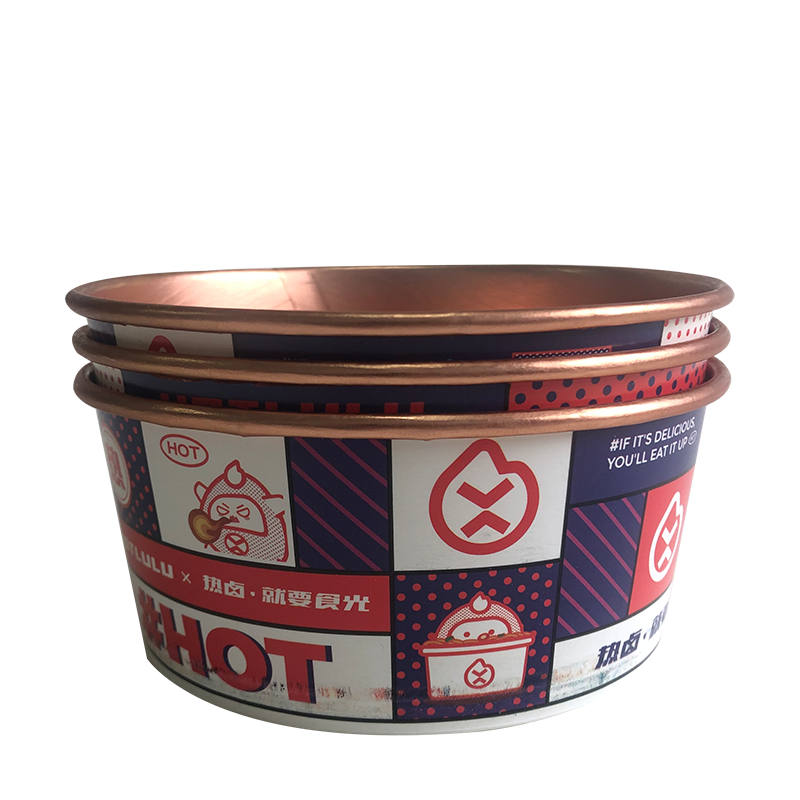
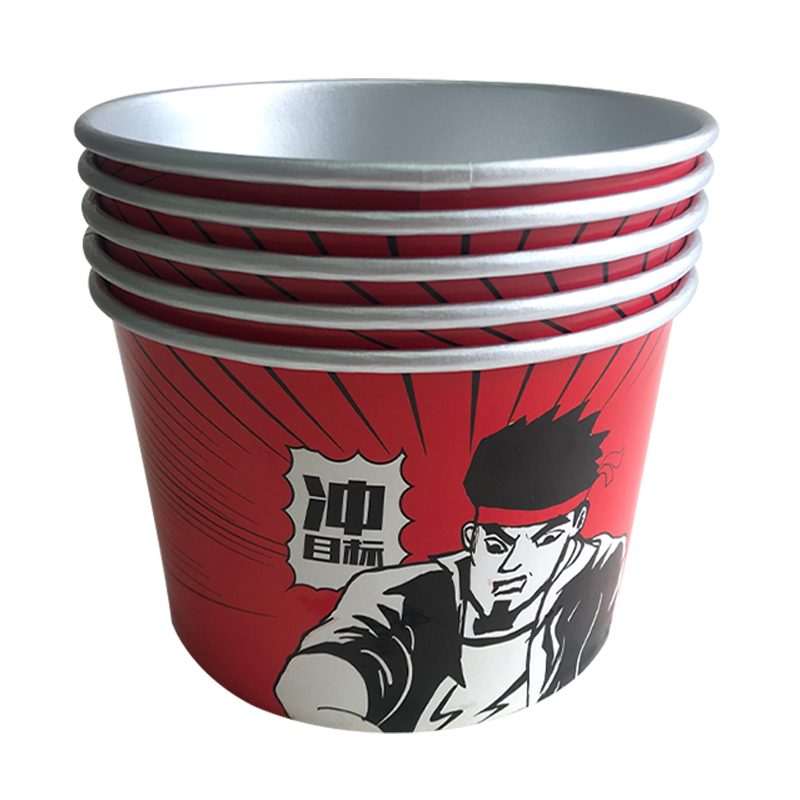
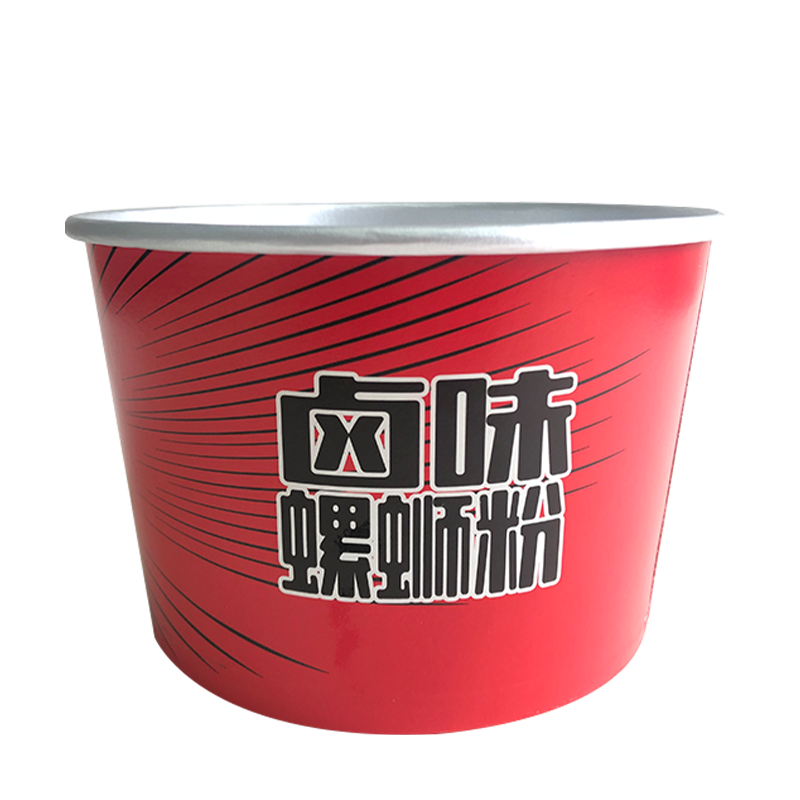

How the Aluminum Foil Layer in Aluminum Foil Paper Bowls Manages Heat Distribution
One of the most practically significant properties of aluminum foil paper bowls — and one that distinguishes them from PE-coated paper bowls — is the thermal behavior of the aluminum foil layer itself. Aluminum has a thermal conductivity of approximately 205 W/m·K, which is orders of magnitude higher than paperboard (roughly 0.05–0.13 W/m·K). This means the foil layer rapidly equalizes temperature across the entire base and wall surface of the bowl, rather than allowing heat to concentrate in localized zones where the food directly contacts the container.
In practical food service terms, this even heat distribution has two important consequences. First, it prevents hot-spot scorching at the bowl base when bowls are used in warming applications — such as holding soups or noodles in a bain-marie or low-temperature oven — because the foil spreads thermal energy laterally across the surface before it can concentrate. Second, when cold foods are placed in aluminum foil paper bowls, the foil equalizes temperature more rapidly between the food and the bowl wall, which means the bowl surface reaches thermal equilibrium with its contents faster than a purely paper-based container. This reduces the duration of the condensation-risk window when chilled bowls are moved to ambient-temperature display environments.
The foil layer also acts as a radiant heat reflector. Aluminum reflects approximately 95% of infrared radiation, meaning that when aluminum foil paper bowls are used in hot-holding applications, a significant portion of heat energy radiating from the food is reflected back inward rather than lost through the bowl wall. This contributes to measurably better heat retention compared to opaque paper-only containers of equivalent wall thickness — an advantage for operators serving soups or stews where maintaining serving temperature during the customer experience matters.
Lamination Structure of Aluminum Foil Paper Bowls: What Lies Between the Layers
Aluminum foil paper bowls are composite structures — not simply a sheet of foil glued to a sheet of paper. The lamination architecture between the paperboard substrate and the aluminum foil layer directly determines adhesion strength, forming performance, barrier integrity, and food safety compliance. Understanding this structure helps buyers ask more informed questions when evaluating supplier qualifications.
The Role of the Adhesive or Extrusion Layer
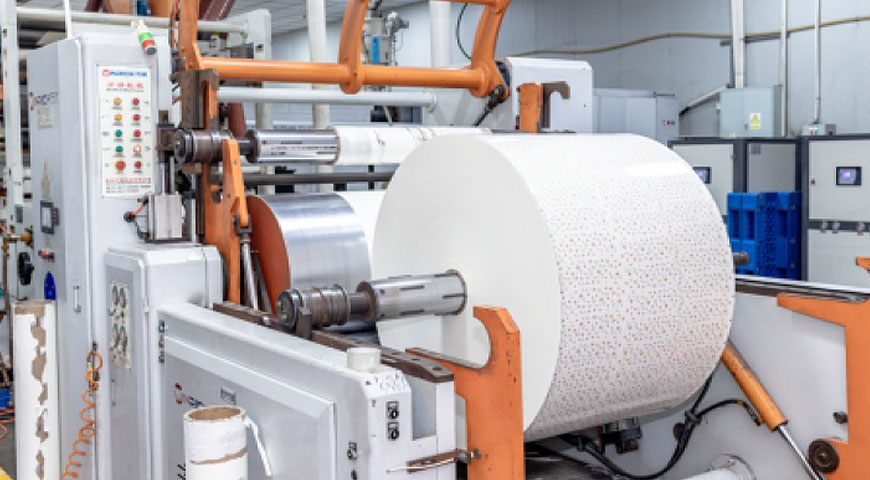
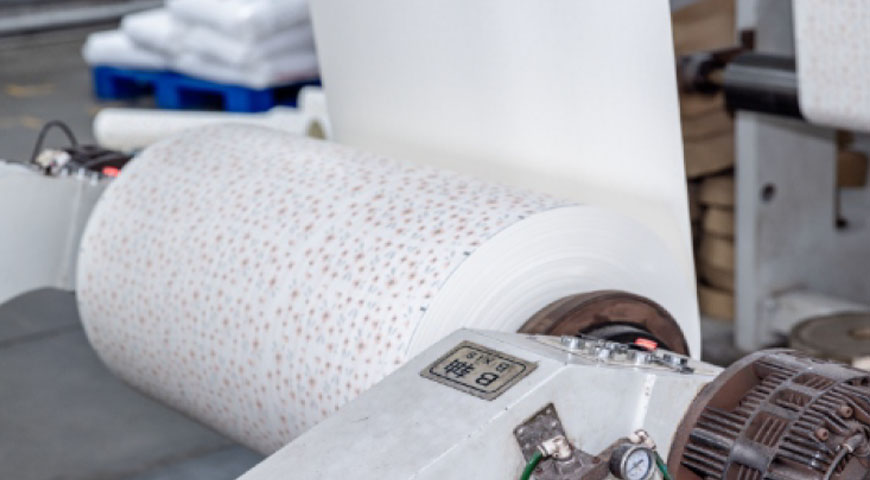
The foil and paperboard are bonded through either a dry lamination adhesive or a PE extrusion layer. In dry lamination, a solvent-based or solvent-free polyurethane adhesive is applied to one surface and the two substrates are pressed together under heat and pressure. In PE extrusion lamination, molten polyethylene is extruded as a thin film between the foil and paperboard as they are brought together on a lamination line. The PE extrusion method — which Hangzhou Renmin Eco-tech applies in our aluminum foil film laminated paper production — offers better bond uniformity and eliminates residual solvent concerns that can arise with adhesive-based lamination in food-contact applications. The PE interlayer also contributes an additional moisture barrier function between the foil and the paper fiber.
Foil Gauge and Its Effect on Forming
Aluminum foil used in aluminum foil paper bowl lamination typically ranges from 6 to 12 microns in thickness. Thinner gauges (6–7 microns) are more flexible and conform more readily to the forming geometry of the bowl, but they are more susceptible to pinhole formation during forming — particularly at crease lines and the base-to-wall junction where the laminate undergoes compound bending. Thicker gauges (9–12 microns) form fewer pinholes but require more forming force and can cause wrinkling or cracking at tight bend radii if the forming tooling is not precisely matched to the material stiffness. The optimal foil gauge for a given bowl size and geometry is determined by forming trials, not by specification alone.
Food-Contact Surface Specification
In aluminum foil paper bowls, the inner food-contact surface is the aluminum foil itself — not a PE or PLA coating applied over the foil. Aluminum in food contact is regulated under food-safe material standards including FDA 21 CFR 182.70 (aluminum compounds) and EU Regulation 10/2011 for metal alloys in food contact. The foil must be produced from food-grade aluminum alloy (typically AA1xxx or AA8xxx series) with controlled additive profiles and surface cleanliness. Rolling oils used in foil production must be fully volatilized or removed before the foil is laminated into food-contact structures. Buyers should request material declarations confirming food-grade foil alloy specification and rolling oil residue compliance.
Aluminum Foil Paper Bowls vs. Pure Aluminum Foil Containers: A Functional Comparison
Aluminum foil paper bowls occupy a distinct market position between pure aluminum foil containers (the shallow trays commonly used in airline catering and ready-meal packaging) and standard PE-coated paper bowls. Understanding where each format excels — and where it falls short — helps foodservice operators select the right container for each application without defaulting to the most familiar option.
| Property | Aluminum Foil Paper Bowls | Pure Aluminum Foil Containers | PE-Coated Paper Bowls |
| Heat resistance | Excellent (up to ~200°C with paper support) | Excellent (up to 220°C+) | Moderate (up to ~90–95°C) |
| Structural rigidity | High (paper provides wall stiffness) | Low to moderate (foil alone is flexible) | High (paper substrate) |
| Printability | Good (outer paper surface) | Limited (foil surface requires special inks) | Excellent (standard flexo/offset) |
| Microwave compatibility | Not compatible | Not compatible | Compatible (no metal layer) |
| Oven compatibility | Yes (conventional oven) | Yes (conventional oven) | No |
| Consumer handling comfort | Good (paper exterior insulates) | Poor (foil conducts heat to hands) | Good to excellent |
The paper exterior of aluminum foil paper bowls is perhaps the most underappreciated advantage in the comparison above. Pure aluminum foil containers conduct heat directly to the consumer's hands, requiring sleeves or secondary holders for hot dishes. The paperboard outer wall of aluminum foil paper bowls provides inherent thermal insulation — not as effective as a double-wall paper construction, but sufficient for most single-serve hot dish applications without additional accessories.
Oven and Hot-Holding Applications for Aluminum Foil Paper Bowls: Temperature Limits and Practical Guidelines
The ability to use aluminum foil paper bowls directly in conventional ovens and hot-holding equipment is a significant operational advantage for catering, ready-meal production, and food retail applications. However, oven compatibility is not unconditional — it depends on the temperature range, duration of exposure, and the specific lamination adhesive or PE interlayer used in the bowl construction.
The limiting factor in oven applications is not the aluminum foil or the paperboard themselves — both can withstand temperatures well above 200°C in isolation — but rather the bonding layer between them. PE extrusion-laminated aluminum foil paper bowls have a PE interlayer with a melting point of approximately 110–130°C depending on the PE grade used. At oven temperatures above this threshold, the PE layer softens and may delaminate, separating the foil from the paperboard. In practice, this means aluminum foil paper bowls produced with a PE interlayer are suitable for oven applications up to approximately 150–170°C for short durations (10–20 minutes) but are not appropriate for extended high-temperature baking. Dry lamination adhesive-bonded constructions, using high-temperature-rated polyurethane adhesives, can extend this ceiling to 190–200°C but require explicit temperature certification from the adhesive supplier.
For hot-holding applications — keeping soups, stews, or noodle dishes at serving temperature in bain-maries, warming drawers, or heated display units — aluminum foil paper bowls perform reliably within the 60–85°C range that characterizes most food-safe hot-holding equipment. The foil layer's heat distribution properties are particularly beneficial here, preventing localized overheating at the bowl base that can scorch or dry out food in direct contact with the container bottom.
- Bain-marie / water bath (60–85°C): Fully compatible for aluminum foil paper bowls with PE or adhesive interlayer. Foil distributes heat evenly; paper exterior remains stable with low ambient humidity contact.
- Conventional oven, short duration (up to 150°C, 15–20 min): Compatible for PE-interlayer constructions when used for reheating pre-cooked foods. Not suitable for raw baking applications requiring sustained high temperatures.
- Conventional oven, extended duration (up to 190°C): Requires high-temperature adhesive lamination specification. Verify with supplier before use; standard PE-interlayer bowls are not rated for this range.
- Microwave oven: Not compatible under any construction specification. The aluminum foil layer will arc in a microwave field regardless of thickness or lamination type.
- Air fryer: Not recommended. The circulating high-temperature air in air fryers can reach 200°C+ and creates uneven thermal stress on the composite bowl structure.