



 English
 中文简体
中文简体 Français
 Español
 عربى
عربى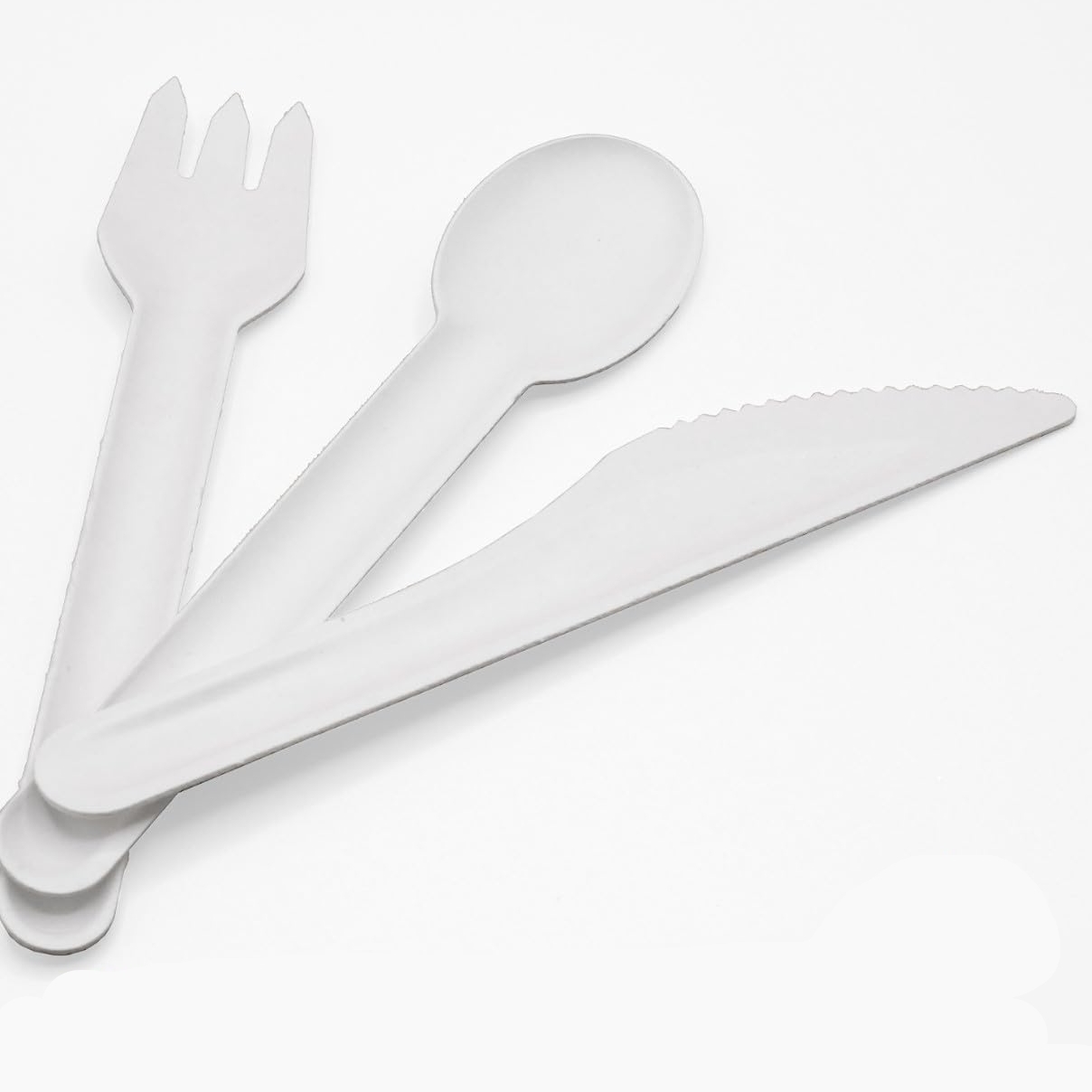




Spoon Typology in Disposable Food Service: Matching Design to Application
Disposable spoons are not a single product — they are a family of form factors, each engineered for a specific service context. Specifying the wrong type leads to user frustration, increased waste, and unnecessary cost. The core categories buyers need to distinguish:
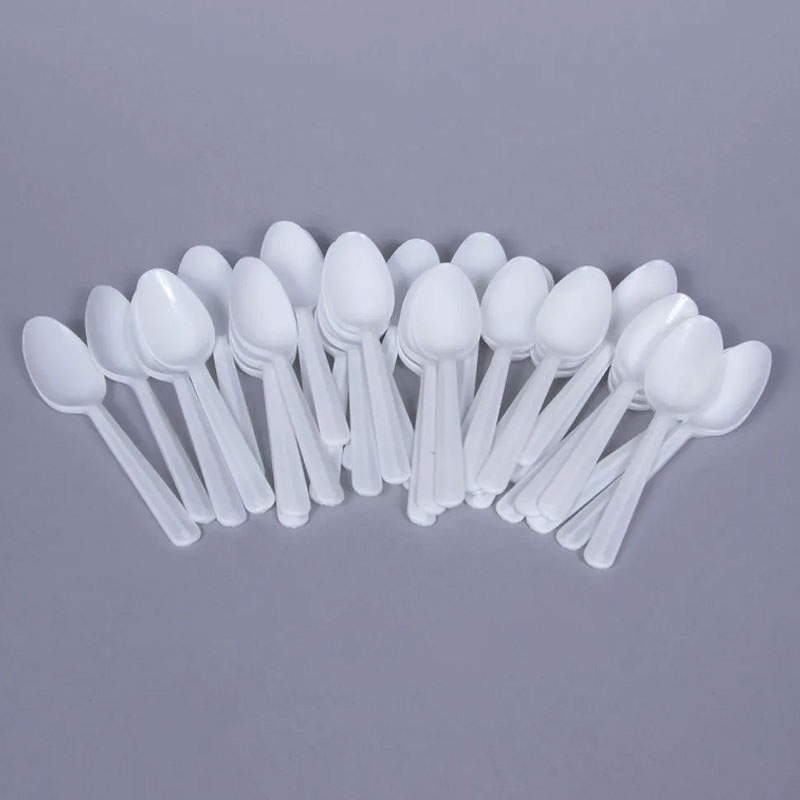
- Teaspoon (approx. 14–16 cm): The most compact format, suited for hot beverages, desserts, yogurt cups, and condiment portioning. The dominant SKU in hotel amenity and airline catering sets.
- Dessert / soup spoon (approx. 17–19 cm): Broader bowl geometry for semi-liquid foods. Standard in QSR soup service, institutional catering, and take-out meal kits.
- Long-handled spoon (approx. 20–23 cm): Designed for tall-cup beverages — bubble tea, iced coffees, smoothies, and sundaes. Bowl depth and handle rigidity are critical specs in this category.
- Spork: A hybrid format combining a shallow spoon bowl with tine notches at the tip. Preferred in contexts where a single utensil must handle both scooping and piercing — common in airline and convenience retail meal packaging.
- Tasting / sampling spoon (approx. 7–10 cm): Miniature format for food retail sampling events, ice cream counters, and condiment tasting stations. High unit volumes, extremely low per-unit cost.
Bowl volume — not handle length — is the defining functional specification for most procurement decisions. Buyers should request bowl capacity in milliliters alongside dimensional drawings when evaluating suppliers. We offer a full range of disposable spoon configurations to cover each of these service scenarios.
Material Performance Under Real Service Conditions
The spoon is the utensil most likely to encounter temperature extremes — hot soups on one end, frozen desserts on the other. Material selection must account for the full thermal range of intended use:
| Material | Max Heat Tolerance | Flex / Rigidity | Compostable | Key Risk |
|---|---|---|---|---|
| PP (Polypropylene) | ~120°C | Very high | No | Regulatory bans in EU/UK markets |
| CPLA | ~85°C | High | Yes (industrial) | Requires industrial composting infrastructure |
| PLA | ~50°C | Medium | Yes (industrial) | Deforms in hot beverages or soups |
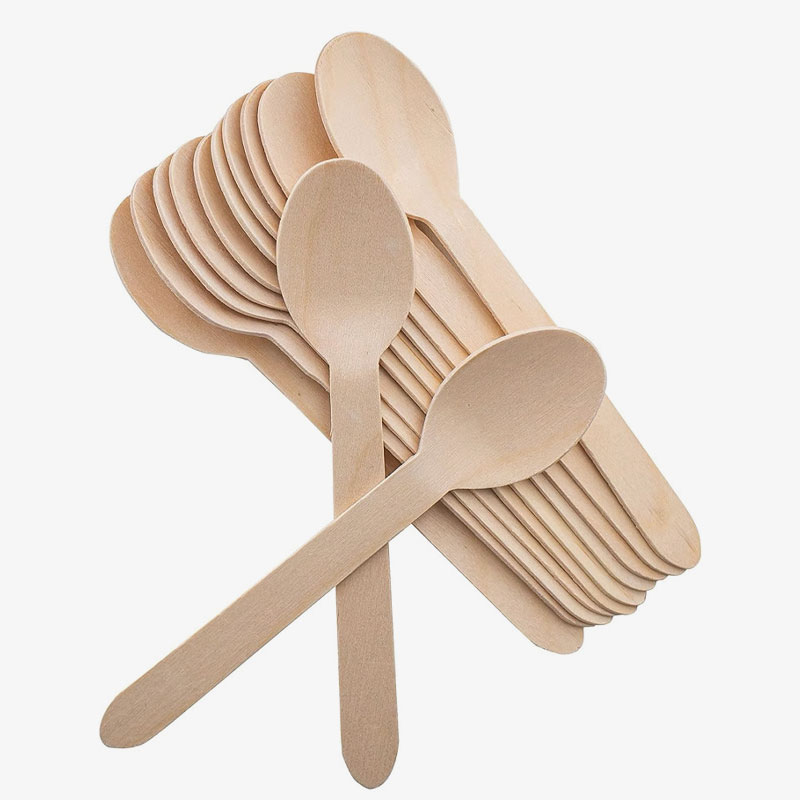
| Birch Wood | ~80°C | Medium | Yes (home) | Absorbs moisture; not suited for liquids held >10 min |
| Bamboo | ~80°C | Medium-high | Yes (home) | Splintering risk if fiber quality is inconsistent |
A critical but frequently overlooked failure mode: PLA spoons placed in hot soup or coffee deform within 60–90 seconds, creating both a usability and a liability issue. Buyers substituting away from PP for compliance reasons should move to CPLA rather than standard PLA for any hot-food application.
How Single-Use Plastics Legislation Is Reshaping Disposable Spoon Supply Chains
Regulatory pressure on plastic cutlery has accelerated faster than most procurement teams anticipated. The market-by-market picture for spoons specifically:
- European Union: The Single-Use Plastics Directive (2019/904) banned plastic spoons across all 27 member states from July 2021. Non-compliant inventory cannot legally be placed on the EU market — a hard stop with no transition grace period remaining.
- United Kingdom: England's ban on supply of plastic cutlery to businesses took effect October 2023; Scotland and Wales implemented equivalent bans earlier. Northern Ireland follows EU rules under the Windsor Framework.
- Canada: Federal Single-Use Plastics Prohibition Regulations banned manufacture and import of plastic cutlery from December 2022, with an export ban phased in through December 2025.
- Australia: State-level bans are near-universal; all major states and territories have prohibited single-use plastic cutlery, with Queensland and New South Wales among the earliest adopters.
- China: Nationwide phase-out of non-degradable disposable plastic cutlery in catering services is underway, with enforcement expanding beyond tier-1 cities through 2025.
For importers, the practical consequence is that maintaining a single compliant SKU across all target markets is no longer feasible — different markets accept different alternative materials. Structuring supplier agreements to support multi-material sourcing from a single partner reduces administrative complexity significantly.
Bowl Geometry and Structural Tolerances: The Specifications That Actually Determine Performance
Most supplier datasheets list overall length and material — and stop there. The specifications that determine whether a spoon performs under real service conditions go considerably deeper:
- Bowl depth (mm): Shallow bowls (3–5 mm) are adequate for semi-solids like yogurt or ice cream; liquid soups require a minimum 7–9 mm bowl depth to prevent spillage between bowl and mouth.
- Wall thickness: For bioplastic and wood spoons, a minimum bowl wall thickness of 1.8–2.2 mm is generally required to prevent cracking under load. Thinner walls reduce material cost but increase field breakage rates — a metric suppliers rarely volunteer.
- Handle flex tolerance: A quality disposable spoon should withstand lateral handle pressure of at least 3–4 N without snapping. This is testable with a simple deflection jig and should be specified in supplier QC documentation.
- Surface finish: For wood and bamboo spoons, surface roughness directly affects splinter risk and user perception. Sanded finishes with Ra ≤ 3.2 µm are considered food-service grade; anything coarser warrants rejection.
- Dimensional tolerance: ±1 mm on overall length and ±0.3 mm on bowl width are reasonable tolerances for a consistently manufacturable disposable spoon. Wider tolerances create problems in automated cutlery dispensers and kit assembly lines.
Buyers sourcing at scale should request a first article inspection (FAI) report covering all critical dimensions before approving bulk production — a practice that is standard in aerospace and electronics procurement but still inconsistently applied in food service disposables. Our disposable spoon products are manufactured to consistent dimensional standards with QC documentation available on request.
Packaging Configuration Strategy for High-Volume Disposable Spoon Buyers
Packaging format decisions have a larger impact on total landed cost and operational efficiency than most buyers account for at the RFQ stage. The three standard configurations carry meaningfully different implications:
- Bulk loose pack: Typically 1,000–2,000 units per carton. Lowest unit cost; highest storage density per cubic meter of container space. Requires dispensing equipment or manual handling at point of use. Contamination risk is managed through sealed inner bags rather than individual wrapping.
- Individually wrapped (paper or OPP sleeve): Adds 20–35% to unit cost. Eliminates contamination concern at the point of service and signals hygiene to the end user — a meaningful factor in premium food service and healthcare environments. Paper sleeve wrapping is increasingly mandated alongside plastic bans in certain markets.
- Cutlery kits (spoon + fork + knife ± napkin): Pre-bundled sets for delivery and take-out operators. Assembly is typically done at the factory for large orders. Key considerations are kit composition flexibility and whether the bundle packaging itself is compliant with destination-market plastic regulations.
For FCL (full container load) importers, optimizing carton dimensions against the internal container footprint can recover 8–12% additional units per shipment — a calculation worth running with your supplier before finalizing packaging specs. This is particularly relevant for long-handle spoon SKUs, where handle length directly constrains carton stacking efficiency.