

-
Products

-
Food Packaging Solution
Mission & PhilosophyRenmin Eco-Tech adheres to the philosophy of green, innovation, and responsibility, placing customers at the center and valuing dedicated professionals. We aim to integrate sustainability and eco-consciousness into every product.
 Green Innovation Leading the Future
 -
Our Story
Why Choose Us?Hangzhou Renmin Eco-tech Co., Ltd, situated in the picturesque city of Hangzhou, Zhejiang, is a leading paper product research, development, and sales company. Established in 2004, we specialize in eco-friendly solutions such as Base Paper Rolls, PE Coated Paper Rolls, Paper Cup Fans, Paper Bowl and Box Fans, Die-cut Sheets, etc, for food packaging, and Aluminum Foil Film laminated paper.
 Coming From China, Marketing To The World.
 -
News
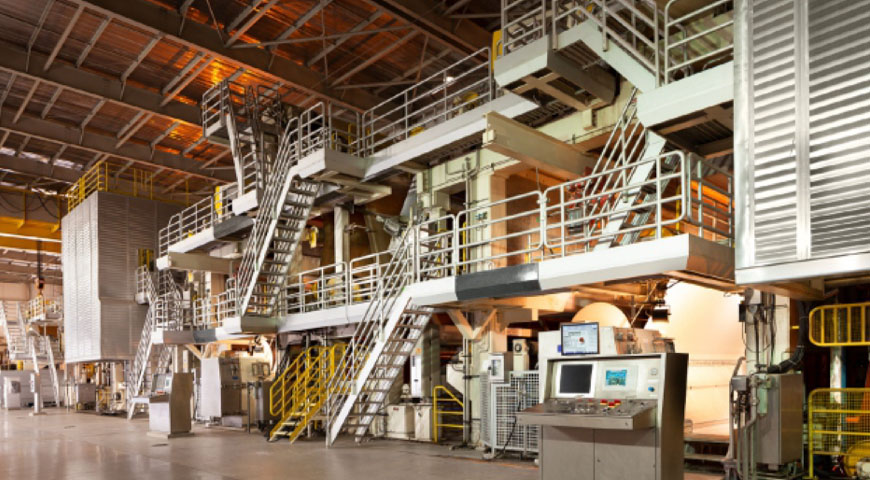 Aluminum Foil Paper Bowls: Structure, Performance & Foodservice Applications
What Aluminum Foil Paper Bowls Actually Are — And Why the Laminate Structure Matters Aluminum foil paper bowls are composite containers built from two bonded materials: a structural paperboard base t...
 English
 中文简体
中文简体 Français
 Español
 عربى
عربىIndustry News
Paper Soup Bowls: The Complete Buyer's Guide
Paper soup bowls have become a cornerstone of modern takeaway and dine-in food service, handling everything from delicate miso broths to heavy beef stews and congee loaded with toppings. Choosing the right bowl is not simply a matter of picking a size — it involves understanding material construction, coating chemistry, structural design, and end-of-life implications. This guide covers the practical knowledge that procurement managers, restaurant operators, and packaging buyers need to make informed decisions about paper soup bowls.
Content
What Makes a Paper Soup Bowl Suitable for Hot Liquid Foods
Not every paper container can serve as a paper soup bowl. Soup service places unique demands on packaging — sustained contact with hot liquid, oil from broths and stews, and the mechanical stress of being carried and handled by a customer. A genuinely functional paper soup bowl must address all three challenges simultaneously.
The foundation is food-grade paperboard, typically in the 250–350 gsm range, which provides the structural rigidity needed to hold shape under the weight and heat of a full serving. This substrate is then lined with either PE (polyethylene) or PLA (polylactic acid) on the food-contact inner surface. The lining creates a continuous barrier that prevents hot liquid from penetrating the paper fiber — the mechanism that would otherwise cause the bowl to soften, deform, and ultimately fail in service. Without this lining, even high-gsm paperboard will lose structural integrity within minutes of contact with hot soup.
Oil resistance is equally critical. Many soups — particularly Asian-style broths, noodle dishes, and stews — carry significant fat content. PE coatings provide excellent grease resistance because polyethylene is chemically nonpolar, repelling lipids that would otherwise wick into the paper fiber. PLA coatings offer comparable oil resistance for most standard applications, though their lower heat tolerance requires careful evaluation for dishes served above 60°C.
PE vs. PLA Lining: Choosing the Right Coating
The choice between PE and PLA lining is one of the most consequential specification decisions for paper soup bowls, with implications for heat resistance, sustainability credentials, and cost. Both are widely used, but they are not interchangeable.
PE-lined paper soup bowls tolerate sustained liquid contact at temperatures up to 90–95°C, making them suitable for the full range of hot soup service applications. PE is derived from petroleum, and PE-laminated paper is not accepted by most municipal paper recycling streams. However, PE-coated bowls remain the dominant commercial specification globally due to their reliability, cost efficiency, and broad temperature tolerance.
PLA-lined paper soup bowls are produced from renewable, bio-based feedstocks — typically corn starch or sugarcane — and can be certified industrially compostable under EN 13432 or ASTM D6400. Their key limitation is heat sensitivity: standard PLA softens at approximately 55–60°C, making it unsuitable for bowls intended to hold boiling broth. Crystallized PLA (CPLA) raises this threshold to around 85°C and is a more viable option for hot applications, though it carries a cost premium of 15–30% over standard PLA and PE alternatives.
| Lining Type | Heat Tolerance | Compostable | Relative Cost |
| PE | Up to ~95°C | No | Lowest |
| Standard PLA | Up to ~55–60°C | Industrially | Moderate |
| CPLA | Up to ~85°C | Industrially | Higher |
Structural Design: Walls, Rims, and Stability
Beyond the lining material, the physical construction of a paper soup bowl determines whether it performs reliably in demanding service conditions. Three structural elements deserve particular attention: wall thickness, rim design, and base construction.
Thick, rigid walls are essential for soup bowls that will be filled with heavy dishes like beef noodles, pork stew, or congee with toppings. Wall rigidity is a function of both paperboard basis weight and the integrity of the lining bond — a delaminating liner weakens the composite wall significantly. For bowls in the 24–32 oz range, a minimum paperboard weight of 300 gsm is generally recommended to maintain shape under full load.
The rolled rim is one of the most functionally important features of a well-engineered paper soup bowl. A tightly and evenly rolled rim distributes stress around the circumference of the bowl, preventing the sidewall from flaring outward when the bowl is full. It also provides a secure seating surface for lids — critical in takeaway and delivery applications where spill prevention is paramount. Unevenly rolled or loosely formed rims are a common quality defect in lower-grade bowls and create inconsistent lid fitment that leads to in-transit spills.
The base-to-wall junction — where the flat bottom disc meets the conical or cylindrical sidewall — is the most mechanically stressed area of a paper soup bowl. This joint must be heat-sealed under precise temperature and pressure to create a continuous, leak-proof bond. Inadequate sealing at this junction is the most common cause of bowl failure in use, manifesting as liquid seeping through the base seam rather than through the wall itself.
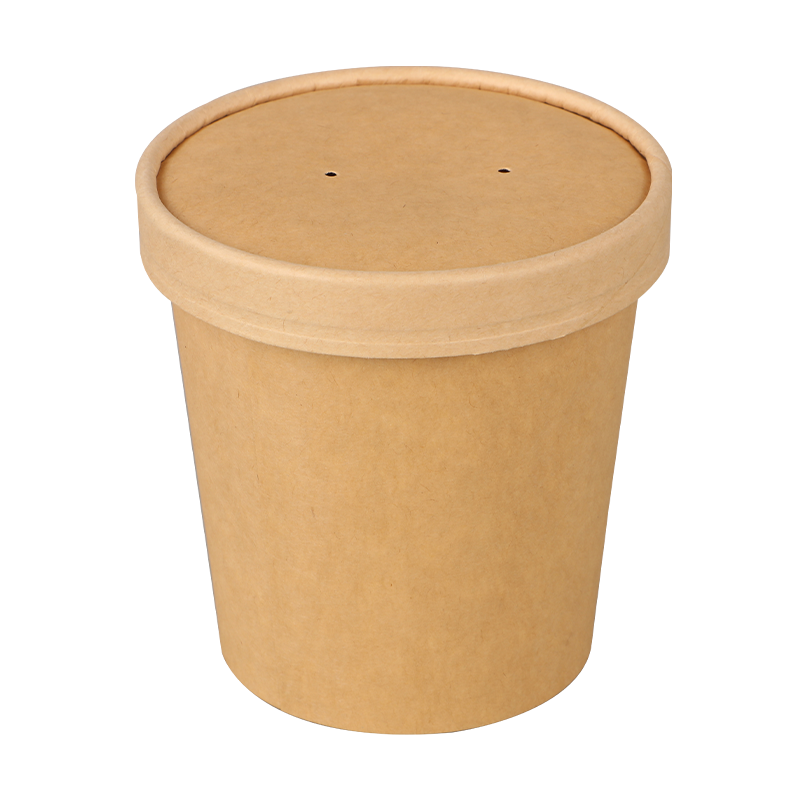
Sizing Paper Soup Bowls to Your Menu
Selecting the right bowl size for each menu application avoids the twin problems of spillage from underfilling and poor visual presentation from overfilling. The following reference framework covers the most common bowl capacities used in foodservice:
- 8–12 oz (240–355 ml): Side soups, appetizer portions, children's congee, and accompaniment dishes. Compact footprint suits self-serve stations and café counters.
- 16 oz (473 ml): Standard single-serve soup portions — tomato soup, miso broth, pho base, and similar café and fast-casual offerings.
- 24 oz (710 ml): Large noodle bowls, ramen, udon, and combination dishes with significant solid content alongside broth.
- 32 oz (946 ml) and above: Catering and family-share formats, bulk delivery, or hot pot base applications requiring large liquid volumes.
Operators should also factor in the fill-to-capacity ratio: soup bowls used for broth-heavy dishes should be filled to no more than 80–85% of rated capacity to allow safe handling. This means the practical usable volume is lower than the nominal bowl specification — an important consideration when matching bowl size to portion weight standards.
Custom Printing for Brand Identity
Custom printing on paper soup bowls transforms functional packaging into a brand communication channel. A printed bowl travels with the food to the customer's location, providing ongoing brand exposure in delivery and takeaway contexts that extends well beyond the point of sale.
Printing is applied to the flat fan (die-cut blank) before the bowl is formed. This flat-surface printing process allows high-quality flexographic work with consistent color registration across production runs. Artwork should be prepared using Pantone spot color references rather than RGB or CMYK screen values to ensure accurate color matching across batches. All inks must be food-grade and water-based, complying with FDA 21 CFR or EU food contact material regulations applicable to the target market.
Minimum order quantities for custom-printed paper soup bowls typically start at 50,000 units per SKU for multi-color designs, with lead times of 4–8 weeks from artwork approval. Operators planning seasonal promotions or new outlet launches should build these timelines into project planning to avoid compromising on artwork quality or specification.
Eco-Friendly Options and Sustainability Certifications
For operators with sustainability commitments or operating in markets with active single-use packaging regulations, eco-friendly paper soup bowl specifications are increasingly available at commercial scale. The most credible sustainability credentials to look for include:
- FSC or PEFC certification: Verifies that the virgin fiber in the paperboard originates from responsibly managed forests. Addresses raw material sourcing but does not indicate compostability of the finished bowl.
- EN 13432 or ASTM D6400: Certifies industrial compostability of the finished product, including both the paper and the PLA lining. Must be issued for the complete assembled bowl, not just the lining material in isolation.
- BPI Certification: North American industrial compostability standard increasingly required by composting facility operators as a condition for accepting food-service packaging.
At Hangzhou Renmin Eco-tech, we supply both PE-coated and PLA-coated paper bowl fans to converters, enabling our downstream customers to produce bowls meeting their specific sustainability and performance requirements. Whether the priority is lowest cost, highest heat resistance, or certified compostability, the right paper soup bowl specification exists — the key is matching the material and construction to the actual demands of the application rather than defaulting to the most familiar option.
Your email address will not be published. Required fields are marked *
We're Here To Help.

Copyright © HANGZHOU RENMIN ECO-TECH CO.,LTD. All Rights Reserved
Eco Friendly Food Packaging Solution Food Paper Packaging Manufacturer
