

 English
 中文简体
中文简体 Français
 Español
 عربى
عربى

PE vs. PLA Lining: Choosing the Right Coating for Paper Soup Bowls
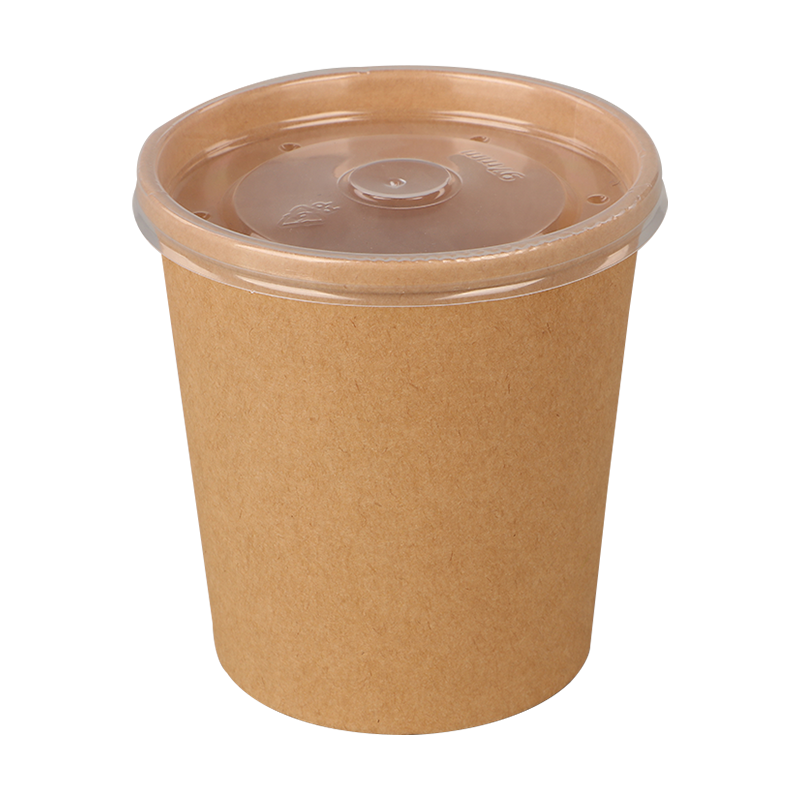
The inner lining of a paper soup bowl is one of the most critical factors determining its performance with hot liquids and greasy foods. Two dominant options exist in the market: PE (polyethylene) and PLA (polylactic acid) coatings. Understanding the differences goes well beyond environmental claims and directly affects how a bowl behaves under real service conditions.
PE-Coated Paper Soup Bowls
PE lining is a petroleum-derived plastic film laminated onto the inner surface of the paper substrate. It creates an exceptionally tight moisture barrier and tolerates temperatures up to approximately 90–95°C without delaminating. This makes it highly reliable for serving congee, ramen broth, or hot stews over extended holding times. PE-coated bowls also offer superior grease resistance because the film is continuous with virtually no micro-pores. The trade-off is end-of-life disposal: PE-laminated paper is not accepted by most paper recycling streams and typically ends up in landfill.
PLA-Coated Paper Soup Bowls
PLA is derived from renewable starch sources such as corn or sugarcane. When certified compostable (e.g., EN 13432 or ASTM D6400), PLA-lined bowls can be processed in industrial composting facilities, typically breaking down within 90–180 days under controlled heat and humidity. However, PLA softens at around 55–60°C, which means it is less suited for prolonged contact with boiling soups. For takeaway operations where the food cools slightly during delivery, or for venues using lids that reduce steam pressure, PLA performs adequately. At Hangzhou Renmin Eco-tech, we supply both PE-coated and PLA-coated paper bowl fans so converters can match the right solution to each application.
| Property | PE Coating | PLA Coating |
| Heat tolerance | Up to ~95°C | Up to ~55–60°C |
| Grease resistance | Excellent | Good |
| Compostability | Not compostable | Industrially compostable |
| Raw material source | Petroleum | Corn / sugarcane |
| Cost | Lower | 15–30% higher |
How Basis Weight and Wall Thickness Affect Paper Soup Bowl Rigidity
A paper soup bowl must hold its shape when filled with dense, heavy dishes — think thick beef stew, pulled pork noodles, or congee loaded with toppings. The structural integrity of the bowl comes primarily from two parameters: the basis weight of the base paper and the physical wall construction of the finished bowl.
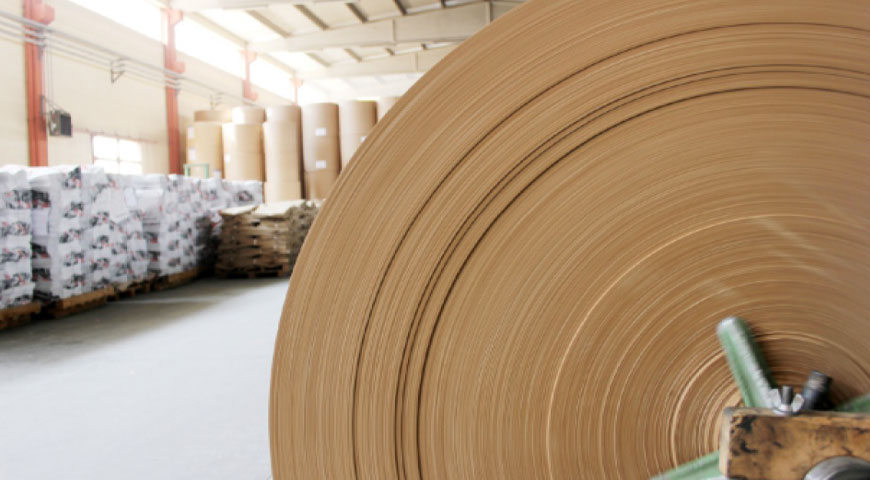
Basis weight is expressed in grams per square meter (gsm). For soup bowls, base paper in the range of 200–350 gsm is typical. Lower basis weights (200–250 gsm) are adequate for smaller bowls (8–12 oz) holding lighter soups. Larger bowls (24–32 oz) designed for noodle dishes or hearty stews generally require 280–350 gsm stock to prevent the bowl from deforming or tilting when a customer picks it up by the rim. At Hangzhou Renmin Eco-tech, our base paper rolls are produced to tight gsm tolerances, giving downstream converters consistent wall performance across production runs.
Beyond flat basis weight, the wall construction method matters significantly. Double-wall paper soup bowls incorporate an outer corrugated or plain sleeve bonded to the inner cup wall, creating an air gap that simultaneously improves rigidity and acts as thermal insulation — reducing heat transfer to the customer's hand by as much as 30% compared to single-wall designs. Single-wall bowls remain dominant for cost-sensitive applications, but operators serving very hot dishes or targeting a premium experience increasingly specify double-wall constructions.
The rolled rim at the top of the bowl is another often-overlooked structural element. A tightly and evenly rolled rim distributes stress around the circumference of the bowl, preventing the sidewall from flaring outward under load. Irregular or loose rim rolling — a common defect in lower-quality production — creates weak points that fail under normal use.
Custom Printing on Paper Soup Bowls: Techniques and Practical Limits
Custom-printed paper soup bowls serve a dual purpose: they communicate brand identity at the point of consumption and differentiate a foodservice operator in a competitive delivery market. However, printing on curved, coated paper surfaces introduces technical constraints that brand owners should understand before committing to artwork.
Printing at the Fan Stage vs. the Formed Bowl Stage
Most high-quality printing is applied to the flat paper bowl fan (also called a blank or die-cut sheet) before the fan is formed into a three-dimensional bowl. Printing on a flat surface allows for flexographic or offset processes with tight registration and consistent ink laydown. After forming, the fan wraps into a truncated cone shape, so artwork must be designed with distortion compensation — elements that appear slightly elongated on the flat fan will look proportional after forming. Attempting to print directly on a pre-formed bowl is far more limited and typically restricted to simple one-color stamping.
Ink and Coating Compatibility
Food-grade, water-based inks are mandatory for any surface that may come into indirect or direct contact with food. Solvent-based inks are prohibited under most food safety frameworks including FDA 21 CFR and EU Regulation 10/2011. The outer PE or PLA coating on the paper also affects ink adhesion — printing is applied to the uncoated outer surface of the fan, while the food-contact inner surface remains unprinted. Brands requesting full-wrap designs should confirm that the ink system used is certified food-safe and that there is adequate space near the seam area to account for overlap joining during forming.
Minimum Order Quantities and Lead Times
Custom printing requires the preparation of printing plates or cylinders, which drives a minimum order quantity (MOQ) threshold to amortize tooling costs. Typical MOQs for custom-printed paper soup bowl fans range from 50,000 to 100,000 pieces per SKU depending on the number of colors and the printing process. Rush orders that bypass standard plate preparation timelines are generally not feasible for multi-color designs. Operators planning seasonal promotions or new store launches should factor in 4–8 weeks of lead time from artwork approval to delivery.
Temperature and Leak Performance: What the Standards Actually Measure
When suppliers claim that paper soup bowls are "leak-proof" or "heat resistant," it is worth understanding what those terms mean in a measurable, testable sense rather than as marketing language. Several industry and regulatory standards provide specific test protocols.
Leak resistance in paper soup bowls is typically evaluated using a liquid penetration test based on TAPPI T 441 or similar methodologies. A bowl is filled with water or a specified liquid at a defined temperature and held for a set duration — commonly 30 minutes at 80°C — after which the outer surface is inspected for moisture penetration, staining, or structural failure. A bowl that passes this test demonstrates that its PE or PLA lining remains intact and continuous under realistic hot-food service conditions.
Grease resistance is separately evaluated using the kit test (TAPPI T 559), which applies solutions of varying surface tensions to the paper surface. A rating of KIT 5 or above is generally considered adequate for oily soups or stews, while KIT 8–12 is specified for particularly fatty or oily dishes. Importantly, grease resistance is a function of both the coating and the base paper — a low-gsm base paper with micro-fissures can allow grease migration even through an otherwise adequate coating.
Heat resistance is not a single number but a combination of the deformation temperature of the lining material and the structural integrity of the paper under sustained heat and humidity. A bowl may maintain its shape at 90°C for 5 minutes but begin to soften and warp if held at 75°C for 45 minutes — a realistic scenario in delivery applications using insulated bags. Buyers specifying paper soup bowls for delivery-heavy operations should request extended soak tests rather than relying solely on instantaneous temperature ratings.
Paper Soup Bowl Sizing: Matching Capacity to Menu Application
Selecting the correct bowl size is a more nuanced decision than it might appear. An undersized bowl creates spill risk and a poor eating experience; an oversized bowl increases material cost and can make portion sizes appear smaller than they are. The following reference framework is used by foodservice operators when mapping bowl capacity to menu items.
- 8–12 oz (240–355 ml): Side soups, appetizer portions, congee accompaniments, or dessert soups. The smaller footprint is also well suited for self-serve stations or children's meals.
- 16 oz (473 ml): Standard single-serve soup portions in fast casual and café settings. This is the most common size for tomato soup, pho broth, or miso-based dishes.
- 24 oz (710 ml): Large noodle bowls, ramen, or combination dishes with significant solid ingredients alongside broth. The extra depth accommodates noodle portions without overflow risk.
- 32 oz (946 ml) and above: Family-share or catering applications, bulk delivery, or dishes such as hot pot bases where a large volume of liquid is required. Structural requirements for these sizes are more demanding, typically requiring 300+ gsm base paper.
Rim diameter also affects lid compatibility, which is a critical operational consideration for delivery and takeaway. Standard lid diameters (90 mm, 98 mm, 115 mm) are widely stocked by lid manufacturers, but non-standard bowl dimensions may require custom or proprietary lids — adding cost and procurement complexity. Specifying paper soup bowls within standard dimension families is generally the most practical approach for operators who source components from multiple suppliers.
Sustainability Certifications Relevant to Paper Soup Bowl Procurement
As sustainability becomes a procurement criterion for foodservice operators — driven by both consumer expectations and regulatory requirements in markets such as the EU and California — understanding what certifications are meaningful versus superficial becomes important. Not all green claims on packaging carry equivalent weight.
FSC and PEFC Certification
The Forest Stewardship Council (FSC) and Programme for the Endorsement of Forest Certification (PEFC) certify that the virgin fiber used in base paper originates from responsibly managed forests. These certifications address the upstream raw material sourcing question but say nothing about the recyclability or compostability of the finished product. A bowl made from FSC-certified paper with a PE lining is still not recyclable in most municipal systems.
EN 13432 and ASTM D6400 (Compostability)
These standards certify that a finished product will disintegrate and biodegrade within defined time limits under industrial composting conditions. EN 13432 is the European standard; ASTM D6400 applies in North America. For PLA-lined paper soup bowls to carry these certifications, both the paper component and the PLA lining must meet the criteria — a certificate issued only to the lining material does not automatically certify the assembled bowl. Buyers should request certificates that specifically cover the finished bowl SKU, not just the material inputs.
BPI Certification
The Biodegradable Products Institute (BPI) operates a North American certification scheme that verifies industrial compostability of finished food packaging products. BPI certification is increasingly required by composting facility operators as a condition for accepting food-service packaging, making it a practical requirement rather than merely a marketing credential for operators targeting composting disposal pathways.
We recommend that buyers request full certification documentation — including the certificate number, issuing body, scope of certification, and expiry date — rather than relying on logo use alone, as self-declared eco claims without third-party backing are common in this product category.