





 English
 中文简体
中文简体 Français
 Español
 عربى
عربى


How Coating Weight Affects Leak Resistance in Paper Noodle Bowls
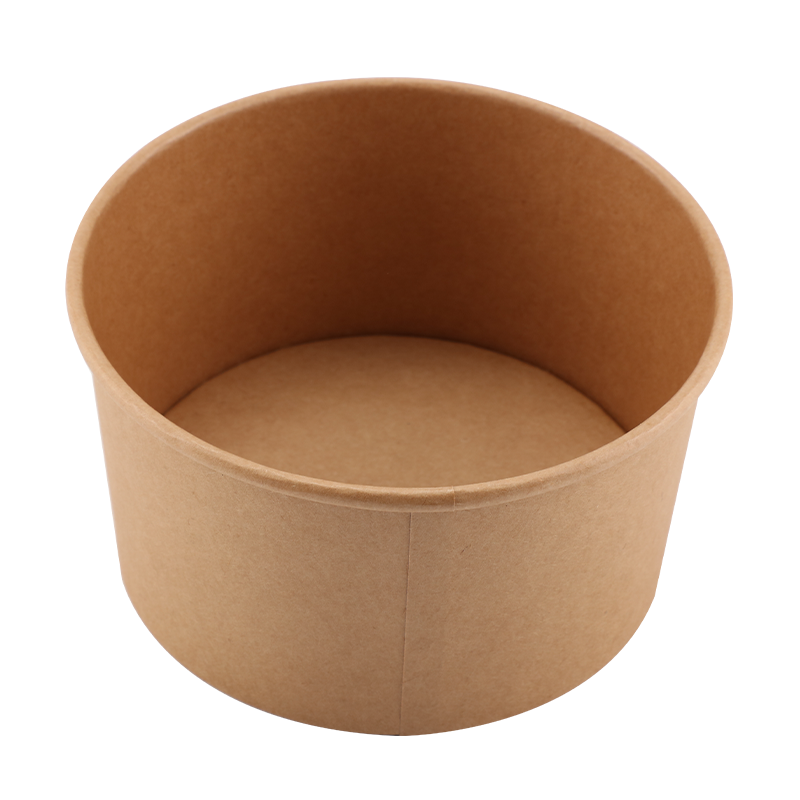
When evaluating the leak resistance of paper noodle bowls, most buyers focus on whether a bowl is single- or double-coated — but the actual coating weight applied per square meter is an equally important variable that often receives less attention. Coating weight, expressed in grams per square meter (gsm), determines the film thickness and continuity of the barrier layer, and small differences in this figure have measurable consequences in real service conditions.
A PE coating applied at 12–15 gsm creates a thin film that is adequate for brief contact with hot, low-fat liquids but is more susceptible to micro-gap formation during the bowl-forming process, particularly at crease lines and the base-to-wall junction where the paperboard undergoes significant mechanical deformation. Coatings applied at 18–22 gsm provide greater film continuity through these stress zones, maintaining barrier integrity even after the mechanical stresses of forming. For paper noodle bowls intended to hold broth-heavy dishes such as ramen, laksa, or beef noodle soup — where the liquid is in sustained contact with the bowl base for 20 minutes or more — specifying a minimum coating weight of 18 gsm on the food-contact surface is a more robust requirement than simply specifying "PE-coated."
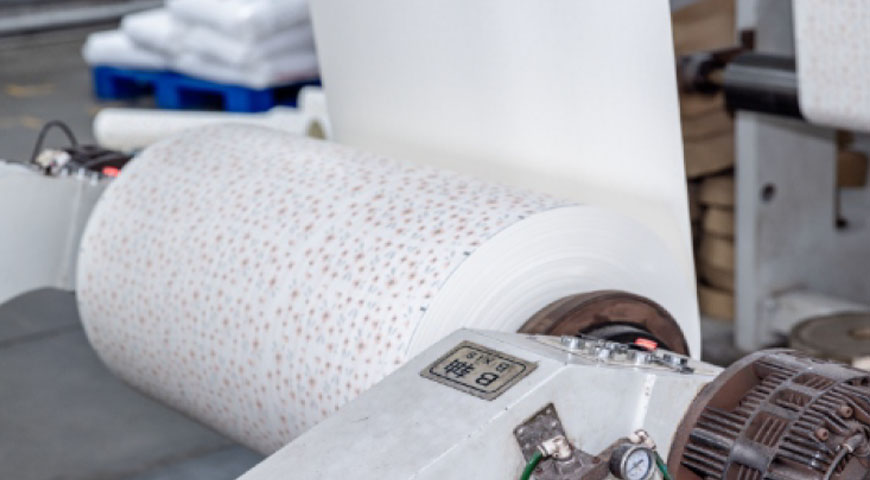
Double PE coating compounds this effect by applying a film to both inner and outer surfaces. The outer coating does not directly contact food but serves to prevent moisture absorption from external sources — condensation from a cold prep surface, ambient humidity in storage, or steam from adjacent hot dishes in a delivery bag. At Hangzhou Renmin Eco-tech, our PE coated paper rolls are produced to controlled coating weight tolerances, providing converters with a consistent baseline for predictable bowl performance across high-volume production runs.
Temperature Gradient Management: Why Paper Noodle Bowls Fail Under Prolonged Heat
Paper noodle bowls are rated for heat resistance, but the failure mechanisms associated with prolonged high-temperature exposure are more nuanced than a simple temperature ceiling. Most PE-lined paper noodle bowls can withstand short-term contact with liquids at 85–95°C without visible degradation, but sustained exposure at lower temperatures — particularly in enclosed delivery environments — creates a different and often more damaging stress condition.
When a sealed paper noodle bowl is placed in an insulated delivery bag, the internal temperature does not drop linearly. Instead, trapped steam from hot broth creates a pressurized, high-humidity microenvironment inside the bowl. The combination of sustained heat and elevated humidity softens the paperboard fiber, reducing its compressive and tensile strength even before any liquid penetration occurs. This is why bowls that perform acceptably for dine-in service can deform or collapse under delivery conditions — the issue is not peak temperature but sustained heat-plus-humidity exposure over 30–60 minutes.
Mitigating this requires addressing both the material specification and the packaging configuration. On the material side, higher basis weight paperboard (300–320 gsm for standard noodle bowl sizes) retains more structural reserve after fiber softening compared to lower-weight substrates. On the configuration side, allowing a brief venting window — removing the bowl lid for 30–60 seconds before resealing — releases accumulated steam pressure and significantly reduces the rate of subsequent fiber softening during transit. Some operators use micro-perforated lids specifically to manage this steam pressure buildup without requiring a manual venting step.
Paper Noodle Bowl Fan Dimensions: How Forming Geometry Determines Finished Bowl Shape
The physical dimensions of a paper noodle bowl — its rim diameter, base diameter, and wall height — are not independently specified by the bowl manufacturer. They are the geometric outcome of the fan (blank) dimensions used to form the bowl, and understanding this relationship helps buyers communicate size requirements accurately and avoid costly mismatches between specification and finished product.
A paper noodle bowl is formed from a fan-shaped blank — a sector of an annulus (a ring cut between two concentric circles). The inner radius of the fan determines the base diameter of the finished bowl, and the outer radius determines the rim diameter. The arc angle of the fan determines how much the fan wraps when formed — a wider arc produces a shallower cone (lower wall height relative to diameter), while a narrower arc produces a deeper, more cylindrical profile. These geometric relationships mean that bowl shape and capacity cannot be changed independently; modifying one dimension necessarily affects the others.
This geometry also explains why wall height and rim diameter are not freely adjustable in the way that, for example, the dimensions of an injection-molded container might be. A converter who receives bowl fans from a paper supplier — such as the paper bowl and box fans we produce at Hangzhou Renmin Eco-tech — works within the dimensional constraints of the fan tooling. Custom fan tooling is required to produce bowls outside standard dimension families, which carries tooling investment costs and lead time implications that buyers should factor into new product development timelines.
| Fan Parameter | Effect on Finished Bowl | Practical Implication |
| Inner radius | Sets base diameter | Affects bowl stability on flat surfaces |
| Outer radius | Sets rim diameter | Must match lid tooling diameter |
| Arc angle (wider) | Shallower bowl profile | Better for salads and dry noodle dishes |
| Arc angle (narrower) | Deeper, taller bowl profile | Better for broth-heavy soups and noodles |
Food Safety Compliance for Paper Noodle Bowls: Key Regulatory Frameworks
Paper noodle bowls are food-contact materials, and the regulatory frameworks governing their composition and performance are substantive. Buyers sourcing bowls for different geographic markets need to understand the primary standards that apply — not just to protect themselves from liability, but to ensure that the migration of substances from packaging into food remains within safe limits.
EU Framework Regulation 1935/2004 and Specific Measures
In the European Union, all food-contact materials — including PE-coated paper noodle bowls — must comply with Framework Regulation (EC) No 1935/2004, which establishes the general principle that packaging must not transfer constituents to food in quantities that could endanger human health or cause unacceptable changes in food composition. For the PE coating specifically, EU Regulation 10/2011 on plastic food-contact materials establishes a positive list of authorized monomers and additives, migration limits for specific substances, and an overall migration limit of 10 mg per dm² of food-contact surface. Compliance documentation — typically a Declaration of Compliance (DoC) supported by migration test data — must be available across the supply chain.
FDA 21 CFR for the US Market
In the United States, food-contact paper and paperboard are regulated under FDA 21 CFR Parts 176 (indirect food additives: paper and paperboard components) and 177 (indirect food additives: polymers, covering the PE coating). Substances used in the manufacture of food-contact paper must either be listed in these regulations or be the subject of a Food Contact Notification (FCN) or Generally Recognized as Safe (GRAS) determination. PE coatings produced from regulated polyethylene resins with appropriate additive profiles are generally compliant, but suppliers must maintain traceability documentation linking their raw materials to the relevant CFR listings.
GB Standards for the Chinese Market
For paper noodle bowls produced and sold within China, the primary food safety standard is GB 4806.8-2016 (Food Safety National Standard — Food Contact Paper and Paperboard Materials and Products). This standard specifies requirements for sensory properties, migration limits (including total migration, potassium permanganate consumption, and heavy metals), and restrictions on prohibited substances. Products sold through domestic foodservice channels in China are expected to carry compliance documentation against GB 4806.8-2016, and increasingly, buyers at major foodservice chains conduct supplier audits to verify this compliance proactively rather than relying on self-declaration alone.