

-
Products

-
Food Packaging Solution
Mission & PhilosophyRenmin Eco-Tech adheres to the philosophy of green, innovation, and responsibility, placing customers at the center and valuing dedicated professionals. We aim to integrate sustainability and eco-consciousness into every product.
 Green Innovation Leading the Future
 -
Our Story
Why Choose Us?Hangzhou Renmin Eco-tech Co., Ltd, situated in the picturesque city of Hangzhou, Zhejiang, is a leading paper product research, development, and sales company. Established in 2004, we specialize in eco-friendly solutions such as Base Paper Rolls, PE Coated Paper Rolls, Paper Cup Fans, Paper Bowl and Box Fans, Die-cut Sheets, etc, for food packaging, and Aluminum Foil Film laminated paper.
 Coming From China, Marketing To The World.
 -
News
 Aluminum Foil Paper Bowls: Structure, Performance & Foodservice Applications
What Aluminum Foil Paper Bowls Actually Are — And Why the Laminate Structure Matters Aluminum foil paper bowls are composite containers built from two bonded materials: a structural paperboard base t...
 English
 中文简体
中文简体 Français
 Español
 عربى
عربىIndustry News
Bamboo Coffee Paper Cups: Sustainability, Performance, and Sourcing Guide
Content
- 1 What Are Bamboo Coffee Paper Cups
- 2 Why Bamboo Outperforms Wood Pulp as a Cup Raw Material
- 3 Compostability, Certifications, and End-of-Life Considerations
- 4 Cup Construction: Single Wall, Double Wall, and Embossed Formats
- 5 Specifying Bamboo Coffee Paper Cups for Commercial Use
- 6 Bamboo Cups as a Brand Sustainability Signal
- 7 Conclusion
What Are Bamboo Coffee Paper Cups
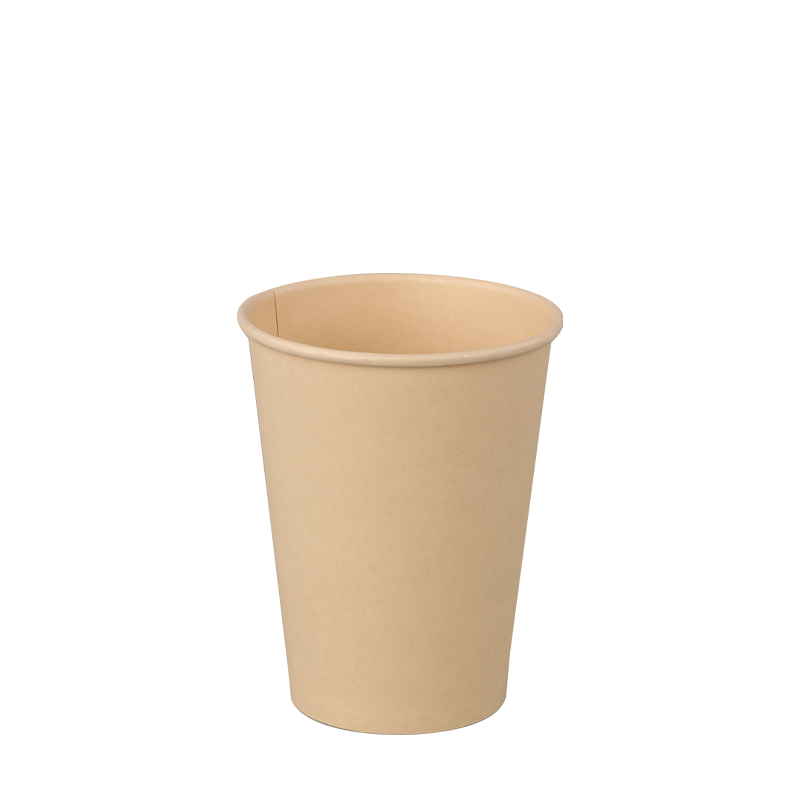
Bamboo coffee paper cups are disposable hot-drink cups manufactured using paper derived from bamboo fiber rather than conventional wood pulp. The bamboo fiber is processed into a food-grade paperboard, formed into cup blanks, and lined with a barrier material — typically plant-based PLA (polylactic acid) or PE — to prevent liquid penetration and maintain structural integrity when holding hot beverages. The result is a cup that performs identically to a standard paper coffee cup in daily use while carrying a fundamentally different environmental footprint from raw material to end of life.
For coffee shops, quick-service restaurants, catering operations, and foodservice distributors, bamboo coffee paper cups represent a practical upgrade to conventional disposable cups — one that supports sustainability commitments without requiring any change to existing cup dispensers, lids, or service workflows. They are available in the standard sizes used across the foodservice industry, from 8 oz to 20 oz and beyond, and are compatible with the 80mm and 90mm lid diameters used on conventional paper cup platforms.
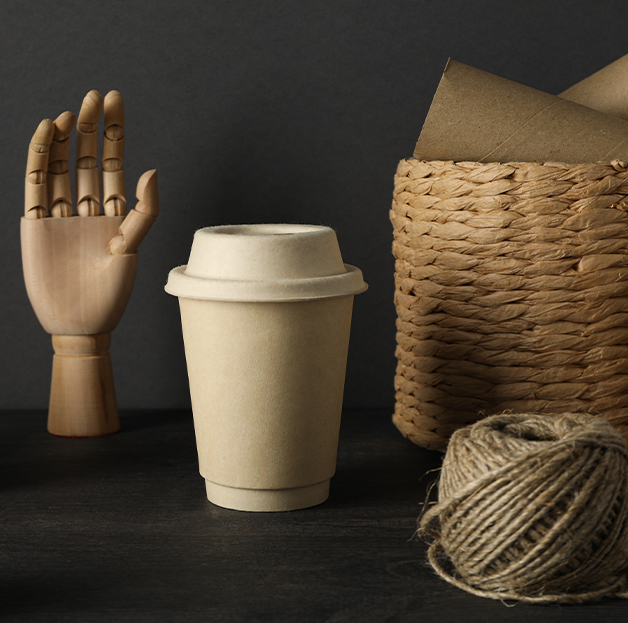
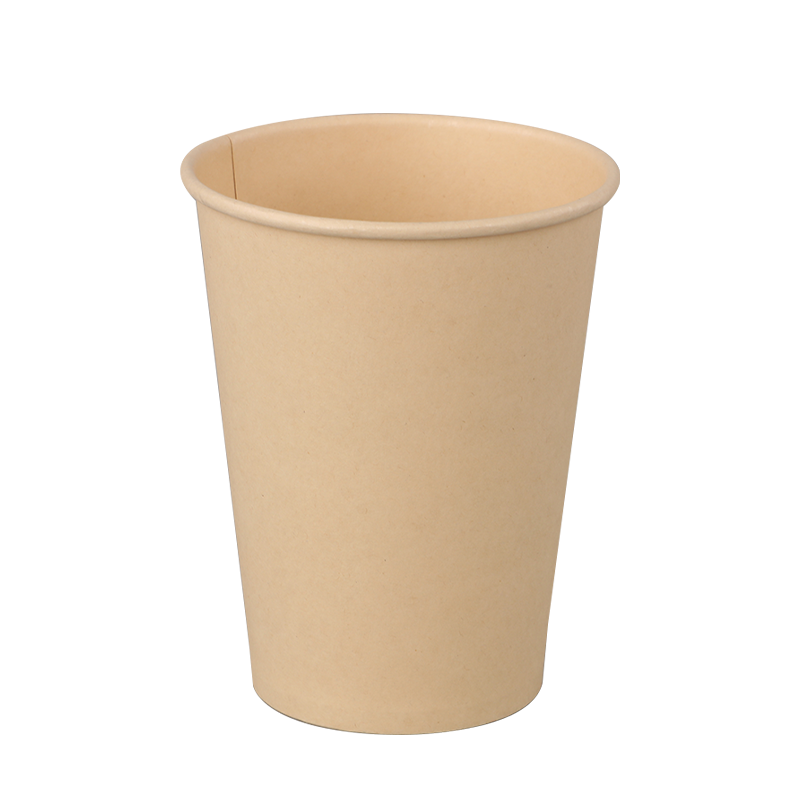
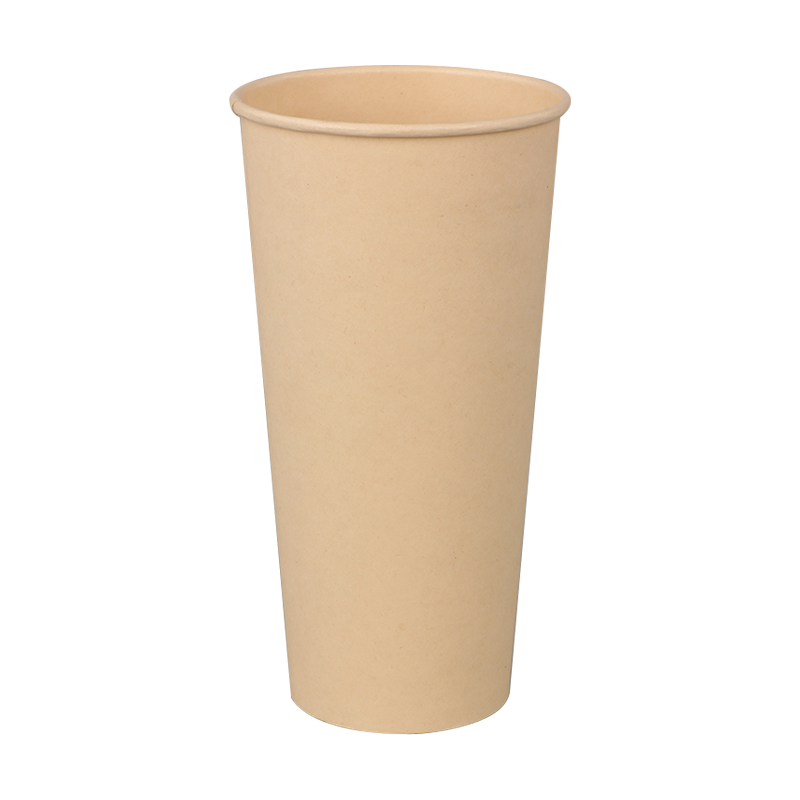
The natural beige color of unbleached bamboo fiber gives these cups a distinctive, premium appearance that has become strongly associated with eco-conscious brands in retail coffee environments. Unlike cups that are bleached white or printed to simulate a natural aesthetic, bamboo cups achieve their color organically — the absence of bleaching is both a design feature and a quality signal that resonates with environmentally aware consumers.
Why Bamboo Outperforms Wood Pulp as a Cup Raw Material
The environmental case for bamboo fiber as a paper raw material rests on several measurable advantages over conventional wood pulp that are directly relevant to the sustainability profile of finished cups.
Regeneration speed is the most cited advantage. Commercial timber species used in paper production typically require 30 to 50 years to reach harvest maturity. Bamboo — technically a grass, not a tree — reaches harvestable size in three to five years. Certain species grow at rates exceeding one meter per day. Critically, bamboo does not die when cut: the root system (rhizome) remains intact and regenerates new shoots without replanting, eliminating the soil disruption and replanting costs associated with conventional timber cycles.
Land use efficiency follows directly from regeneration speed. A given area of bamboo plantation produces substantially more fiber per hectare per year than the equivalent area of softwood or hardwood plantation, reducing the land footprint required to supply equivalent paperboard volumes.
Carbon sequestration is a further measurable benefit. Bamboo releases approximately 35% more oxygen into the atmosphere than an equivalent volume of trees, and its rapid growth cycle means it actively absorbs carbon dioxide at a higher rate per unit area during the growth phase. For brands building supply chain sustainability narratives, the bamboo origin story is substantively different from FSC-certified wood pulp — and increasingly, that distinction is meaningful to end consumers and procurement teams alike.
Input requirements complete the picture. Bamboo cultivation requires no pesticides or artificial fertilizers under natural growing conditions, and its water requirements are lower than those of many conventional agricultural crops. This positions bamboo fiber as among the cleanest agricultural raw materials available for paper production at commercial scale.
Compostability, Certifications, and End-of-Life Considerations
The environmental benefit of bamboo fiber at the raw material stage is only meaningful if the finished cup can be disposed of in a way that avoids landfill. This is where the choice of cup liner material becomes the decisive factor — and where buyers need to distinguish between marketing language and verified certification.
Conventional paper coffee cups are lined with a thin layer of polyethylene (PE), a petroleum-derived plastic. This liner is necessary to prevent the paper from absorbing liquid and collapsing, but it is also the reason that standard paper cups cannot be recycled in most municipal paper streams: the PE layer bonds to the fiber and cannot be separated cost-effectively at scale. The result is that the vast majority of conventional paper coffee cups end up in landfill or incineration, regardless of the paper's recyclability in isolation.
Bamboo coffee cups lined with plant-based PLA — derived from corn starch, sugarcane, or beet pulp — break this pattern. PLA-lined bamboo cups are certified compostable under internationally recognized standards: ASTM D6400 (the North American benchmark) and EN 13432 (the European equivalent). At a certified industrial composting facility, these cups break down into water, CO₂, and organic matter within 60 to 90 days. This end-of-life pathway closes the material loop in a way that PE-lined cups cannot.
It is important to note that industrial compostability is not the same as home compostability. Most PLA-lined cups require the sustained elevated temperatures (above 58°C) of an industrial composting pile to degrade within the certified timeframe. Cups explicitly certified for home composting — under schemes such as TÜV OK Compost HOME — carry a higher-value end-of-life claim but are less common in commercial supply chains. Buyers should verify which certification applies to the specific product they are sourcing, and confirm that their region has access to industrial composting infrastructure before promoting compostability claims to end consumers.
For operations prioritizing recyclability over compostability, compostable hot paper cups with verified BPI or DIN CERTCO certification provide the most defensible environmental positioning in markets where composting infrastructure is well established.
Cup Construction: Single Wall, Double Wall, and Embossed Formats
Bamboo coffee paper cups are available in the same structural configurations as conventional paper cups, each serving a different functional and commercial purpose.
Single Wall
Single wall bamboo cups consist of a single layer of paperboard formed into the cup shape. They are the lightest and most material-efficient format, suitable for lower-temperature beverages or for service situations where cup sleeves will be provided. The thinner wall construction reduces per-unit material cost but provides less thermal insulation, meaning the outer surface of the cup becomes noticeably warm when filled with hot coffee — which can be uncomfortable to hold without a sleeve.
Double Wall
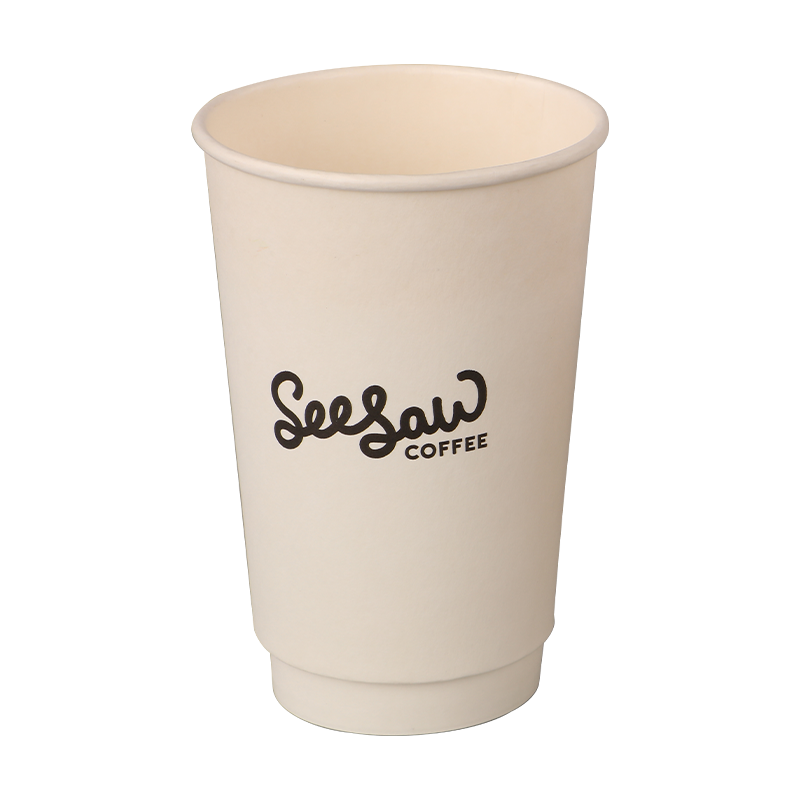
Double wall hot paper cups address the insulation limitation directly. Two layers of paperboard are bonded with an air gap between them, creating a thermal barrier that keeps the outer surface comfortable to hold without a sleeve and maintains beverage temperature more effectively during the time-to-consume window typical in takeaway coffee service. Double wall construction adds material weight and cost but eliminates the need for cup sleeves in most use cases — which often offsets the unit cost difference when sleeve expenses are factored into the total per-serve cost.
Embossed Formats
Embossed bamboo cups use a textured outer surface to create an air cushion effect similar to double wall construction while using a single-layer paperboard with a formed corrugation pattern. The embossed texture also provides a grip surface and gives the cup a premium tactile and visual quality that distinguishes it from flat-wall alternatives on the café counter.
| Construction | Insulation | Sleeve Required | Best For |
|---|---|---|---|
| Single Wall | Basic | Usually yes | Budget takeaway, sleeved service |
| Double Wall | High | No | Premium café, branded to-go coffee |
| Embossed | Medium–High | No | Retail, events, visible sustainability branding |
Specifying Bamboo Coffee Paper Cups for Commercial Use
For foodservice operators and packaging distributors sourcing bamboo coffee cups at commercial volumes, the following specification parameters determine product fit and supplier comparability.
- Capacity range — Standard commercial sizes run from 4 oz (espresso/tasting) through 8 oz, 10 oz, 12 oz, 16 oz, and 20 oz. Verify that the sizes offered align with the café's menu and existing lid inventory before committing to a supplier.
- Lid compatibility — The two dominant rim diameters in commercial coffee service are 80mm (typically for 4–8 oz cups) and 90mm (for 10–20 oz). Confirm the cup rim diameter against your existing lid specification to avoid costly incompatibility.
- Liner material — PE-lined cups are standard and widely available. PLA-lined cups carry compostability certification but cost more and require industrial composting infrastructure to realize their end-of-life benefit. Specify which liner is appropriate for your disposal pathway.
- Heat resistance — Bamboo fiber cups with PLA lining are typically heat-resistant to 194°F (90°C), suitable for all standard hot beverage service temperatures. Confirm this rating for high-temperature applications such as specialty tea service.
- Certifications — For food contact safety, look for FDA compliance (US), LFGB (Germany/EU), and food-grade material declarations. For sustainability claims, verify BPI, DIN CERTCO, or equivalent compostability certification. BPA-free and unbleached claims should be supported by documentation.
- Custom printing — Most commercial bamboo cup manufacturers offer full custom printing using water-based inks on the cup exterior. Minimum order quantities, artwork lead times, and per-unit pricing at volume tiers are the key commercial parameters to confirm at the inquiry stage.
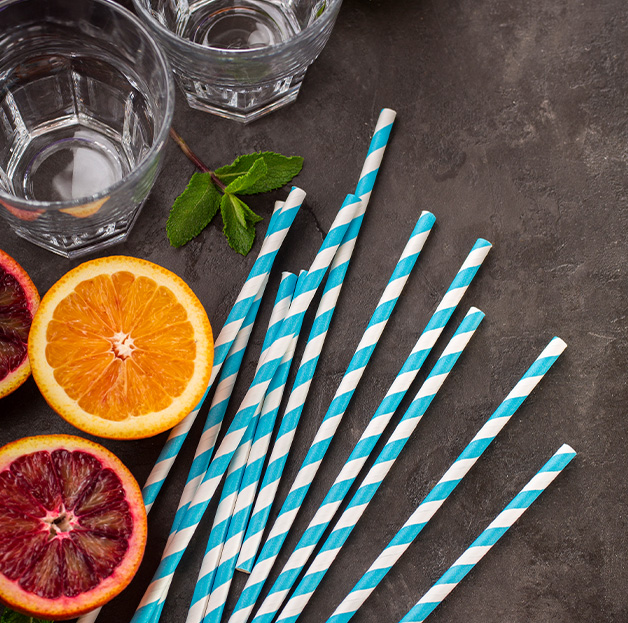
Operators building a fully sustainable service offer should also evaluate complementary products including kraft coffee paper cups for alternative sustainable positioning, and paper straws to complete a plastic-free beverage service.
Bamboo Cups as a Brand Sustainability Signal
For coffee shops, restaurant groups, and food-to-go operators, the shift to bamboo coffee cups is not only an operational sustainability decision — it is a customer-facing brand statement. The natural beige color of unbleached bamboo fiber is immediately recognizable at the point of service as a deliberate material choice, communicating environmental responsibility without requiring any signage or explanation.
This visual differentiation is commercially meaningful in a market where consumer preference for sustainable packaging is consistently documented across age groups and geographies. In competitive retail coffee environments, the cup in a customer's hand is a mobile brand impression — one that reaches audiences well beyond the point of purchase. A bamboo cup with a clearly printed logo and a brief on-cup sustainability message turns every takeaway order into a brand communication opportunity.
The most effective sustainability positioning combines material transparency with verified certification. Stating "bamboo fiber cup, BPI certified compostable" on the cup exterior is more credible and more commercially impactful than generic eco-claims. Buyers who invest in accurate, certification-backed on-cup messaging build consumer trust more durably than those who rely on visual cues alone.
Conclusion
Bamboo coffee paper cups deliver a genuine environmental improvement over conventional PE-lined wood pulp cups across the full product lifecycle — from a faster-regenerating, lower-input raw material through to a compostable end of life when lined with certified plant-based PLA. For foodservice operators, the transition requires no change to equipment or service workflows, and the premium visual character of natural bamboo fiber actively supports brand sustainability narratives at the point of consumer contact.
For distributors and OEM buyers sourcing at commercial scale, specifying bamboo cups requires attention to liner material, certification scope, rim diameter compatibility, and custom print capabilities. Working with a manufacturer who can supply verified documentation alongside competitive unit pricing and reliable production lead times is the foundation of a sustainable packaging program that holds up to scrutiny — from procurement through to consumer communication.
Your email address will not be published. Required fields are marked *
We're Here To Help.

Copyright © HANGZHOU RENMIN ECO-TECH CO.,LTD. All Rights Reserved
Eco Friendly Food Packaging Solution Food Paper Packaging Manufacturer
