

-
Products

-
Food Packaging Solution
Mission & PhilosophyRenmin Eco-Tech adheres to the philosophy of green, innovation, and responsibility, placing customers at the center and valuing dedicated professionals. We aim to integrate sustainability and eco-consciousness into every product.
 Green Innovation Leading the Future
 -
Our Story
Why Choose Us?Hangzhou Renmin Eco-tech Co., Ltd, situated in the picturesque city of Hangzhou, Zhejiang, is a leading paper product research, development, and sales company. Established in 2004, we specialize in eco-friendly solutions such as Base Paper Rolls, PE Coated Paper Rolls, Paper Cup Fans, Paper Bowl and Box Fans, Die-cut Sheets, etc, for food packaging, and Aluminum Foil Film laminated paper.
 Coming From China, Marketing To The World.
 -
News
 Aluminum Foil Paper Bowls: Structure, Performance & Foodservice Applications
What Aluminum Foil Paper Bowls Actually Are — And Why the Laminate Structure Matters Aluminum foil paper bowls are composite containers built from two bonded materials: a structural paperboard base t...
 English
 中文简体
中文简体 Français
 Español
 عربى
عربىIndustry News
8oz vs 12oz Paper Cups: What Size Should You Choose for Coffee and Tea?
When a buyer sits down to order paper cups, the first decision screen usually shows two numbers: 8oz and 12oz. Those two sizes cover most hot and cold drink menus, but they are not interchangeable. The choice changes how much liquid a cup holds, which lid or sleeve it needs, how much it costs per unit, and how customers perceive portion size. The practical rule is simple: 8oz works best for small hot drinks, espresso-based milk drinks, and controlled portions, while 12oz is the standard all-rounder for coffee, tea, cold drinks, and takeaway soup or ice cream.
Content
8oz vs 12oz: Capacity and Conversion
One ounce equals about 29.5735ml. That makes 8oz roughly 236ml and 12oz roughly 355ml. Those numbers are the starting point, but they are not always what you pour. Paper cup suppliers usually state a full cup capacity, and some also list a safe fill level. The safe fill level is the volume you can actually pour without spilling or leaving a customer with a cup that looks underfilled. Requesting this data during sampling prevents a common problem: a 12oz cup that only holds about 330ml when filled 90% full.
| Size label | Nominal capacity | Common menu item | Typical top diameter |
|---|---|---|---|
| 8oz | 236ml | Small coffee, cappuccino, espresso with milk, vending drinks | 80mm |
| 12oz | 355ml | Medium coffee, latte, iced latte, tea, takeaway soup, ice cream | 90mm |
For hot drink service, the difference between full and safe fill becomes more visible because foam, milk, or whipped cream sits above the liquid line. In cold drinks, ice takes up part of the volume, so a cup labeled 12oz may still hold less liquid than the label suggests.
Where the 8oz Cup Fits
An 8oz cup is a compact container. It suits a short black coffee, a 1+1 cappuccino, a children's hot chocolate, or a vending machine hot drink. In many coffee programs, the 8oz size is the small menu option, and customers who choose it expect milk-to-coffee ratios that work for a smaller drink. It also holds about 236ml, which is below the 250ml level many cafes use as their benchmark for a regular size. If you serve a 250ml drink in an 8oz cup, the customer will notice the gap between the liquid and the rim. If you serve the same amount in a 12oz cup, the portion looks more generous.
From an operations point of view, 8oz cups are cheaper per unit, use less board and coating, and generate less waste. They also need a smaller lid size, typically around 80mm. If you stock both 8oz and 12oz, you will need two lid sizes and possibly two sleeve sizes, which increases inventory complexity.
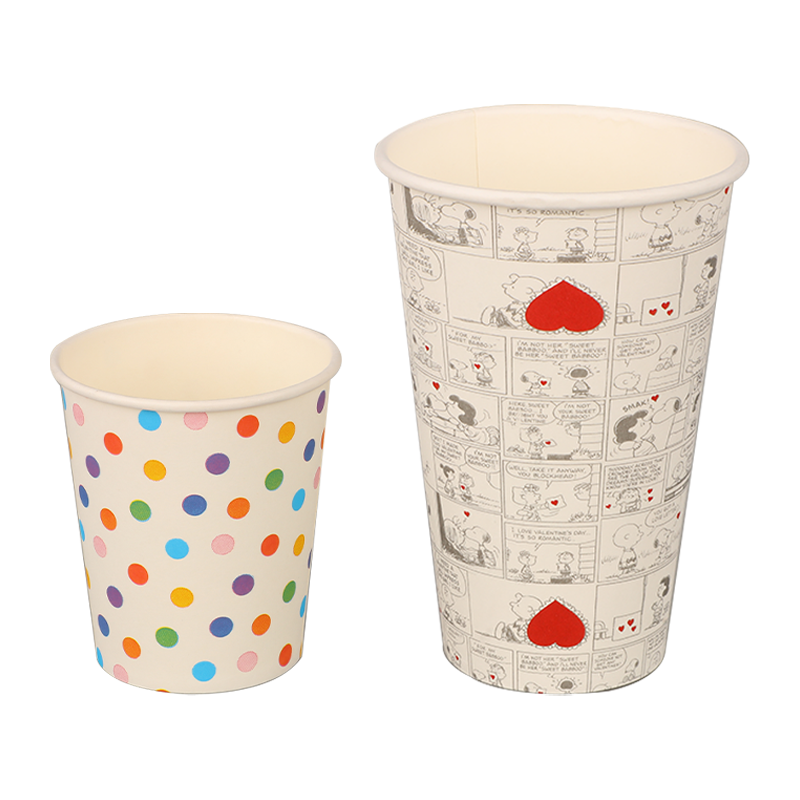 8oz Waterproof Single Wall Hot Paper Cups for Small BeveragesThis 8oz cup is a cost-effective option for small coffee or tea servings, with lower material usage and waste. It fits standard small lids, but verify if your menu requires a larger size for medium drinks.View Product →
Where the 12oz Cup Fits
The 12oz cup is the safest default for foodservice. It covers a medium coffee, a standard latte, and most cold drinks. It holds about 355ml, close to the 350ml standard for many takeaway menus. Customers associate 12oz with a proper drink, and it gives the drink enough room for milk foam, ice, or whipped cream without spilling. In a cafe, it is usually the medium or regular option. In a tea shop, it is often the default cup for milk tea or iced tea.
The top diameter is typically about 90mm, and the height is taller than an 8oz cup. That changes the sleeve, lid, and tray plan. If your supplier offers a universal 90mm lid for both 12oz and 16oz cups, you can simplify purchasing and reduce lid SKUs.
12oz is also a common size for takeaway soup, salad, and ice cream. If your menu includes hot or cold food, the same 12oz cup can serve a single portion of soup or a scoop of ice cream, which reduces the number of SKUs you need to carry.
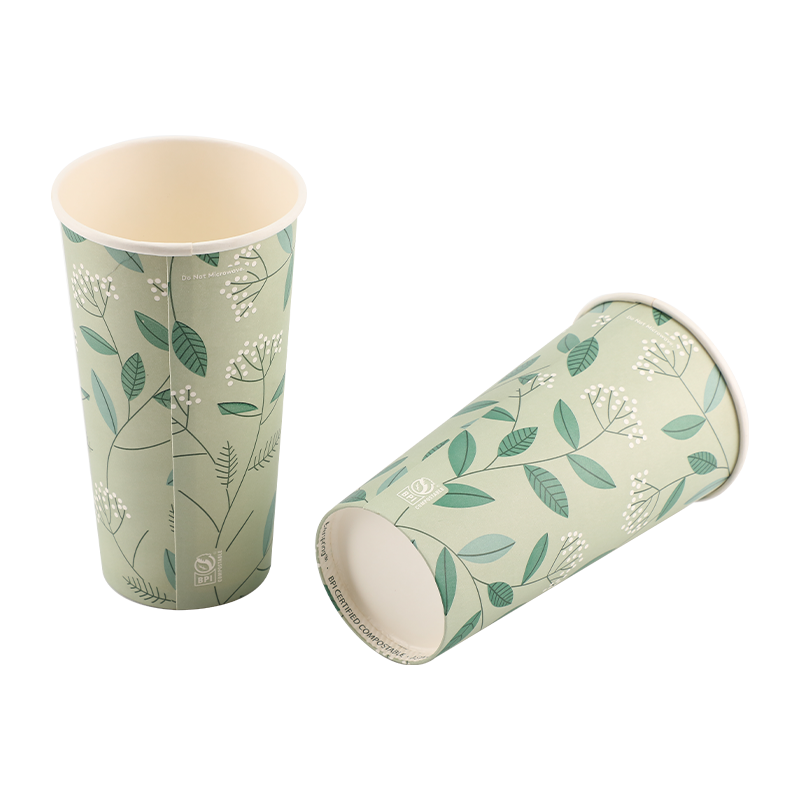 12oz PE Coated Single Wall Hot Paper Cups for Versatile UseA 12oz single-wall paper cup that suits coffee, tea, soup, or ice cream. It offers a common serving size, but may need a sleeve for hot drinks above 85°C to protect hands.View Product →
Key Differences Buyers Should Check
Before you commit to one size or buy both, compare four factors: top diameter, height, board weight, and coating. Top diameter matters because lids are not interchangeable between 80mm and 90mm. Height matters for sleeves, shipping boxes, and cup dispensers. Board weight matters for feel and heat insulation. Coating matters for whether the cup is recyclable, compostable, or both. An 8oz single-wall cup and a 12oz single-wall cup may look similar in shape, but the 12oz usually requires a heavier board to keep the wall rigid at a larger diameter and height.
Also consider customer perception. A 12oz cup gives a sense of better value per ounce, especially for iced drinks where ice creates visual volume. An 8oz cup, by contrast, is associated with quality coffee, short pours, and portion control. If you serve a limited menu, one size may be enough. If your menu includes both coffee and tea, or both hot and cold drinks, carrying 8oz and 12oz together gives you flexibility.
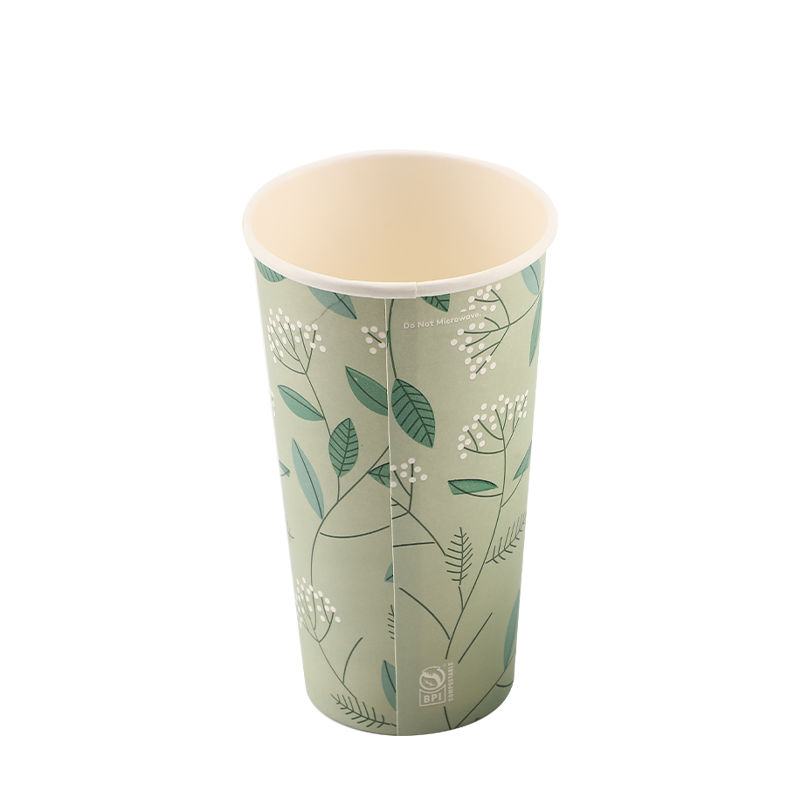
Material and Wall Structure Matter as Much as Size
The standard cup for hot drinks is a single-wall cup made from food-grade cupstock paper, laminated with a barrier coating. The coating can be PE (polyethylene), PLA (polylactic acid), or a water-based plastic-free coating. The choice affects cost, recyclability, and customer perception. A PE-coated cup is usually recyclable if the disposal system accepts coated paper. A PLA-coated cup is designed for compostable programs. A water-based plastic-free coating can be a good option where regulations restrict plastic coating.
Here is where product choice and size meet. An 8oz or 12oz cup can be made with any of those coatings, but the board grade changes with size. A typical 8oz single-wall cup uses about 250gsm cupstock paper, while a 12oz single-wall cup often needs 280gsm or 300gsm to keep the wall stable. The heavier board adds stiffness but also adds weight and cost.
Some suppliers produce 8oz waterproof single-wall hot paper cups with a water-based coating, while others offer 12oz PE paper single-wall hot paper cups for standard recyclable use. The cupstock paper itself affects stiffness and shelf appeal. A 100% virgin wood pulp cupstock paper yields a cleaner, whiter cup; a kraft or bamboo board gives a natural, rustic look. If you want a standard PE-coated option, PE-coated cupstock rolls provide consistent lamination for hot cups.
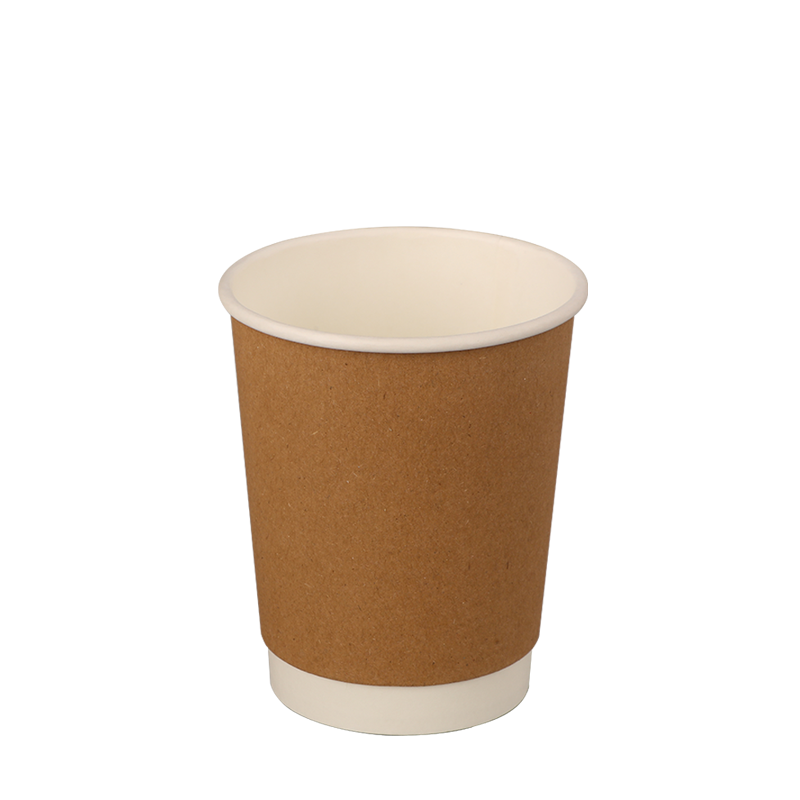
For hot drinks above 85°C, many buyers prefer a double-wall cup or a corrugated sleeve. A double-wall 12oz cup adds insulation without a separate sleeve. It costs more than a single-wall cup, but it solves the practical problem of hot beverages burning customers' hands. If your menu is hot-drink-focused, a double-wall 12oz cup is a good upgrade over a single-wall cup.
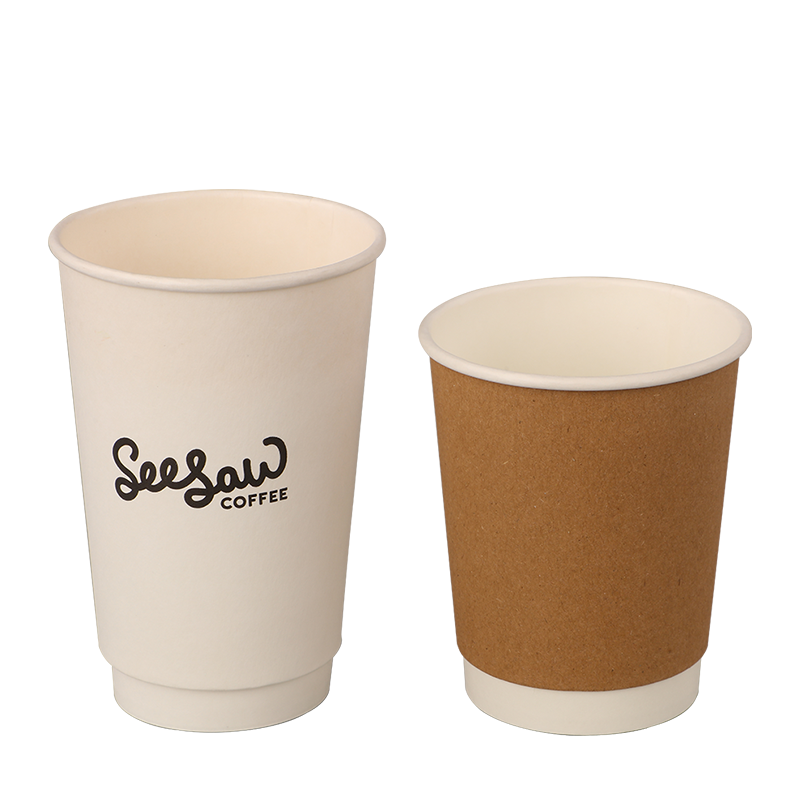 12oz Insulated Double Wall Hot Paper Cups for Hot BeveragesThis double-wall cup provides built-in insulation for hot drinks, eliminating the need for separate sleeves. It keeps beverages hot and hands cool, though it costs more than single-wall options.View Product →
Three Questions Before You Order
Use this checklist to finalize your decision:
- What is your smallest drink portion on the menu? If your smallest drink is an espresso or a 200ml cappuccino, choose an 8oz cup. If your smallest drink is around 350ml, choose 12oz.
- What is your most common drink size? Most hot coffee and tea programs sell more medium sizes than small sizes, so the 12oz cup tends to become the workhorse.
- Which lids and sleeves do you already stock? Match the new cup to existing stock to avoid double inventory, or plan to switch both sizes at the same time.
Conclusion: Choose the Size That Fits the Customer Experience
For most foodservice buyers, the answer is not an either/or. The 8oz cup is ideal for small hot drinks and portion control. The 12oz cup is the standard for coffee, tea, cold drinks, and smaller meals. If you want one size to cover a wide menu, make it a 12oz cup. If you want a polished coffee program, keep both sizes and differentiate them by menu item. Either way, define your actual fill volume, verify the lid diameter, and request a sample before you commit to a large order.
Your email address will not be published. Required fields are marked *
We're Here To Help.

Copyright © HANGZHOU RENMIN ECO-TECH CO.,LTD. All Rights Reserved
Eco Friendly Food Packaging Solution Food Paper Packaging Manufacturer
