

-
Products

-
Food Packaging Solution
Mission & PhilosophyRenmin Eco-Tech adheres to the philosophy of green, innovation, and responsibility, placing customers at the center and valuing dedicated professionals. We aim to integrate sustainability and eco-consciousness into every product.
 Green Innovation Leading the Future
 -
Our Story
Why Choose Us?Hangzhou Renmin Eco-tech Co., Ltd, situated in the picturesque city of Hangzhou, Zhejiang, is a leading paper product research, development, and sales company. Established in 2004, we specialize in eco-friendly solutions such as Base Paper Rolls, PE Coated Paper Rolls, Paper Cup Fans, Paper Bowl and Box Fans, Die-cut Sheets, etc, for food packaging, and Aluminum Foil Film laminated paper.
 Coming From China, Marketing To The World.
 -
News
 Aluminum Foil Paper Bowls: Structure, Performance & Foodservice Applications
What Aluminum Foil Paper Bowls Actually Are — And Why the Laminate Structure Matters Aluminum foil paper bowls are composite containers built from two bonded materials: a structural paperboard base t...
 English
 中文简体
中文简体 Français
 Español
 عربى
عربىIndustry News
Paper, Wood, and Compostable Alternatives to Plastic Utensils for Food Service
Your catering client just added a zero-plastic clause to the contract. Your waste hauler now applies a surcharge for mixed recyclables. And your front-of-house staff keep telling you the polypropylene forks snap in hot rice bowls. Each of these scenarios leads to the same procurement question: which alternatives to plastic utensils can you switch to without hurting the dining experience or the budget?
The practical answer is that no single material fits every meal. Molded paper cutlery works well in cafeterias and quick-service settings, wooden and bamboo utensils hold up in hot and oily dishes, CPLA bioplastic suits high-heat soups and stews, and stainless steel earns its cost back in dine-in operations. The right material depends on food temperature, contact time, disposal infrastructure, and per-piece cost.
Content
- 1 Why plastic cutlery is a shrinking option
- 2 How to compare alternatives before you buy
- 3 Material comparison for disposable and reusable cutlery
- 4 Wooden and bamboo utensils: dependable for hot and oily meals
- 5 Molded paper cutlery: printable, compostable, and increasingly strong
- 6 Compostable bioplastic utensils: the plastic-like option with a condition
- 7 Stainless steel and silicone for dine-in and fixed settings
- 8 Building your buying plan
Why plastic cutlery is a shrinking option
Single-use plastic forks, knives, and spoons are rarely recycled. Their small size makes them fall through sorting screens, and polypropylene is not economically recovered in most municipal systems. Once in the environment, they fragment into microplastics that persist for decades. That is why the European Union restricts them under the Single-Use Plastics Directive, Canada has banned several single-use plastic items, and a growing number of U.S. states and cities have introduced their own rules. Even where the law is unclear, large corporate clients and event venues are writing plastic-free serviceware into procurement requirements.
Switching also simplifies the back of house. Plastic cutlery contaminates compost streams and complicates recycling sorting. Certified compostable utensils, by contrast, can travel with food scraps into the organics bin, which reduces sorting errors and often lowers hauling costs.
How to compare alternatives before you buy
Before choosing a material, define the criteria that matter for your menu. A fork used for a cold salad has different requirements from a spoon that sits in hot broth for ten minutes. The five factors below cover most food service decisions.
Heat tolerance
Some molded paper utensils soften when left in hot liquid. Wood and bamboo hold their shape well in hot dishes, and CPLA bioplastic is formulated for higher temperatures. Check the manufacturer's rated temperature range against the food you serve.
Structural strength
A fork must pierce food without bending. A spoon must keep its shape when scooping thick stew. A knife needs a clean edge. Ask for samples and test them with your actual dishes rather than relying on product photos.
Oil and water resistance
Fried foods and saucy meals require a barrier coating. For paper-based utensils, the coating determines whether the item is compostable, recyclable, or neither. Water-based and PLA coatings are the most common compostable options.
Disposal path
Confirm whether your venue has industrial composting service, a municipal organics program, or only landfill collection. If organics collection is unavailable, a highly compostable product provides less practical benefit than a durable option that users can reuse.
Cost per serving
Prices vary with material, coating, thickness, and order volume. Wood and molded paper have become more affordable as production scales, but very cheap products usually cut corners on sanding, coating coverage, or pulp density.
Material comparison for disposable and reusable cutlery
The table below summarizes how the main alternatives compare across these criteria.
| Material | Heat tolerance | Strength | Disposal | Typical use |
|---|---|---|---|---|
| Wood and bamboo | High | Firm; splintering rare on quality items | Backyard or industrial compost | Hot bowls, noodles, catering |
| Molded paper | Moderate | Good for forks and spoons; knives suit softer foods | Industrial compost or recyclable with water-based coating | Cafeterias, takeout, kids meals |
| PLA and CPLA bioplastic | Moderate to high | Similar to plastic | Industrial compost required | Soups, hot entrees, food trucks |
| Stainless steel | High | Very durable; reusable | Recyclable after long life | Dine-in, offices, events with dishwashing |
| Silicone | High | Flexible; not for cutting | Reusable; specialty recycling programs | Kitchen prep and serving |
Wooden and bamboo utensils: dependable for hot and oily meals
Wooden forks, knives, and spoons are the closest drop-in replacement for plastic in stiffness and feel. Bamboo and birch dominate the market because they grow quickly, weigh little, and need no plastic coating to resist moisture. A bamboo spoon can sit in a bowl of ramen for fifteen minutes without losing its shape, and a wooden fork handles grilled meat and vegetables without bending.
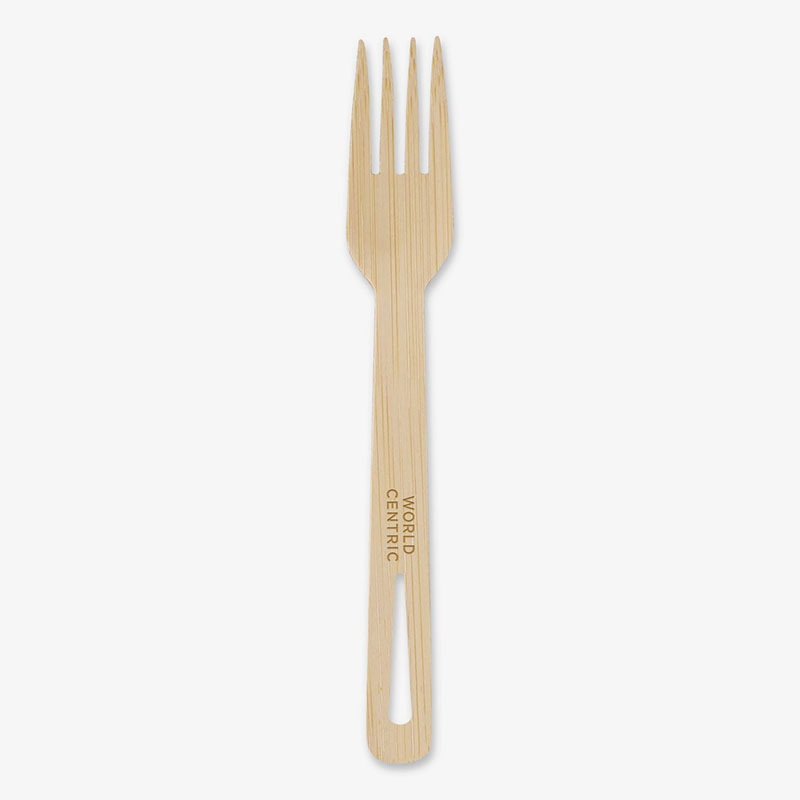 Bamboo Wooden Fork for Sturdy Eco-Friendly DiningA durable bamboo fork that resists bending during meals, ideal for brands aiming for a natural look. Its performance suits pasta, salads, and soft vegetables without losing shape.View Product →
The trade-offs are texture and cutting performance. Low-grade wood can feel rough or splinter, so buy sanded items from a supplier with consistent quality control. Wooden knives work best on pasta, salads, and soft vegetables; they are not built for steak. Choose wood when your brand leans natural or rustic, or whenever hot food would soften paper.
Verify that the utensils are cut from a single piece of wood rather than glued layers, and confirm that any moisture barrier is not a plastic coating that defeats the purpose.
Molded paper cutlery: printable, compostable, and increasingly strong
Molded paper utensils are pressed from pulp into the shape of forks, knives, and spoons, then finished with a barrier coating for moisture and oil resistance. Their biggest advantage is customization: the surface accepts logos, menu information, or sustainability messaging, so the cutlery becomes a branding touchpoint rather than a throwaway.
Paper forks and spoons perform well for most meals with less than twenty minutes of food contact. Paper knives are best for cutting sandwiches, cakes, and cooked vegetables, which makes them a staple in corporate cafeterias and children's meals. Coating chemistry matters: water-based and PLA coatings keep the item compostable, while some conventional coatings do not. Ask for the coating specification before ordering.
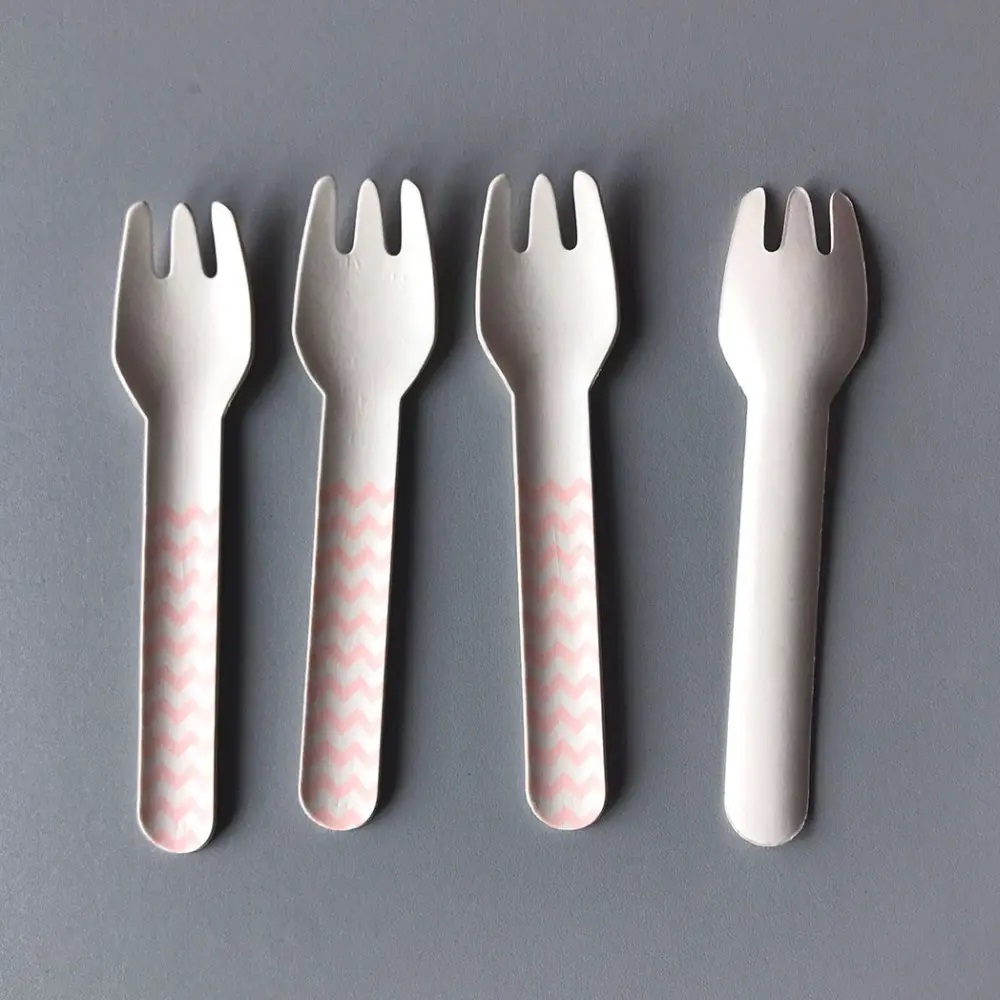 Compostable Paper Fork with PLA Coating OptionA paper fork suited for meals under twenty minutes of contact, perfect for cafeterias and kids' meals. Its coating choice affects compostability, so verify specs before ordering.View Product →
Paper cutlery also pairs naturally with fiber-based packaging. When your cups, bowls, and boxes are already paper, a full set of molded paper utensils keeps the waste stream homogeneous and makes the disposal instruction easier for customers to follow.
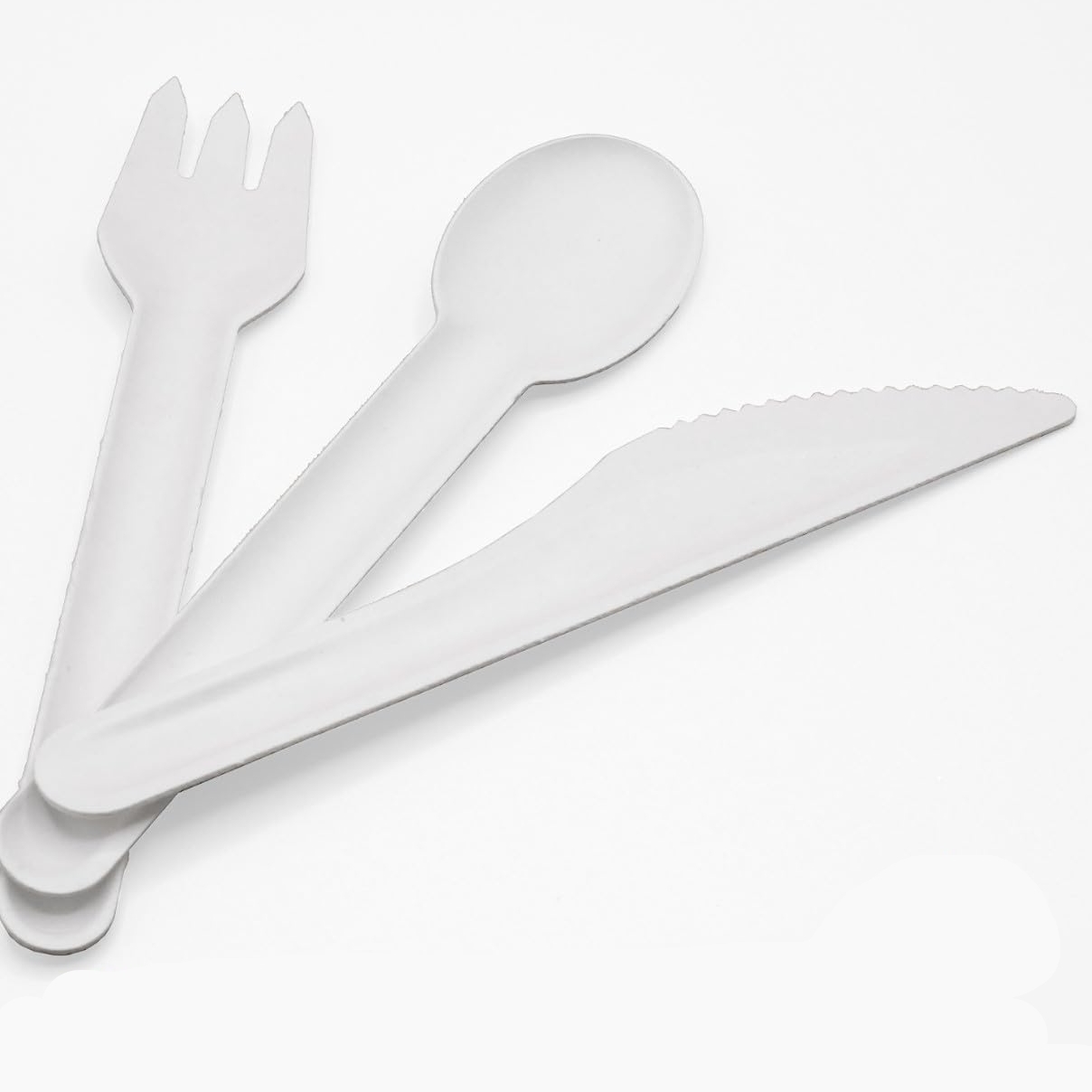 Molded Paper Spoon for Homogeneous Fiber PackagingA paper spoon that pairs well with paper cups and bowls, helping simplify waste sorting in takeaway setups. Reliable for short-contact use and complements a full fiber-based kit.View Product →
For a complete takeaway setup, check that your cutlery works with the rest of the kit. Our paper soup bowls buying guide covers leak and heat tests you can apply to the whole package.
Compostable bioplastic utensils: the plastic-like option with a condition
PLA and CPLA utensils are made from plant-based polymers, usually corn or sugarcane, and they look and behave much like conventional plastic. CPLA is heat-treated to withstand hot foods better than standard PLA, which is why it appears in soup kits and hot entree packaging.
The condition is disposal infrastructure. Bioplastic utensils require industrial composting with controlled temperature and microbial activity; they do not break down reliably in a backyard pile or in marine environments. If your city does not collect compostable serviceware, these products reduce petroleum use but will not deliver the zero-waste outcome you may want to advertise. Confirm that your compost hauler accepts PLA and look for third-party certification such as BPI or TUV OK Compost.
Stainless steel and silicone for dine-in and fixed settings
Where washing is available, stainless steel is the most durable alternative. It tolerates any food temperature, does not leach chemicals, and can be recycled after a very long life. Offices, staff canteens, and event venues often use steel cutlery for dine-in service and reserve disposables for delivery.
Silicone adds flexibility in kitchen prep and serving. Spatulas and spoons made from food-grade silicone handle temperatures well above boiling, but silicone is not suitable for cutting tasks, so pair it with metal or wood. Reusable items carry a higher upfront cost and operators must plan for loss, yet the per-use cost can fall below disposables within a few months.
Building your buying plan
Start with your highest-volume menu item. A noodle shop will probably choose wooden utensils; a corporate caterer serving salads and sandwiches may find molded paper sufficient. In every case, follow the same purchasing sequence:
- Request samples from at least two suppliers and test them with the actual food at the actual serving temperature.
- Confirm the coating and certification status in writing, especially for compostable claims.
- Estimate cost per piece including freight, storage, and waste handling, not just the purchase price.
- Ask about minimum order quantities and lead times so you can phase the switch without stockouts.
- Train staff that the new utensils are not plastic and show them the correct disposal bin.
Cutlery is rarely the only plastic in a takeaway order. Pair your new forks and spoons with grease-proof wrapping paper for fried items and paper bowls for soups so the whole package carries the same sustainability message.
Finally, review supplier quality control. The difference between a good wooden fork and a bad one is sanding and grading; the difference between a good paper spoon and a bad one is coating coverage and pulp density. An experienced food service packaging supplier will share technical specifications and testing guidance rather than only a price list.
The shift away from plastic utensils is no longer driven by regulation alone; customers, corporate clients, and waste haulers are all pushing in the same direction. Start with the highest-volume item, validate it in real service conditions, and expand from there. Paper, wood, and bioplastic each have a place. The best alternative to plastic utensils is the one that performs cleanly from the kitchen to the compost bin.
Your email address will not be published. Required fields are marked *
We're Here To Help.

Copyright © HANGZHOU RENMIN ECO-TECH CO.,LTD. All Rights Reserved
Eco Friendly Food Packaging Solution Food Paper Packaging Manufacturer
