

-
Products

-
Food Packaging Solution
Mission & PhilosophyRenmin Eco-Tech adheres to the philosophy of green, innovation, and responsibility, placing customers at the center and valuing dedicated professionals. We aim to integrate sustainability and eco-consciousness into every product.
 Green Innovation Leading the Future
-
Our Story
Why Choose Us?Hangzhou Renmin Eco-tech Co., Ltd, situated in the picturesque city of Hangzhou, Zhejiang, is a leading paper product research, development, and sales company. Established in 2004, we specialize in eco-friendly solutions such as Base Paper Rolls, PE Coated Paper Rolls, Paper Cup Fans, Paper Bowl and Box Fans, Die-cut Sheets, etc, for food packaging, and Aluminum Foil Film laminated paper.
 Coming From China, Marketing To The World.
-
News
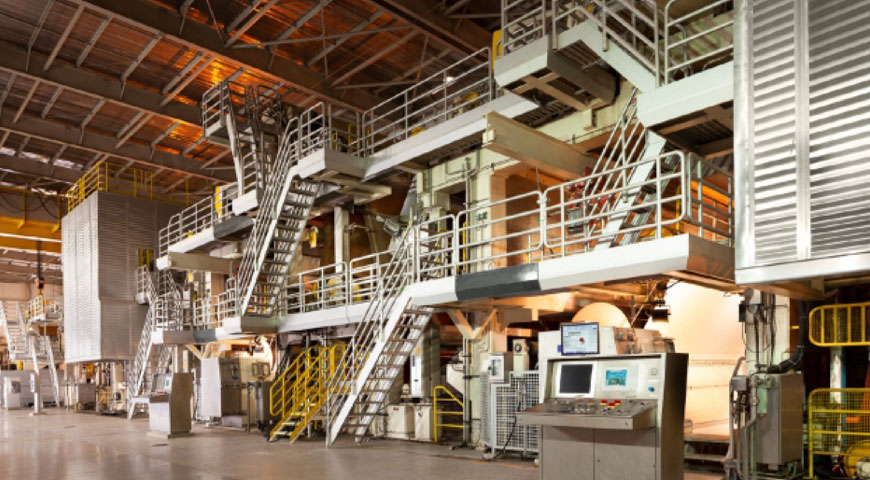 Aluminum Foil Paper Bowls: Structure, Performance & Foodservice Applications
What Aluminum Foil Paper Bowls Actually Are — And Why the Laminate Structure Matters Aluminum foil paper bowls are composite containers built from two bonded materials: a structural paperboard base t...
 English
 中文简体
 Français
 Español
 عربى
Industry News
Paper Cup Sizes: oz to ml Charts, Rim Diameters and Choosing the Right One
A café that switches from a 12 oz cup supplied by one mill to a 12 oz cup from another tends to notice two things within the first week: the new cup holds visibly less drink, and the lids already in the storeroom no longer snap on properly. Both problems come from the same habit — buying cups by the ounce number alone.
The practical rule is this: select paper cup sizes by rim diameter first, usable fill volume second, and the printed ounce label last. The ounce figure is a rounded trade name, not a statement about how much coffee you can pour into the cup. Rim diameter is a physical measurement, and it is what determines whether your lids, sleeves and carriers still work when you change supplier.
Content
- 1 Paper Cup Sizes in Ounces, Milliliters and Rim Diameters
- 2 Rim Diameter Decides Lid Fit — Capacity Does Not
- 3 Hot Cup Sizes: Single Wall, Double Wall and One Shared Rim
- 4 Cold, Iced and Ice Cream Cups Use Different Sizing Logic
- 5 Nominal Capacity vs the Volume You Actually Pour
- 6 How Many Cup Sizes a Drinks Menu Really Needs
- 7 Where Size Choices Show Up in Cost, Waste and Freight
- 8 A Checklist Before You Confirm a Cup Size
Paper Cup Sizes in Ounces, Milliliters and Rim Diameters
One US fluid ounce is about 29.6 ml, but cup labels are rounded for convenience rather than accuracy. This is why a 12 oz cup is usually listed as 360 ml rather than 355 ml, and why a 16 oz cup may be described as 480 ml or 500 ml depending on the manufacturer. Treat the millilitre figure the same way: an approximate identity, not a fill instruction.
| Nominal size | Typical volume | Common rim diameter | Where it usually fits |
|---|---|---|---|
| 2.5–3.5 oz | 75–100 ml | 57–62 mm | Espresso, cortado, tasting samples |
| 4 oz | about 120 ml | 62 mm | Espresso, ice cream, dessert portions |
| 6–7 oz | 180–200 ml | 73 mm | Small flat white, tea, vending machines |
| 8 oz | 240 ml | 80 mm, sometimes 90 mm | Small coffee, hot chocolate, kids' drinks |
| 10 oz | about 300 ml | 90 mm | Regular tea, medium coffee |
| 12 oz | 360 ml | 90 mm | The default regular size in most cafés |
| 16 oz | 480–500 ml | 90 mm | Large coffee, iced latte base |
| 20 oz | 580–600 ml | 90 mm | Extra-large hot drinks |
| 22 oz | 650–700 ml | 90–95 mm | Large iced drinks, bubble tea, soft drinks |
| 24–32 oz | 700–950 ml | 95–105 mm | Fountain drinks, soup and noodle bowls |
Read the chart as a starting point for enquiries, not a universal standard. Two cups can both be called 12 oz and differ by 15 mm in height, several millimetres in rim diameter and a full millimetre in board thickness.
Rim Diameter Decides Lid Fit — Capacity Does Not
Lids are matched to the rim, and the rim family matters more than the volume printed on the base. Within hot cups, the 90 mm rim covers most 10, 12, 16 and 20 oz sizes, which is precisely why a single lid SKU can serve three or four menu positions. Smaller formats sit on 62 mm, 73 mm or 80 mm rims, and cold cups spread across 90 mm, 95 mm, 107 mm and 115 mm depending on volume and drink style.
This creates a real procurement risk. If your current supplier specifies an 80 mm rim for its 8 oz cup and a new supplier uses 90 mm for the same nominal size, every lid in that size becomes unusable stock. Before confirming any order, ask for the rim's outer diameter and the matching lid's inner plug dimension in writing, and check both against a physical sample. The two numbers must agree; the ounce label does not have to.
Hot drink cups cover roughly 2.5 oz to 22 oz, and the choice between single wall, double wall and embossed construction changes the look, the insulation and the outer diameter of the body — but usually not the rim. A double-wall 12 oz cup and a single-wall 12 oz cup will typically take the same lid, which lets a café keep one lid family while offering different hand-feel and heat protection.
Single wall remains the workhorse for espresso-based drinks served quickly, because it is the lightest and lowest-cost option per serve. It performs best when the drink is consumed within minutes and the cup is sleeved or double-cupped for very hot serves. Where drinks are handed across a counter and carried further, the added air gap of a double wall or the texture of an embossed body tends to justify the higher unit cost.
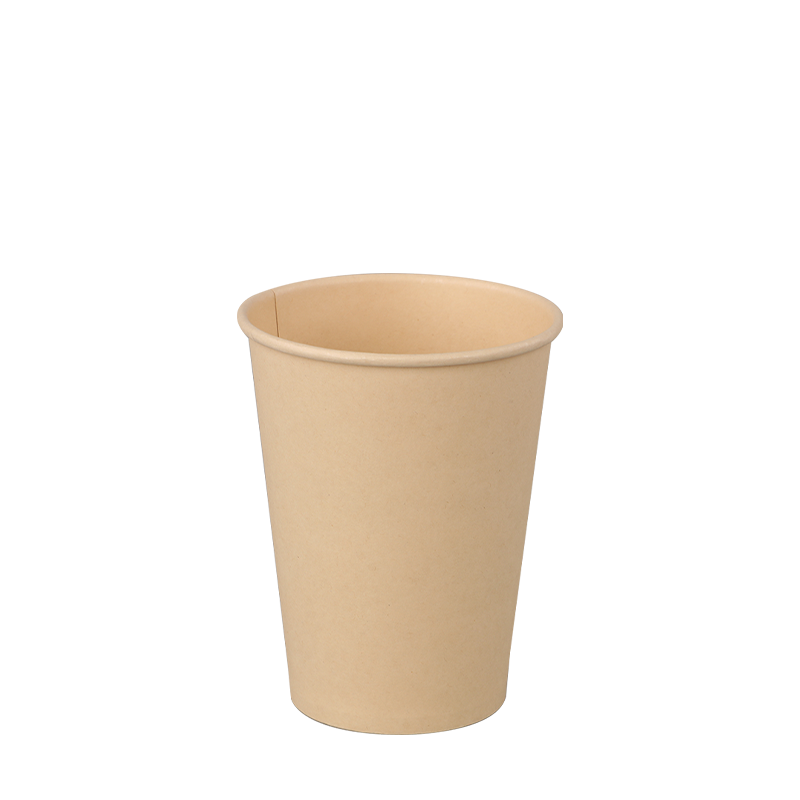
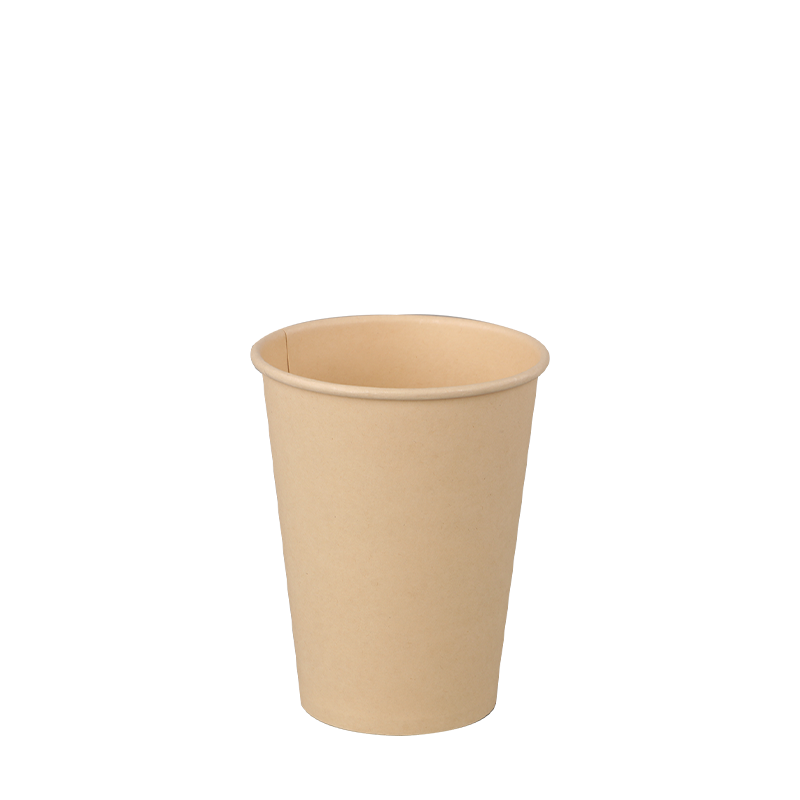
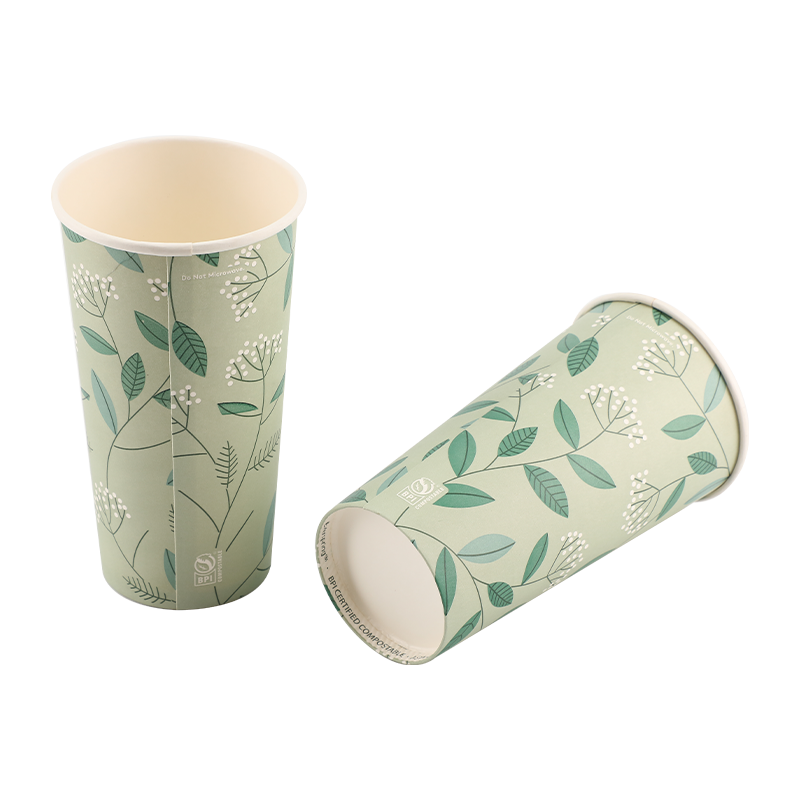 12oz PE Single-Wall Hot Paper CupA lightweight, low-cost single-wall cup for fast espresso drinks; check external dimensions and customization options before ordering.View Product →
One practical detail: adding a second wall increases the outer diameter and the overall height, so double-wall cups may not fit carriers, dispensers or cup sleeves sized for the single-wall version of the same nominal volume. Confirm the external dimensions, not just the ounce count.
Cold, Iced and Ice Cream Cups Use Different Sizing Logic
Cold cups carry a different set of constraints. The board needs a moisture barrier and enough stiffness to resist condensation softening, so cold cups are commonly concentrated in 12, 16, 22 and 24 oz formats rather than the long ladder of small hot sizes. Because iced drinks are built with ice, syrup and milk rather than a single pour, the volume that matters is the finished build, not the liquid alone.
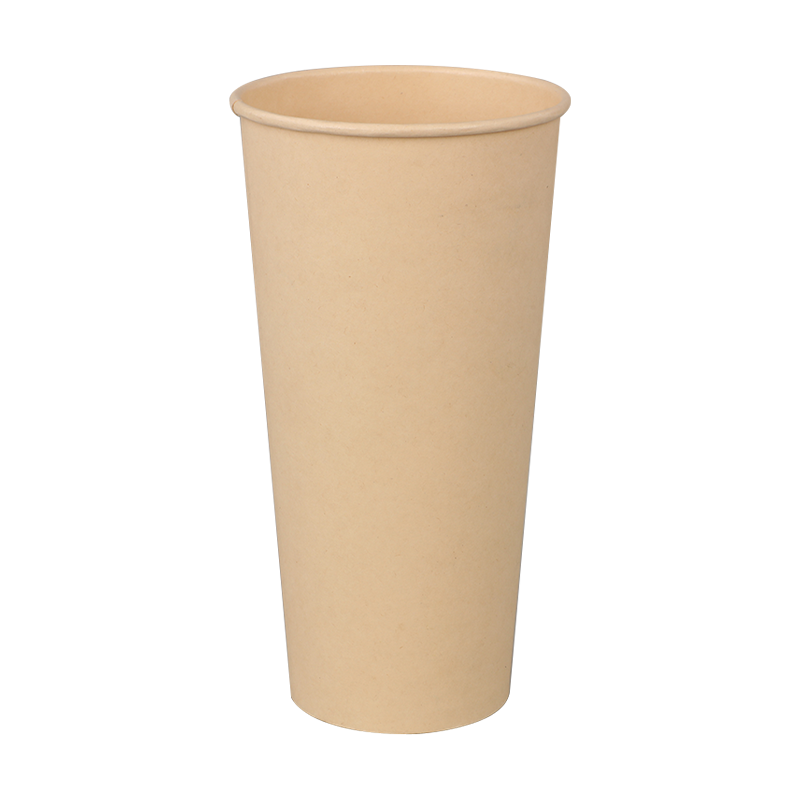
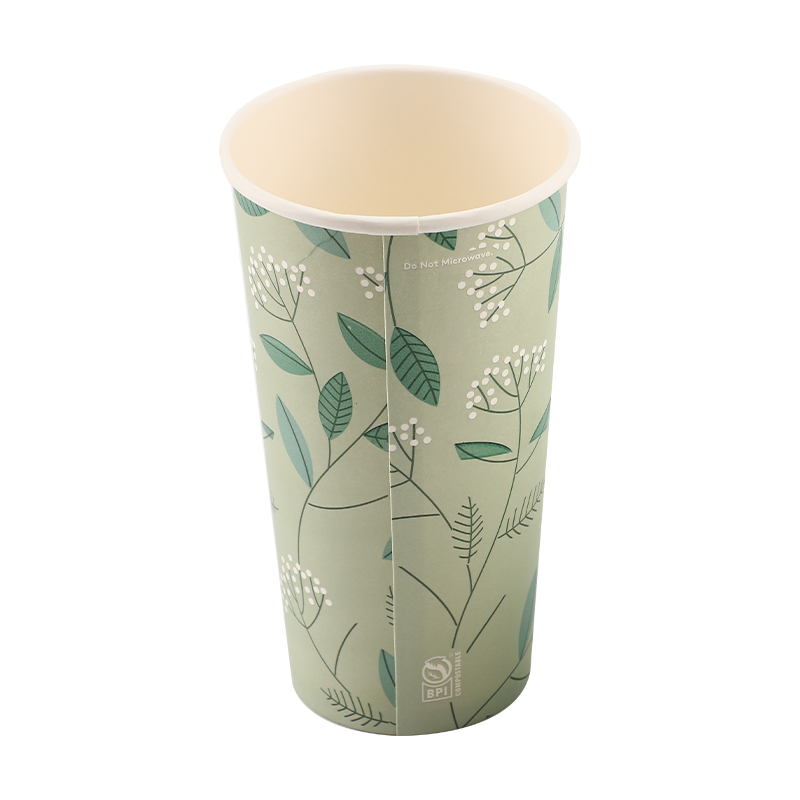
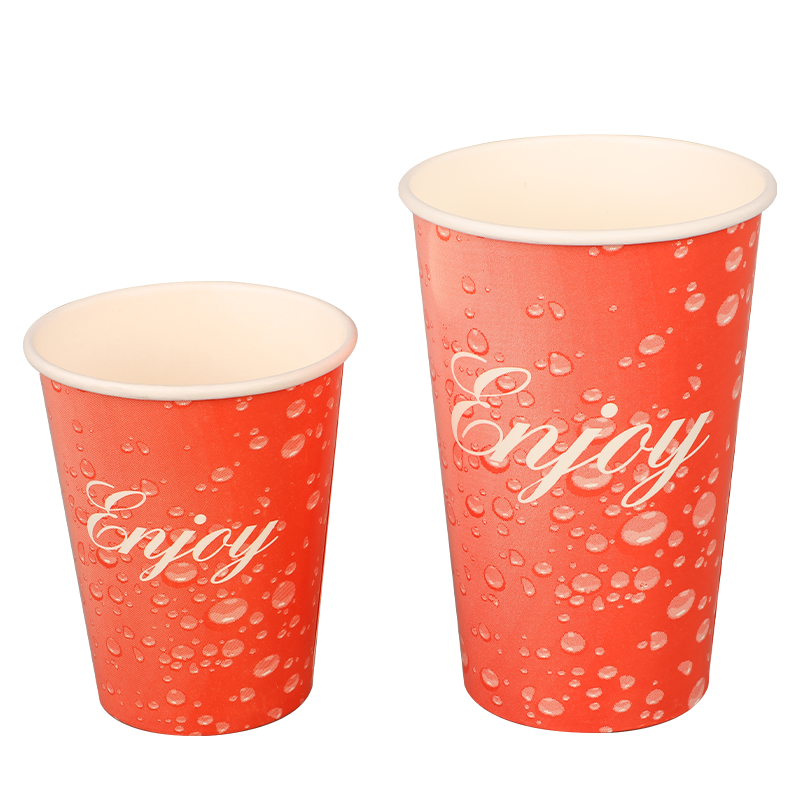 Custom 22oz Cold Drinking Paper CupA 22oz cold cup for cola, juice and iced tea, with a two-sided coating and waterproof barrier; suitable for larger iced builds.View Product →
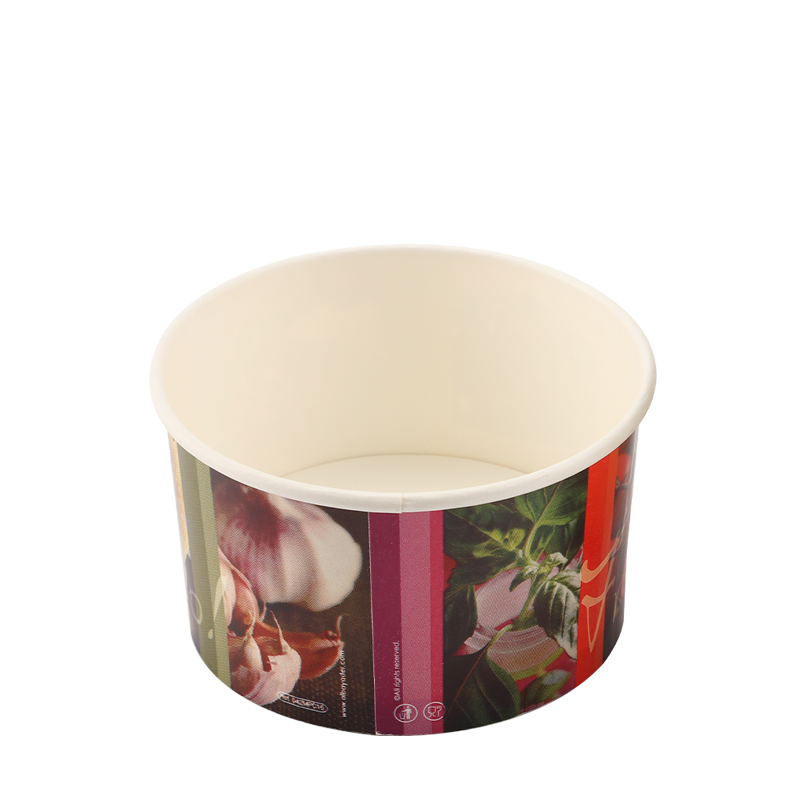
Ice cream and dessert cups behave differently again. They run from around 4 oz to 16 oz and often use a wider, shallower profile so a spoon reaches the corners and the cup stays stable on a counter. If you are comparing constructions, coatings and lid options across these formats, the guide to cold drinking paper cup materials and sizes walks through the trade-offs in more detail.
Nominal Capacity vs the Volume You Actually Pour
Every cup needs headroom. Filling to the rim makes a drink impossible to carry and guarantees spills once a lid goes on, so the working fill line normally sits 15 to 20 mm below the rim. On a 12 oz cup that leaves roughly 10 to 10.5 oz of usable liquid — a gap customers notice when a "large" arrives only two-thirds full.
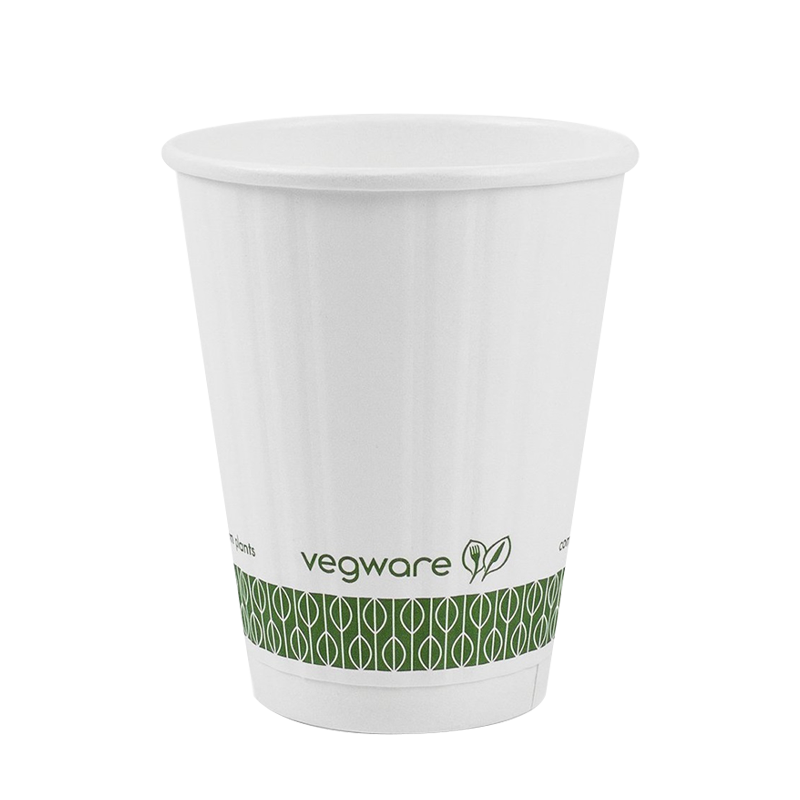
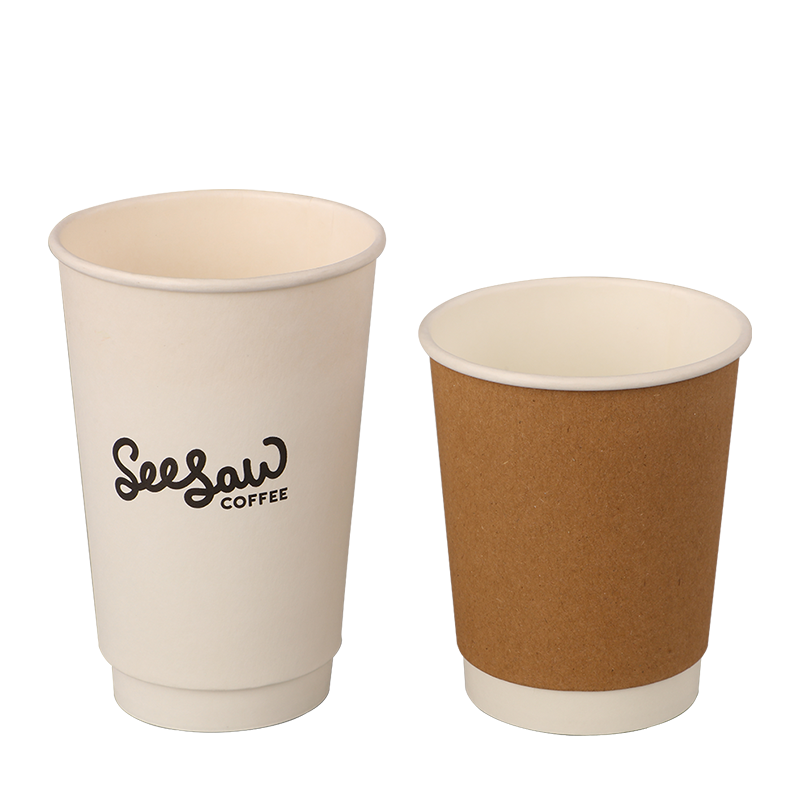 16oz Scald-Proof Double-Wall Hot Paper CupA 16oz double-wall hot cup with an insulating air layer for coffee and milk tea; compare dimensions and lid fit for insulated service.View Product →
Ice changes the arithmetic far more than foam does. Ice typically occupies somewhere between a third and a half of the cup's volume, so a 16 oz iced drink often needs a 22 oz cup to hold the same amount of liquid as a 16 oz hot drink. Cappuccino and whipped drinks need space for foam, and drinks finished with cream need more still.
The only reliable test is a pour test with your own build. Take the sample cup, pour your standard serve at the standard recipe, and mark where the liquid settles. If it lands more than 25 mm below the rim, the cup is oversized for the price point; if it reaches the rim, the next size up is the correct choice.
How Many Cup Sizes a Drinks Menu Really Needs
Most cafés operate comfortably with three hot sizes and two cold sizes. A typical hot line-up is 8 oz for a small or kids' serve, 12 oz as the regular, and 16 oz as the large, with 4 oz reserved for espresso and sampling. A cold line-up of 16 oz and 22 oz covers the majority of iced orders, with a 12 oz cold cup added only if iced sales justify it.
Each additional size adds a lid variant, a carton dimension, a shelf position and a training point at the counter. Shops that trim from six sizes to four usually find waste falls faster than sales do, because staff stop guessing and start using one consistent build per menu position. Custom or unusual sizes are possible, but they are worth reserving for a genuine product need rather than menu variety for its own sake.
Where Size Choices Show Up in Cost, Waste and Freight
Carton counts differ by size, so a pallet of 8 oz cups and a pallet of 16 oz cups rarely contain the same number of units. Freight is driven by nested height and carton cube, not by nominal volume, which means the cost per serve can move in surprising directions when you shift a drink one size up or down. Board weight compounds this: a 16 oz cup built from heavier stock may cost more than a 20 oz cup built from lighter stock.
Rim diameter also has tooling consequences. Cup bodies are cut from flat blanks, and a new rim or height generally means new cutting tooling rather than a simple adjustment, so genuinely custom dimensions carry setup costs that standard sizes do not. Buyers sourcing semi-finished material can review the standard paper cup fan formats to see how blank geometry maps to finished cup size before requesting a bespoke dimension.
The per-serve calculation that matters is straightforward: divide the landed carton price by the number of servings actually poured from that carton, using the usable fill volume rather than the nominal one. Oversized cups look cheap per unit and often are not cheap per drink.
A Checklist Before You Confirm a Cup Size
- Record the rim outer diameter and confirm it against the lid's inner plug dimension.
- Run a pour test with your real recipe and mark the settled fill line.
- Check the external height and top diameter against carriers, sleeves and dispensers.
- Confirm the carton count, pallet configuration and nested height for freight maths.
- Match the coating to the drink: PE for standard hot serves, water-based or PLA for recycling and composting claims.
- Ask for the minimum order quantity per size, since printing usually applies per size rather than per order.
- Keep one lid family where possible, and document rim diameters beside the ounce label on the menu sheet.
Sizes on a spec sheet are a starting point; the cup in a customer's hand is the real specification. Order samples in the two sizes you are considering, pour your standard drinks into both, fit the lids and stack them in the carrier you actually use. That half hour of testing settles rim diameter, usable volume and menu position at once, and it prevents the far more expensive discovery that a container of lids no longer fits the cups you just bought.
Your email address will not be published. Required fields are marked *
We're Here To Help.

Copyright © HANGZHOU RENMIN ECO-TECH CO.,LTD. All Rights Reserved
Eco Friendly Food Packaging Solution Food Paper Packaging Manufacturer
