

-
Products


-
Food Packaging Solution
Mission & PhilosophyRenmin Eco-Tech adheres to the philosophy of green, innovation, and responsibility, placing customers at the center and valuing dedicated professionals. We aim to integrate sustainability and eco-consciousness into every product.
 Green Innovation Leading the Future
-
Our Story
Why Choose Us?Hangzhou Renmin Eco-tech Co., Ltd, situated in the picturesque city of Hangzhou, Zhejiang, is a leading paper product research, development, and sales company. Established in 2004, we specialize in eco-friendly solutions such as Base Paper Rolls, PE Coated Paper Rolls, Paper Cup Fans, Paper Bowl and Box Fans, Die-cut Sheets, etc, for food packaging, and Aluminum Foil Film laminated paper.
 Coming From China, Marketing To The World.
-
News
 Aluminum Foil Paper Bowls: Structure, Performance & Foodservice Applications
What Aluminum Foil Paper Bowls Actually Are — And Why the Laminate Structure Matters Aluminum foil paper bowls are composite containers built from two bonded materials: a structural paperboard base t...
 English
 中文简体
 Français
 Español
 عربى
Industry News
Paper Cup Sizes in cm: Real Dimensions, Volume Mapping and Lid Fit Guide
A cafe owner reorders 12 oz cups from a new supplier and finds that the 90 mm lids no longer snap on. The cups are still labelled 12 oz. The rim has quietly moved from 9.0 cm to 9.2 cm, and nobody wrote the change on the purchase order.
That is the short answer to paper cup sizes in cm: the ounce figure is a rounded trade name, while the centimetres decide whether a lid fits, whether the cup sits in a dispenser, and how many units fit a carton. A typical 12 oz cup measures 9.0 cm across the rim, 6.0 cm across the base and about 11.0 cm tall, and two millimetres of drift is enough to break a lid line. Get the dimensions right and lids, sleeves, carriers and case counts all follow.
Content
- 1 Why an Ounce Label Does Not Fix the Size
- 2 Paper Cup Sizes in cm: Standard Dimensions at a Glance
- 3 What Each Measurement Actually Controls
- 4 How Construction Moves the Numbers
- 5 Cold Cups, Ice Cream Cups and Bowls
- 6 Lid Fit: Where Millimetres Decide
- 7 A Buyer's Checklist Before Approving a Size
- 8 Sourcing by Dimension, Not by Label
Why an Ounce Label Does Not Fix the Size
One US fluid ounce is 29.57 ml, and most suppliers round it to 30 ml when they name a cup. So a "12 oz" cup names roughly 360 ml, measured to the very brim on a flat surface. Nobody serves to the brim. A hot drink needs 1.5 to 2 cm of headspace for the lid, crema and foam, and an iced drink loses 30 to 40 percent of its volume to ice. In practice a 12 oz hot cup carries 300 to 320 ml of coffee, and the same cup with ice holds around 240 ml of liquid plus ice.
Two cups can both be sold as 12 oz and still be different objects. One may be 9.0 cm at the rim, 6.0 cm at the base and 11.0 cm tall; another may be 9.2 cm, 6.2 cm and 10.8 cm. The first takes a 90 mm lid comfortably. The second may need a 95 mm lid, and neither will sit properly in the other's dispenser. A purchase order that specifies only the ounce figure leaves the important half of the specification open.
Paper Cup Sizes in cm: Standard Dimensions at a Glance
The figures below are the industry-typical starting point for single-wall hot cups. Use them to plan, then confirm against a supplier drawing with stated tolerances before committing to a print run.
| Nominal size | Trade volume (ml) | Top diameter (cm) | Base diameter (cm) | Height (cm) | Typical service |
|---|---|---|---|---|---|
| 2.5 oz | 75 | 5.0 | 3.5 | 4.8 | Espresso, tasting cups |
| 4 oz | 120 | 6.0 | 4.5 | 6.0 | Piccolo, ice cream samples |
| 6 oz | 180 | 7.0 | 5.0 | 7.8 | Small coffee, tea |
| 8 oz | 240 | 8.0 | 5.6 | 9.2 | Regular coffee, flat white |
| 12 oz | 360 | 9.0 | 6.0 | 11.0 | Medium coffee, cold drinks |
| 16 oz | 480 | 9.0 | 6.0 | 13.5 | Large coffee, iced tea |
| 20 oz | 590 | 9.0 | 6.0 | 15.2 | Large iced drinks |
| 22 oz | 700 | 9.0 | 6.0 | 16.8 | Fountain drinks, smoothies |
Read the table as a shape guide rather than a catalogue. The 8 oz to 22 oz hot cups here share a 9.0 cm rim, so one lid family can cover five products, while a height step of roughly 2.5 cm between sizes keeps stacked sleeves stable on a counter.
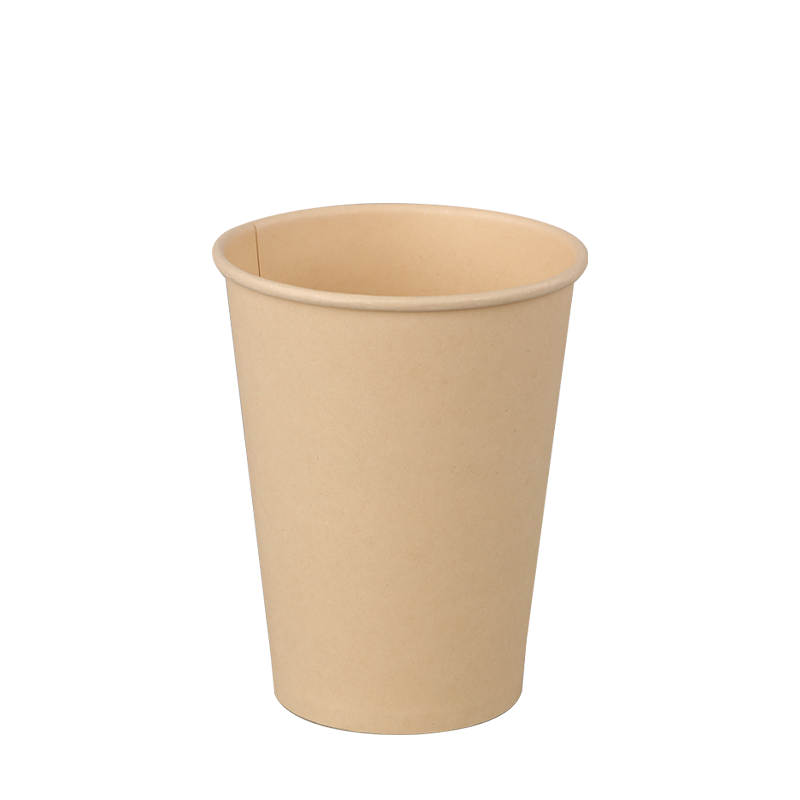
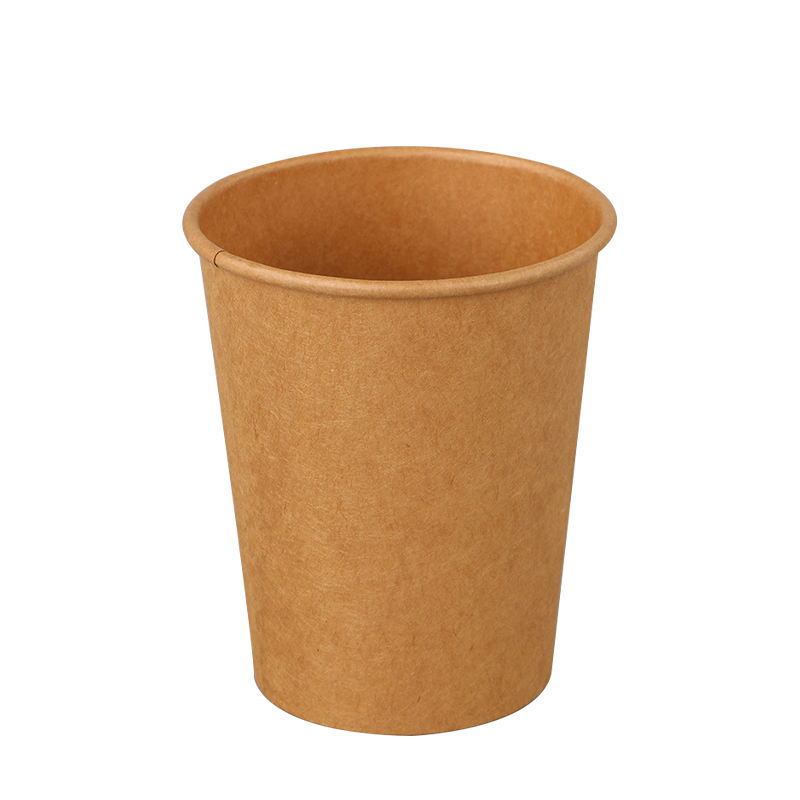
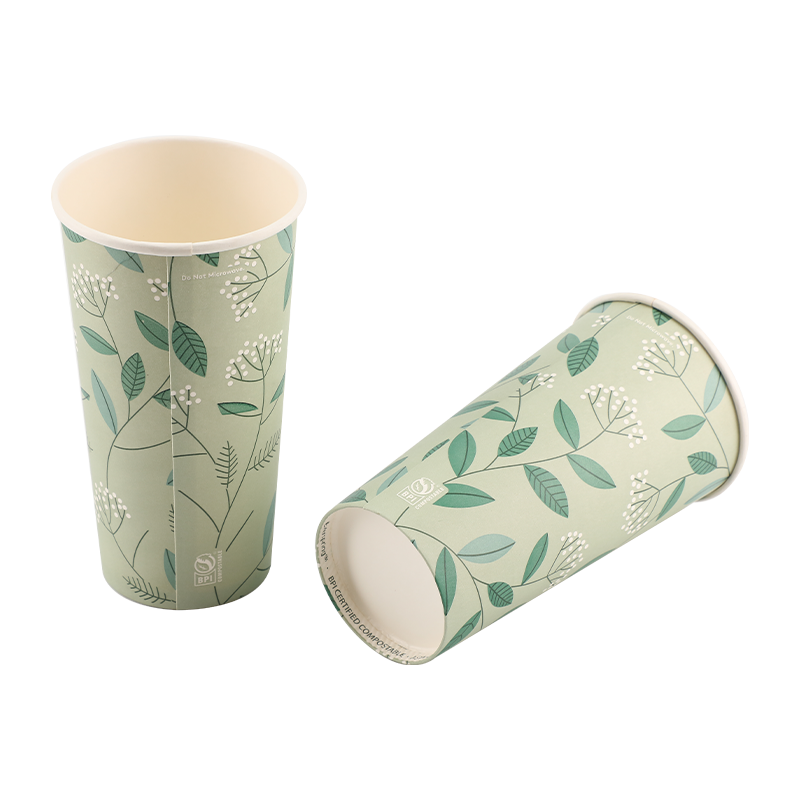 12 oz Single-Wall PE Hot Paper Cups12 oz single-wall hot cup with 9.0 cm rim and 11 cm height, practical for milk tea or Americano; 1,000-piece cartons stay manageable.View Product →
The 12 oz cup at 9.0 by 6.0 by 11.0 cm is the workhorse of the range: small enough for a milk tea or an Americano, tall enough to look like a proper serving, and short enough that a case of 1,000 stays manageable to lift and store.
What Each Measurement Actually Controls
- Top diameter sets lid fit, dome clearance and whether the cup drops cleanly into a dispenser tube.
- Base diameter drives stability on a tray, the size of the cup holder, and how tightly a sleeve grips.
- Height decides the safe fill line, the stack height on a shelf, and the carton cube that shipping is priced on.
- Rim curl thickness is rarely quoted but decides whether a snap-fit lid seals or spins; ask for it on the drawing.
How Construction Moves the Numbers
Single wall is the baseline. A double-wall cup wraps a second layer of board around a slightly smaller inner cup, buying insulation at the cost of a few millimetres: for the same nominal volume, expect roughly 3 to 6 mm of extra height and a marginally wider base. Ripple and embossed cups add a corrugated outer shell that is thicker again, often pushing the rim out by 1 to 3 mm, so a lid that gripped the plain version may sit loose on the textured one.
Coatings and fibre choice change performance more than size. PE, PLA, water-based and plastic-free coatings are applied at 10 to 25 grams per square metre, far too thin to shift a diameter, but they do change how stiff the rim feels and how a lid snaps over it. Bamboo pulp, kraft and virgin wood pulp are normally formed on the same tooling, so the centimetres stay put while the shade and the print base change.
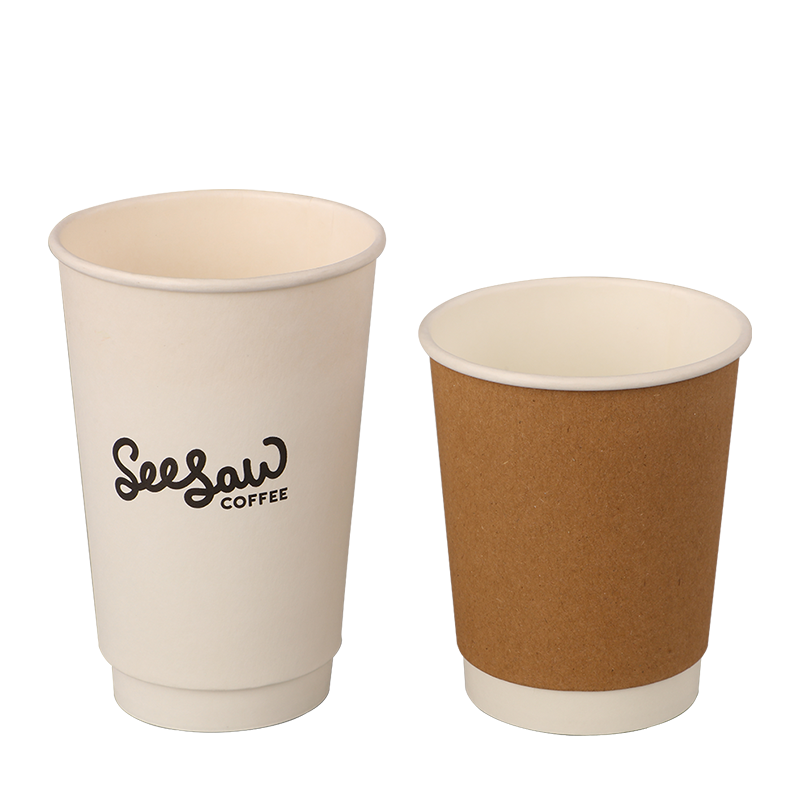 16 oz Scald-Proof Double Wall Hot CupsThe 16 oz double-wall cup adds an insulating air layer and taller body, keeping hot drinks warm while the outside stays easier to handle.View Product →
The 16 oz scald-proof double wall shows the trade-off clearly: the same 480 ml nominal fill, but a taller body and a second wall that keeps the outside below the temperature where fingers start to complain.
Cold Cups, Ice Cream Cups and Bowls
Cold drinks follow the same logic with different proportions. A 12 oz, 16 oz and 22 oz cold cup often share a 9.0 cm rim while the height climbs from about 11 cm to 16.8 cm, and the wider 107 mm and 115 mm rims appear at the top of the cold range and on bowls. Ice cream cups from 4 oz to 16 oz are shorter and squatter, with base diameters closer to the rim so the cup does not tip in a freezer tray.
Bowls are usually quoted in millilitres rather than ounces: 500, 750, 1000, 1300 and 1500 ml for salad bowls, 12 to 32 oz for soup and noodle bowls. Top diameter is the first number to fix, because it decides the lid, the carrier and whether the bowl fits a heated shelf. If cold service is the larger part of your menu, the cold drinking paper cups buying guide goes deeper into materials and size selection.
Lid Fit: Where Millimetres Decide
Lids are sold by rim diameter in millimetres, with 62, 80, 90, 95, 107 and 115 mm covering most of the market, and they are not interchangeable between suppliers. A snap-fit lid tolerates roughly 0.5 mm of rim variation, which sits inside the plus or minus 1 to 2 mm that most cup tolerances allow, so the same lid can feel loose on one production lot and tight on the next.
Test before you commit. Pull twenty cups from the top, middle and bottom of a case, fit your lid, and lift each cup by the lid while it holds water. A lid that slips, leaks air or cracks at the rim is a specification problem, not a training problem.
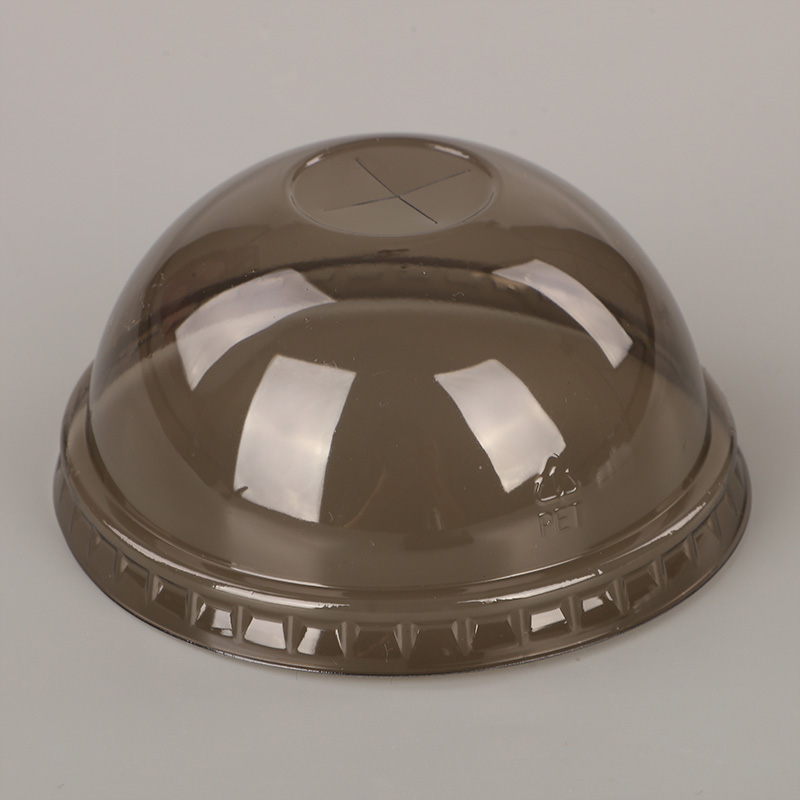 90 mm PET Dome Lids for 12–16 oz Cold CupsFood-grade PET dome lid with a 90 mm rim for 12–16 oz cold cups, offering transparency, sealing and a positioned straw hole for takeout drinks.View Product →
A 90 mm dome lid built for 12 to 16 oz cold cups is a good reference point: it pairs with the most common rim in the range, which is exactly why that rim became common.
A Buyer's Checklist Before Approving a Size
- Request a dimension drawing that lists top diameter, base diameter, height and rim thickness with tolerances.
- Measure ten samples with a caliper and compare the spread, not just the average.
- Fit your existing lids, sleeves, carriers and dispensers to the samples before approving print.
- Run a fill test with the real product, including foam, whip or ice displacement.
- Check carton cube and stack height; 3 mm of extra height across 1,000 units changes pallet counts.
- Keep a signed reference sample so that reorders are compared to an object, not a description.
Sourcing by Dimension, Not by Label
When you write a specification, put the numbers in the order the production line reads them: material and coating, top diameter, base diameter, height, nominal volume, tolerance, print and packing. Convert millilitres to ounces by dividing by 29.57 when you need a cross-check, but never size a cup from the ounce name alone.
If you form cups or bowls in-house and buy paper cup fan blanks rather than finished cups, the geometry of the fan, meaning arc length, angle and blank height, sets the finished rim and base before a single cup exists. In that case the fan drawing is the real size document, and the finished cup dimensions are simply its consequence.
Paper cup sizes in cm are therefore less about ounces than about three caliper readings and the lid that has to sit on top of them. Fix the centimetres, hold a reference sample, and the ounce label goes back to being what it always was: a convenient name for a shape you have already measured.
Your email address will not be published. Required fields are marked *

We're Here To Help.

Copyright © HANGZHOU RENMIN ECO-TECH CO.,LTD. All Rights Reserved
Eco Friendly Food Packaging Solution Food Paper Packaging Manufacturer
