

-
Products


-
Food Packaging Solution
Mission & PhilosophyRenmin Eco-Tech adheres to the philosophy of green, innovation, and responsibility, placing customers at the center and valuing dedicated professionals. We aim to integrate sustainability and eco-consciousness into every product.
 Green Innovation Leading the Future
-
Our Story
Why Choose Us?Hangzhou Renmin Eco-tech Co., Ltd, situated in the picturesque city of Hangzhou, Zhejiang, is a leading paper product research, development, and sales company. Established in 2004, we specialize in eco-friendly solutions such as Base Paper Rolls, PE Coated Paper Rolls, Paper Cup Fans, Paper Bowl and Box Fans, Die-cut Sheets, etc, for food packaging, and Aluminum Foil Film laminated paper.
 Coming From China, Marketing To The World.
-
News
 Aluminum Foil Paper Bowls: Structure, Performance & Foodservice Applications
What Aluminum Foil Paper Bowls Actually Are — And Why the Laminate Structure Matters Aluminum foil paper bowls are composite containers built from two bonded materials: a structural paperboard base t...

 English
 中文简体
 Français
 Español
 عربى
Industry News
Paper Cup Measurements: Capacity, Rim Diameter and Wall Thickness Explained
A café switches cup suppliers to save on freight and keeps its existing 90 mm lids. On the first morning of service, the lids drop loose onto one pallet and refuse to snap onto another. Nothing printed on either carton is wrong: both say 12 oz. The difference sits in the measurements behind that label — a rim that finishes at 89.2 mm instead of 90.0 mm, or a rolled edge with a slightly different curl.
Paper cup measurements, not the ounce figure, decide whether a lid seals, whether a cup drops cleanly into a carrier, and whether your carton plan holds. Four numbers carry most of that weight: rim diameter, bottom diameter, overall height and nominal capacity. Three more refine the picture: board weight, coating type and wall construction. Get those seven aligned and a reorder rarely surprises anyone; skip them and the surprise usually arrives during service.
Content
- 1 The Measurements That Define a Paper Cup
- 2 Why the Ounce Label Is Only a Starting Point
- 3 Typical Paper Cup Measurements by Size
- 4 Rim Diameter Decides Whether Your Lid Fits
- 5 Wall Construction Changes the Outside Dimensions
- 6 Board Weight, Coating and Apparent Thickness
- 7 Tolerances, Sampling and the Purchase Order
- 8 How to Measure a Cup You Already Use
The Measurements That Define a Paper Cup
Buyers who ask only for "a 12 oz cup" leave the supplier to choose the geometry. That is where mismatch creeps in. Each cup is defined by a set of dimensional values that travel together:
- Rim (top) diameter — measured across the outside edge of the rolled lip, and the single most important number for lid compatibility.
- Bottom diameter — governs stability on a tray and how the base sits in a holder.
- Overall height — determines whether the cup fits under a machine spout, a heat sleeve or a cup carrier.
- Nominal capacity — the published fill figure in ounces or millilitres, usually measured close to the brim rather than at a practical serving line.
- Wall thickness and board weight — the variables behind rigidity, heat transfer and how many cups nest into a sleeve.
Two cups bearing the same capacity can differ by several millimetres in every other dimension. That is not a manufacturing defect; it is a design choice made to suit different tooling, different lids or a different drink menu.
Why the Ounce Label Is Only a Starting Point
A 12 oz cup is nominally 355 mL, yet almost no café serves 355 mL of coffee into one. Baristas stop 10 to 20 mm below the rim to leave room for crema, foam, a lid or a stirrer. On the cold side the gap widens considerably, because ice occupies roughly a third of the cup volume. A 16 oz cup packed with ice typically holds 280 to 320 mL of actual liquid.
Practical serving volume therefore runs below nominal capacity, and the gap is not consistent between suppliers. Some 8 oz cups hold about 270 mL when filled level to the brim; others hold noticeably more for the same stated size. When you compare suppliers, ask for the brimful capacity in millilitres as well as the printed ounce figure, and ask where the fill line was set. A supplier who can answer both questions has usually invested in real tooling drawings. Cold drink buyers face a second layer of choice on materials and formats, which is covered in this guide to cold drinking paper cups.
Typical Paper Cup Measurements by Size
The table below shows the ranges most foodservice programmes work within. Treat them as reference points during early conversations, never as a substitute for the supplier's own drawing.
| Size (oz / mL) | Rim diameter | Bottom diameter | Height | Matching lid rim |
|---|---|---|---|---|
| 4 oz / 118 mL | 62 mm | 45 mm | 60 mm | No standard lid |
| 8 oz / 237 mL | 80 mm | 56 mm | 92 mm | 80 mm |
| 10 oz / 296 mL | 90 mm | 60 mm | 95 mm | 90 mm |
| 12 oz / 355 mL | 90 mm | 60 mm | 110 mm | 90 mm |
| 16 oz / 473 mL | 90 mm | 60 mm | 135 mm | 90 mm |
| 20 oz / 591 mL | 90 to 95 mm | 62 mm | 150 mm | 90 or 95 mm |
| 22 oz / 650 mL | 95 mm | 62 mm | 165 mm | 95 mm |
| 32 oz / 950 mL | 107 to 115 mm | 70 mm | 175 mm | 107 or 115 mm |
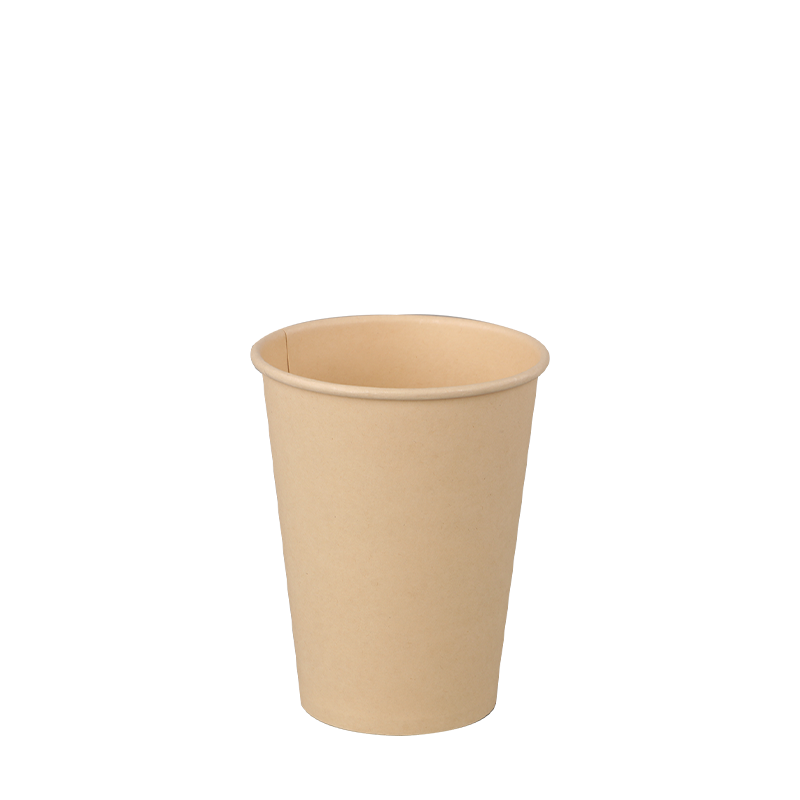
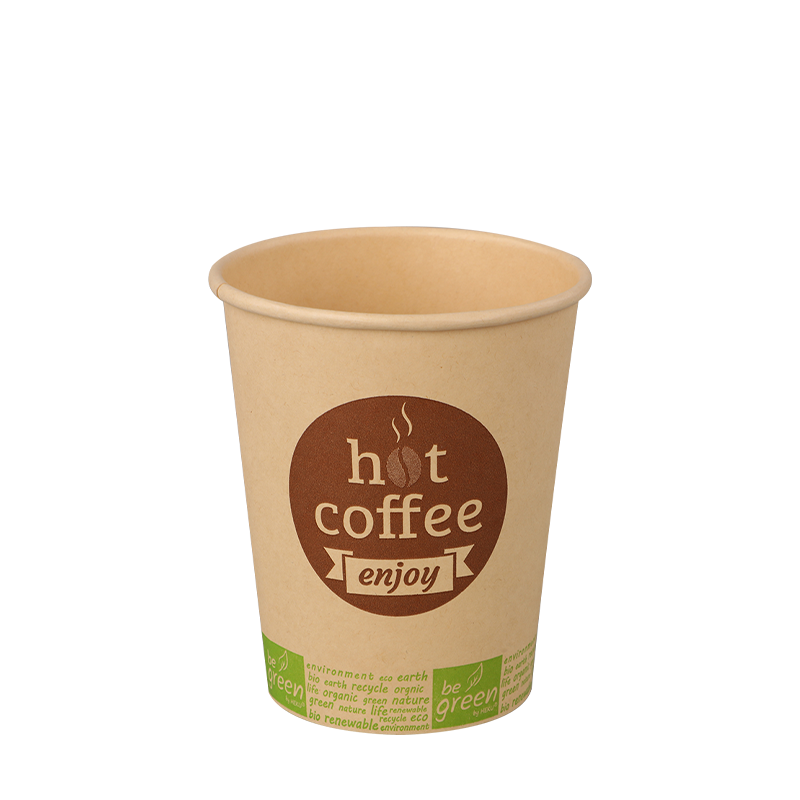
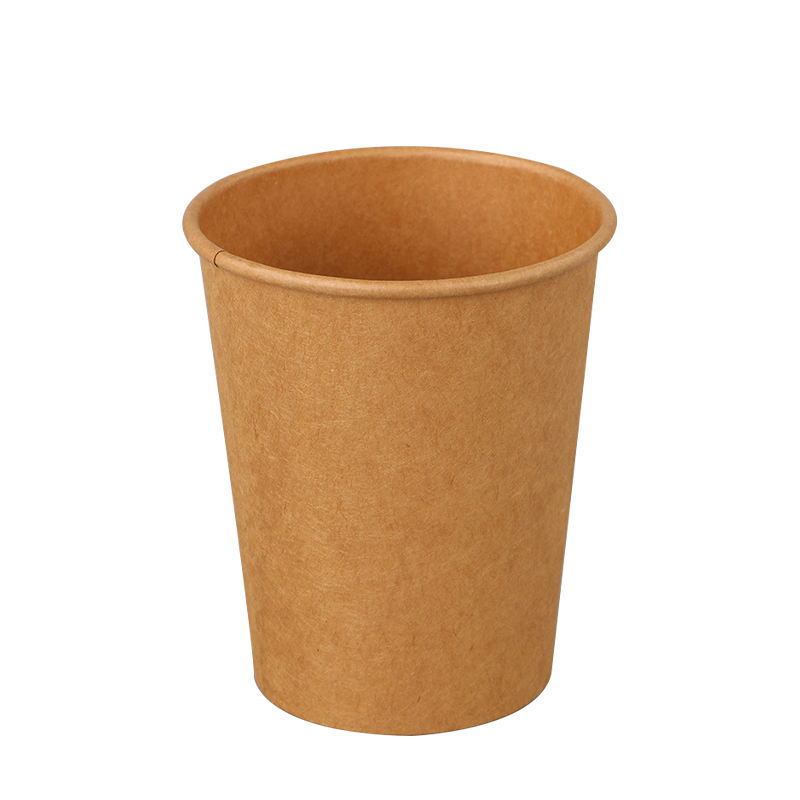
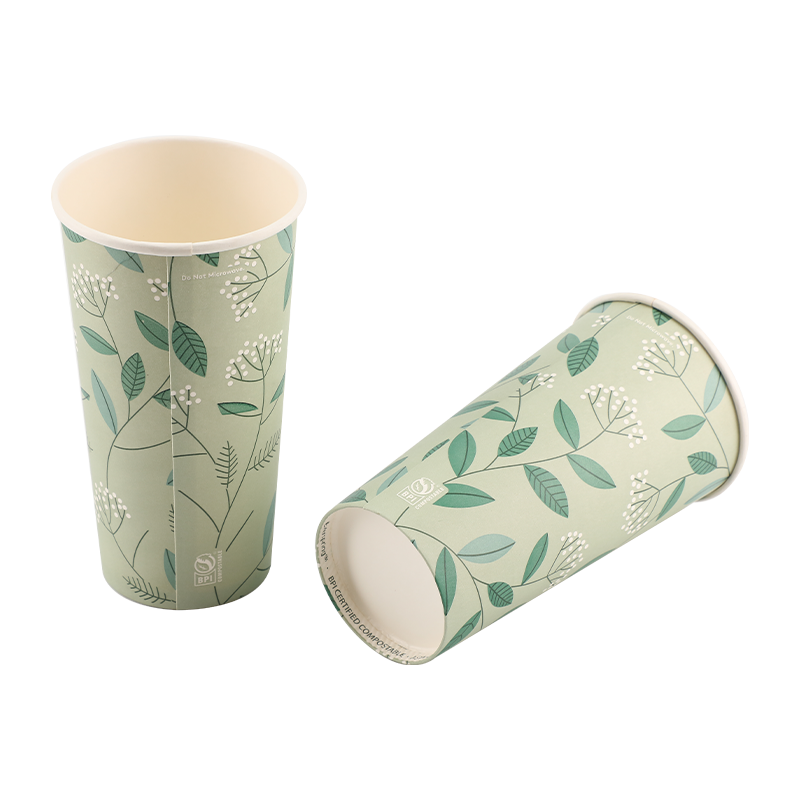 12oz PE Paper Single Wall Hot paper cupsProduct Description: 100% original wood pulp paper with moisture-proof and oil-proof coating, compostable & bio-degradable, especially designed for hot drinks. Feature...View Product →
Rim Diameter Decides Whether Your Lid Fits
Lids are specified in millimetres, not ounces, which is why the ounce label can stay constant while the lid changes. Most hot ranges cluster around 90 mm across 10 to 16 oz, cold programmes move to 95 mm once they pass 20 oz, and large bowls or 32 oz formats sit at 107 mm or 115 mm.
Rim diameter alone is not enough. The curl profile — how tightly the lip is rolled and how far it protrudes — matters just as much, and it varies between machines. A lid designed for a 90 mm rim with a thin, tight curl may sit loosely on a 90 mm rim with a wider roll. That single detail explains most "the lids don't fit" complaints after an otherwise well-handled supplier change.
Two practical consequences follow. First, buy lids by rim diameter and curl profile, and state both on the purchase order. Second, standardise where you can: a common 90 mm lid across the 10, 12 and 16 oz hot cups removes one SKU from the storeroom and eliminates the chance of a barista grabbing the wrong stack during a rush.
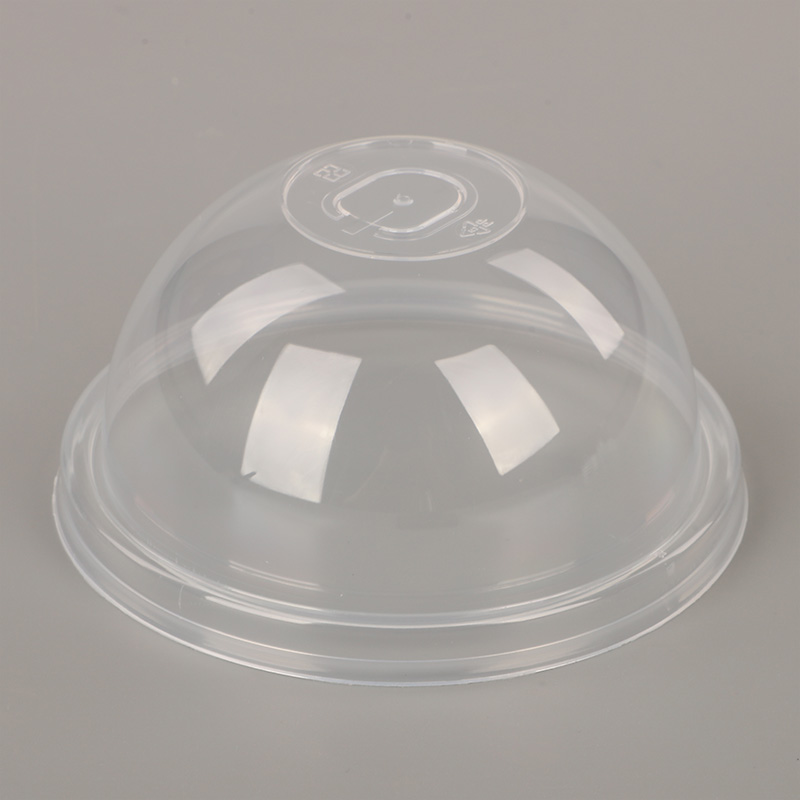 12oz/16oz White/Black PP Hot Drinking Lids20-25 days after the deposit payment is received.View Product →
Wall Construction Changes the Outside Dimensions
A single wall cup is one board layer with a coating on the drinking side, which keeps the outside diameter close to the tooling size. A double wall cup adds an outer wrap, so the same nominal capacity sits roughly 1 to 2 mm wider on the outside and loses a small amount of usable internal volume. Embossed and ripple formats add again, and the extra texture can affect how cups nest, how a sleeve slides on and how many fit into a carton.
If you are moving a menu between wall types, check three things before the first bulk order: whether the existing lids still seal, whether the cups still fit the carrier your delivery team uses, and whether the outer carton count per case has changed. Double wall is also a functional choice, cutting surface temperature at the hand contact point on hot drinks. A scald-proof double wall specification is worth sampling when your menu runs above 85 degrees Celsius at the point of pouring.
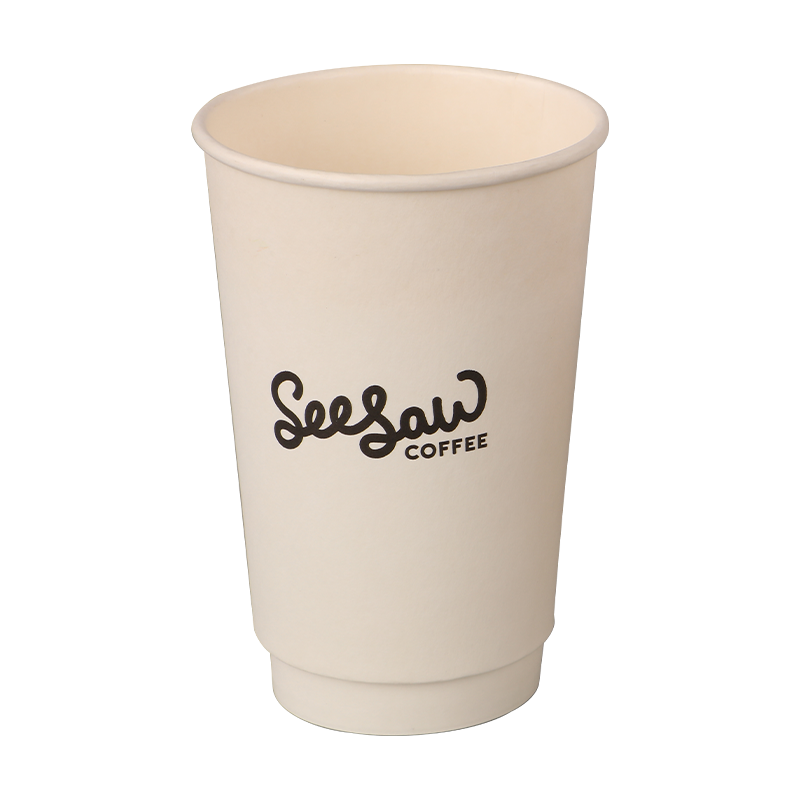
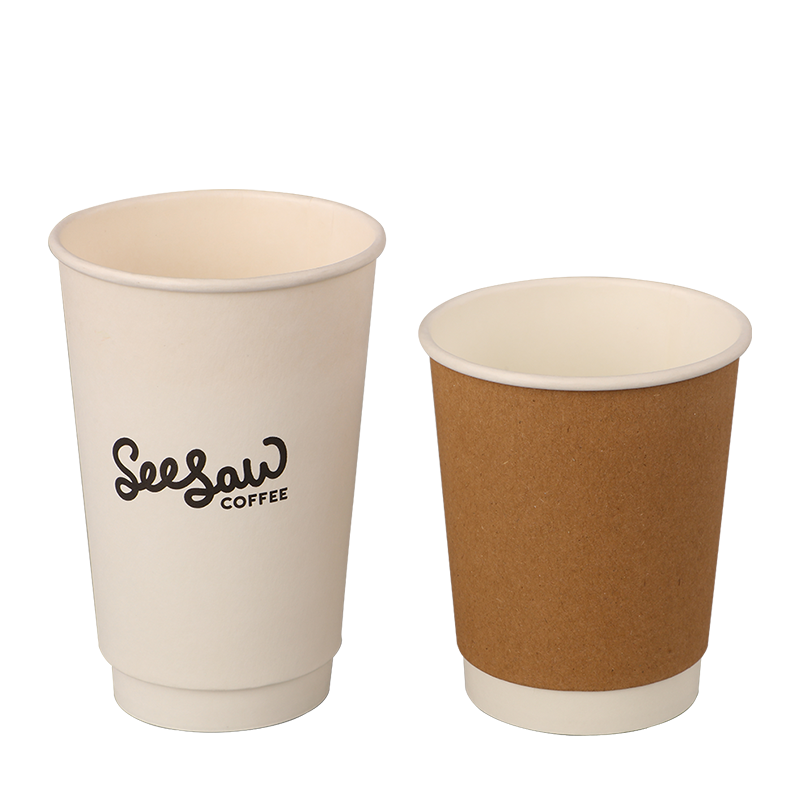 16oz Scald Proof Double Wall Hot Paper CupsProduct Description: Designed with an additional layer to create an air wall, providing thermal insulation for hot drinks like coffee. 1)Ultra-tight rim roll, engineer...View Product →
Board Weight, Coating and Apparent Thickness
Cup board for foodservice commonly falls between 170 and 350 g/m², with hot drink cups usually sitting at 210 to 280 g/m² and cold cups sometimes heavier to resist condensation softening. A single-side polyethylene coating typically adds 15 to 25 g/m², and a board of about 245 g/m² usually measures around 0.34 mm in the cup wall.
Weight alone does not predict rigidity. Fibre type, coating coverage and the forming process all change how a finished cup feels in the hand. A 230 g/m² cup made from strong virgin fibre can outperform a heavier cup made from weaker stock, which is why comparing suppliers on GSM numbers alone leads to disappointing samples. Buyers who want to understand the raw material side can review 100% virgin wood pulp cupstock paper, which sets out how the base sheet is specified before coating.
Tolerances, Sampling and the Purchase Order
No converting line holds every cup to a nominal figure. Typical commercial tolerances run to about plus or minus 0.5 mm on rim diameter, plus or minus 2 mm on height, and around plus or minus 3 percent on capacity. Those bands are perfectly workable, provided both sides agree on them in writing rather than assuming a perfect match to a drawing.
Before signing off a bulk run, measure a sample of about 30 cups drawn from three different cartons. Check the rim in two directions across the cup, since ovality is common, then check height and nesting depth. Fill one cup to the brim with water and weigh it to confirm brimful capacity, and fill a second to the intended serving line to confirm the practical volume your baristas will work with.
- State the rim diameter and curl profile your lids require.
- Give the practical fill volume, not only the nominal size.
- Confirm wall type, board weight and coating.
- Agree tolerances for diameter, height and capacity.
- Ask for the nested pack count — typical sleeves hold 50 cups and cartons 1,000 — so your storage plan matches.
How to Measure a Cup You Already Use
If you have a cup that works and want a replacement that matches it, measure it rather than describing it. A caliper and a jug of water take about ten minutes.
- Measure the rim outside diameter in two directions, 90 degrees apart.
- Measure the bottom diameter and the overall height.
- Measure the height of the rim curl, which sets how a lid engages.
- Fill to the brim with water, weigh, and subtract the empty cup weight for brimful capacity.
- Fill to the level your team actually serves and record that volume too.
- Photograph the cup beside the caliper reading, so the supplier sees exact values rather than rounded ones.
Send those figures with a lid sample if possible. A physical lid removes most of the ambiguity that drawings leave behind, particularly around curl profile and snap force.
Paper cup measurements are a short list of numbers that carry a long chain of consequences: lid fit, carrier compatibility, carton planning, serving consistency and the amount of coffee a customer actually receives. The workable approach is to specify rim diameter and curl, state practical fill volume in millilitres, agree tolerances in writing and sample before committing to a production run.
Suppliers who convert their own board can usually adjust tooling or recommend a specification that matches an existing lid rather than asking you to rebuild your service around a new cup. Hangzhou Renmin Eco-tech has supplied paper cups, cup fans, coated cupstock and food packaging materials since 2004, and works from drawings and physical samples rather than capacity labels alone, which is the difference between a smooth reorder and a morning of loose lids.
Your email address will not be published. Required fields are marked *

We're Here To Help.

Copyright © HANGZHOU RENMIN ECO-TECH CO.,LTD. All Rights Reserved
Eco Friendly Food Packaging Solution Food Paper Packaging Manufacturer
