

-
Products



-
Food Packaging Solution
Mission & PhilosophyRenmin Eco-Tech adheres to the philosophy of green, innovation, and responsibility, placing customers at the center and valuing dedicated professionals. We aim to integrate sustainability and eco-consciousness into every product.
 Green Innovation Leading the Future
 -
Our Story
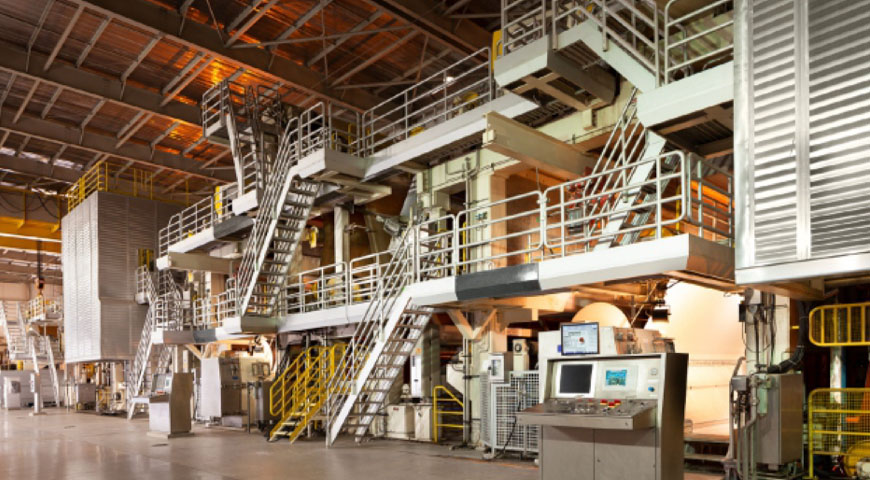
Why Choose Us?Hangzhou Renmin Eco-tech Co., Ltd, situated in the picturesque city of Hangzhou, Zhejiang, is a leading paper product research, development, and sales company. Established in 2004, we specialize in eco-friendly solutions such as Base Paper Rolls, PE Coated Paper Rolls, Paper Cup Fans, Paper Bowl and Box Fans, Die-cut Sheets, etc, for food packaging, and Aluminum Foil Film laminated paper.
 Coming From China, Marketing To The World.
 -
News
 Aluminum Foil Paper Bowls: Structure, Performance & Foodservice Applications
What Aluminum Foil Paper Bowls Actually Are — And Why the Laminate Structure Matters Aluminum foil paper bowls are composite containers built from two bonded materials: a structural paperboard base t...

 English
 中文简体
中文简体 Français
 Español
 عربى
عربىIndustry News
Layered Coffee Drinks: How to Build Clean, Visible Layers
Content
What Makes a Coffee Drink "Layered"
A layered coffee drink isn't stirred together — it's built. Milk, espresso, syrup, and cold foam each sit in their own visible band, separated by differences in density rather than by any special ingredient. The heavier component settles at the bottom, the lighter one floats on top, and the line between them stays sharp as long as nobody disturbs it.
This is the same physical principle that keeps oil floating on water or cream sitting on top of coffee: fluids with different densities resist mixing under gravity alone, forming distinct bands called stratification. The clearer the density gap between two liquids, the crisper the line between their layers, which is why a well-made layered latte holds its stripes for minutes rather than seconds. For anyone who wants the physics in more depth, the phenomenon is explained well in this university-level explainer on density stratification in fluids.
The Tools and Cup That Actually Matter
Most guides to layered coffee focus entirely on the pour and skip the container, but the vessel is doing half the work. If nobody can see through the walls, there's no point building three careful layers. A clear cold drinking paper cup that lets every layer show through turns a technical pour into something a customer actually notices and photographs.
Beyond the cup, three tools do most of the work: a long-handled bar spoon, a small pitcher with a narrow spout, and patience. Pouring over the back of a spoon breaks the fall of the liquid, so it slides gently onto the surface below instead of punching through it. Skip the spoon and even a perfect density difference won't save the pour.
Step-by-Step: Building a Classic Layered Latte
- Steam or froth the milk until it's velvety, then pour it into the glass or cup first — it becomes the base layer.
- Pull a shot of espresso and let it cool for 20–30 seconds. Hot espresso poured straight from the machine has enough momentum to blast through the milk.
- Rest a spoon just above the milk's surface, angled down, and pour the espresso slowly over the back of it. The espresso should spread out and settle rather than plunge in.
- Finish with a thin layer of syrup, cream, or flavored cold foam, again poured over the spoon for control.
The order matters because it follows density from heaviest to lightest. Reverse the sequence — pour milk over espresso — and the two mix on contact instead of stacking.
Iced vs. Hot Layered Coffee: Different Rules
Hot layered drinks rely almost entirely on density and pour technique, since there's no ice to help. Iced versions get an extra assist: a full load of ice slows the downward momentum of whatever is poured next, giving gravity time to sort the liquids before they can blend.
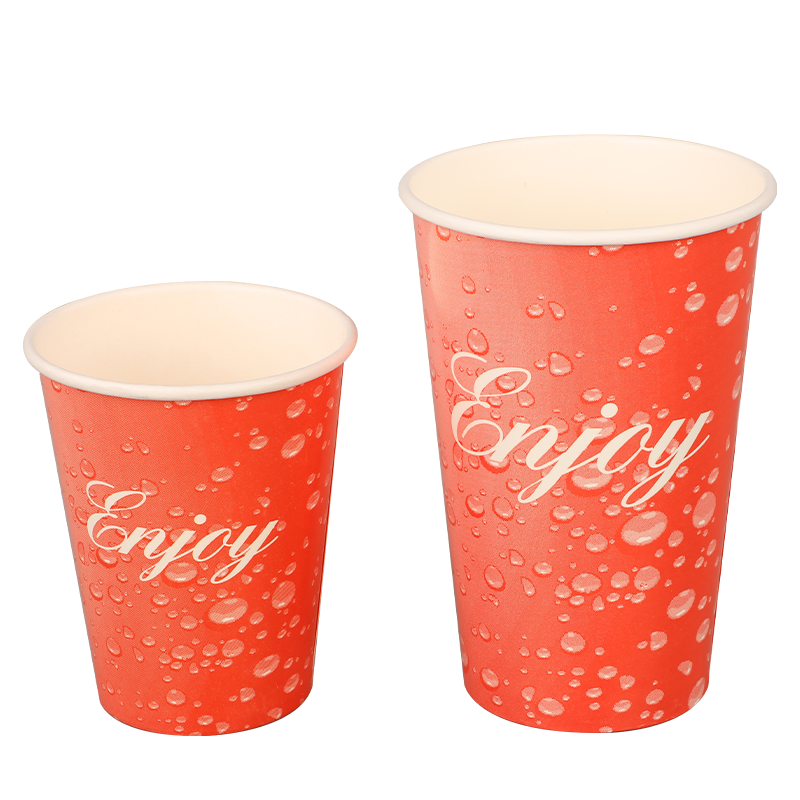
That's also why cup size matters more for iced builds than hot ones — too little ice and the layers blur together before they set. A 12oz cup sized for iced coffee and juice-style layered drinks works well for a single-serving build with room for ice, while a larger 16oz cup gives a three- or four-layer iced drink enough vertical space for each band to read clearly.
Common Mistakes That Break the Layers
- Pouring too fast — momentum punches through the layer below no matter how different the densities are.
- Skipping the spoon trick — a direct pour concentrates force in one spot instead of spreading it across the surface.
- Using liquids at the wrong temperature — a too-hot pour thins the liquid and lets it mix more easily.
- Choosing ingredients with too little density difference — milk and a thin syrup can blur together even with a careful pour, while cream or a thick syrup holds its line.
Most of these show up as a muddy transition zone instead of a clean line — this middle band is normal in small amounts, but a thick one usually means the pour was too fast or the temperatures were mismatched.
Serving Layered Drinks at a Café Scale
For a coffee shop, the presentation is the product. A drink that looks identical to a regular latte doesn't earn the premium price or the social media share, so the packaging has to do as much visual work as the pour.
A transparent PET dome lid designed for cold drinks keeps the top layer visible while still giving enough headspace for cold foam or fruit garnish to survive the walk to the table. Finishing the drink with a striped paper straw adds a small decorative touch without covering any of the layers.
Cup material matters just as much as clarity for cold builds — condensation, hold time, and beverage acidity all affect how a cup performs over a busy shift. Buyers sourcing at volume can check our cold cup materials and sizing guide before settling on a size range for a layered drink menu.
Your email address will not be published. Required fields are marked *

We're Here To Help.

Copyright © HANGZHOU RENMIN ECO-TECH CO.,LTD. All Rights Reserved
Eco Friendly Food Packaging Solution Food Paper Packaging Manufacturer
