

-
Products
-
Food Packaging Solution
Mission & PhilosophyRenmin Eco-Tech adheres to the philosophy of green, innovation, and responsibility, placing customers at the center and valuing dedicated professionals. We aim to integrate sustainability and eco-consciousness into every product.
 Green Innovation Leading the Future
 -
Our Story
Why Choose Us?Hangzhou Renmin Eco-tech Co., Ltd, situated in the picturesque city of Hangzhou, Zhejiang, is a leading paper product research, development, and sales company. Established in 2004, we specialize in eco-friendly solutions such as Base Paper Rolls, PE Coated Paper Rolls, Paper Cup Fans, Paper Bowl and Box Fans, Die-cut Sheets, etc, for food packaging, and Aluminum Foil Film laminated paper.
 Coming From China, Marketing To The World.
 -
News
 Aluminum Foil Paper Bowls: Structure, Performance & Foodservice Applications
What Aluminum Foil Paper Bowls Actually Are — And Why the Laminate Structure Matters Aluminum foil paper bowls are composite containers built from two bonded materials: a structural paperboard base t...
 English
 中文简体
中文简体 Français
 Español
 عربى
عربىIndustry News
How Big Is a 12 oz Cup? Standard Dimensions, Capacity, Lid Sizes, and Uses
A 12 oz paper cup measures about 3.5 inches (89 to 90 mm) across the top rim, roughly 2.4 inches (60 mm) across the base, and 4.3 to 4.4 inches (110 to 112 mm) tall. Filled level with the rim it holds 355 ml; served as a real drink, with headspace left under the lid, it carries somewhere between 300 and 320 ml.
The gap between the printed size and what you can actually pour is where most sizing mistakes start. Anyone specifying a 12 oz cup for a coffee programme, a juice line or a soup takeaway needs three dimensions and two capacities, plus a clear idea of which of those numbers the supplier is quoting. Below are the standard figures, the reasons two 12 oz cups can look completely different, and the checks worth putting into a purchase order before a container ships.
Content
- 1 12 oz Cup Dimensions at a Glance
- 2 What 12 Ounces Actually Means in Millilitres
- 3 Why Two 12 oz Cups Can Look Different
- 4 Hot Drinks: the Standard 12 oz Coffee Cup
- 5 Cold Drinks: Same Volume, Different Proportions
- 6 12 oz Soup and Takeaway Cups
- 7 Materials and Coatings: What They Change and What They Do Not
- 8 How a 12 oz Cup Compares With Other 12 oz Containers
- 9 Buying Checklist for 12 oz Cups
12 oz Cup Dimensions at a Glance
Almost every disposable 12 oz cup follows the same basic geometry: a tapered body, a rolled rim that accepts a snap-on lid, and a base narrow enough for standard holders and dispensers. The values below are typical for the disposable paper cups sold into foodservice and retail packaging markets.
| Specification | Single-wall hot cup | Double-wall hot cup | Cold drink cup |
|---|---|---|---|
| Nominal capacity (fill line) | 355 ml / 12 US fl oz | 355 ml | 355 ml |
| Overflow capacity (to the rim) | 370-400 ml | 370-400 ml | 375-410 ml |
| Practical serving fill | 300-330 ml | 300-330 ml | 300-340 ml including ice |
| Top rim diameter | 90 mm / 3.54 in | 90 mm | 90 mm |
| Base diameter | 60 mm / 2.36 in | 60 mm | 60 mm |
| Overall height | 110 mm / 4.33 in | 110-115 mm | 112-120 mm |
| Lid class | 90 mm hot drink lid | 90 mm hot drink lid | 90 mm flat or dome lid |
Two rows matter more than the rest. The rim diameter controls everything downstream, from lids and sleeves to cup holders in delivery vehicles, and the difference between nominal and overflow capacity explains how a cup can feel generous while still being labelled 12 oz.
What 12 Ounces Actually Means in Millilitres
A US fluid ounce equals 29.5735 ml, so 12 oz comes to 354.9 ml, rounded to 355 ml across the industry. An imperial fluid ounce is smaller, at 28.413 ml, which makes a British or Irish "12 oz" cup 341 ml, about 14 ml less. That shortfall is roughly half a single espresso shot, and it is enough to change a portion specification if the buyer and the supplier are reading different unit systems.
Cup sizes are nominal, not absolute. Manufacturers print the number that corresponds to a practical fill line, usually 1.5 to 2 cm below the rim, which leaves room for a lid and reduces the chance of a spill during a commute or a delivery run. That headspace costs 40 to 60 ml in a cup of this size. If a customer asks why a 355 ml drink does not fill the cup, the answer is the fill line and the lid recess.
Weight and volume also diverge once the contents change. Twelve fluid ounces of water or black coffee weighs about 355 g, while the same cup of a thick soup or a blended smoothie can weigh 380 to 400 g. Freight and packaging strength calculations should follow the weight, not the printed ounce figure.
Why Two 12 oz Cups Can Look Different
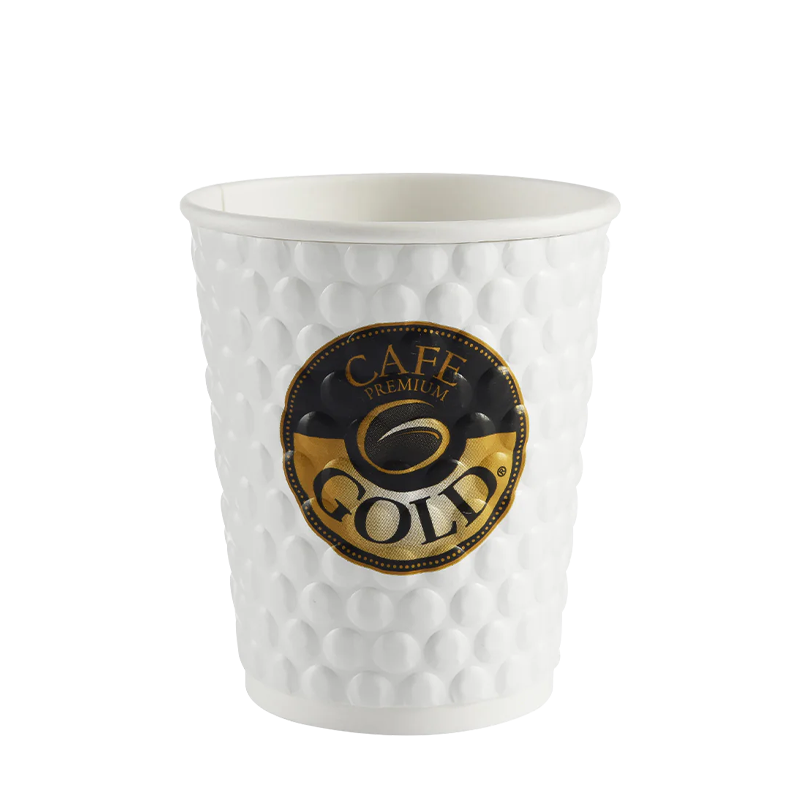
Two cups holding the same 355 ml can sit at noticeably different heights. A wider taper produces a shorter cup; a narrower taper produces a taller one with the same rim diameter. A double-wall cup adds an outer shell that increases the outer diameter by a millimetre or two without changing the inner volume, and an embossed or rippled wall adds texture rather than height.
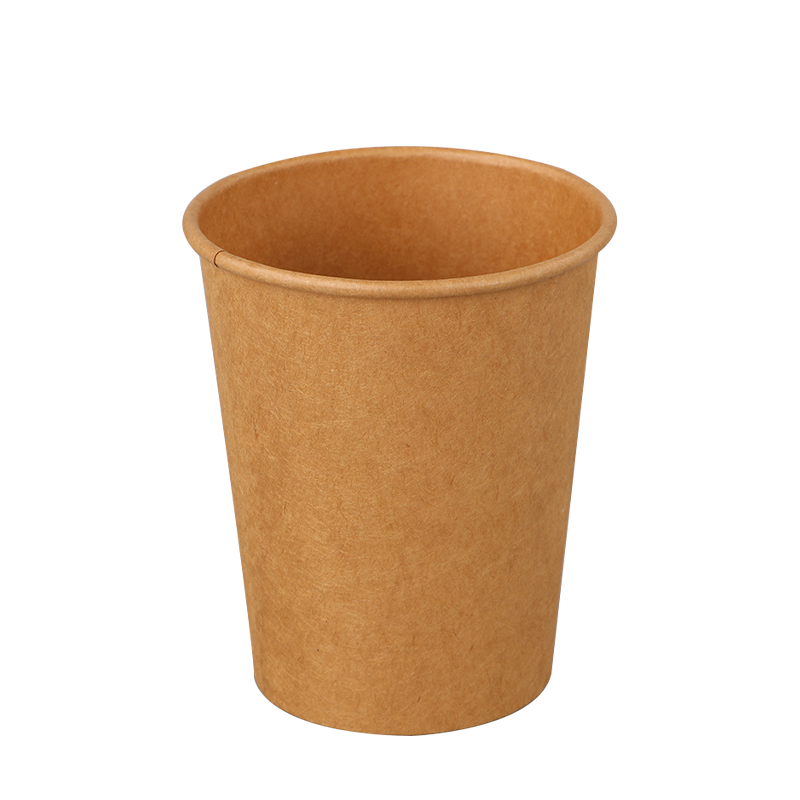
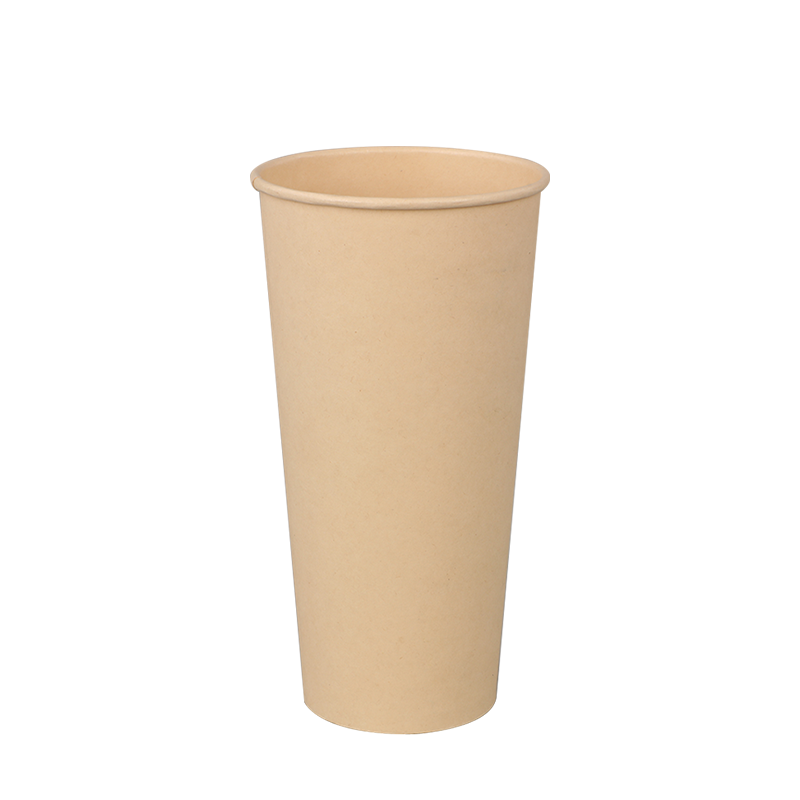
Substrate choice is often mistaken for a size difference. Kraft, bamboo fibre and virgin wood pulp cupstock are formed on the same tooling, so a 12 oz kraft cup and a 12 oz white cup share dimensions even when they look and feel different in the hand. What actually changes with material is stiffness, print contrast and how the cup behaves with hot liquid inside.
Hot Drinks: the Standard 12 oz Coffee Cup
A 12 oz single-wall hot cup with a 90 mm rim and a 110 mm body is the workhorse of takeaway coffee. It fits most under-counter dispensers, standard cup carriers and the 90 mm lid range, so a café can switch between 12 oz and 16 oz cups and keep the same lid stock on the shelf.
The double-wall version shares the rim and base but adds an insulating layer, which removes the need for a separate sleeve and keeps the outer surface comfortable at 85 to 90 degrees Celsius. Buyers who want that comfort but cannot accept a wider outer shell usually move to an embossed or rippled single wall instead.
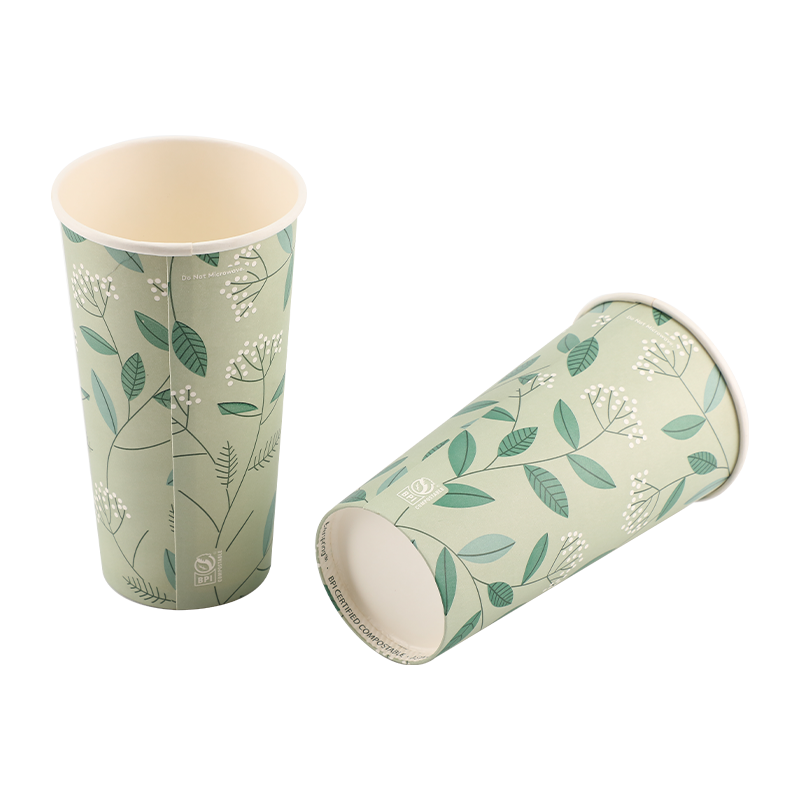 12oz Single Wall Hot Paper Cups for Coffee and TeaA 12 oz single-wall hot cup with moisture- and oil-resistant wood pulp paper, suited to coffee, tea, and milk tea service.View Product →
Cold Drinks: Same Volume, Different Proportions
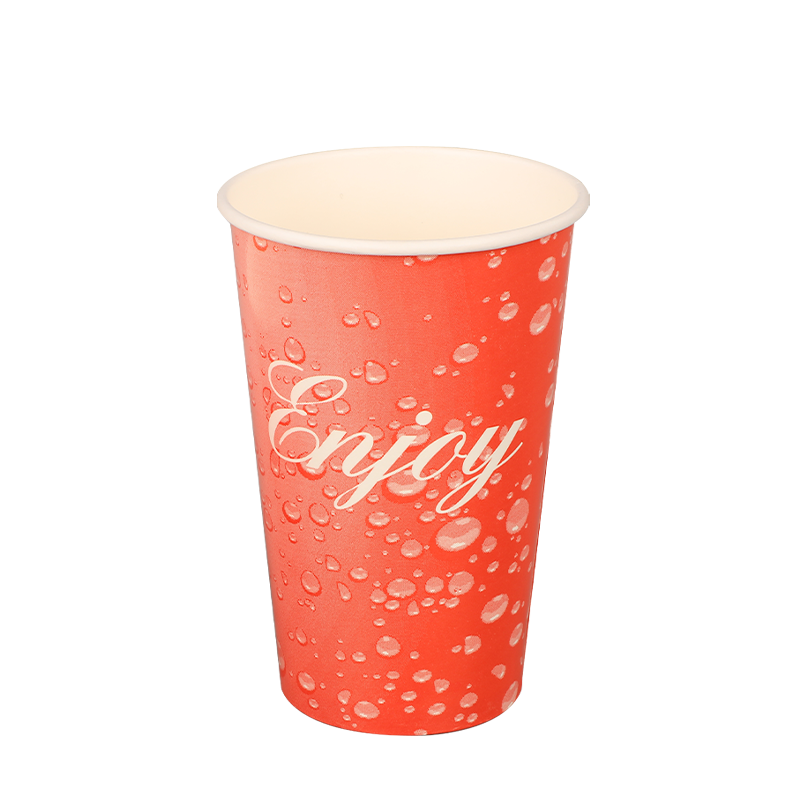
A 12 oz cold drink cup usually runs slightly taller than its hot counterpart, at 112 to 120 mm, because the body carries a thinner wall and often needs extra height for ice. Ice displaces 30 to 50 percent of the volume in a typical serve, which is why a 12 oz cold cup is rarely filled with liquid alone. Dome lids add another 20 to 30 mm of clearance for whipped toppings.
The practical consequence is straightforward: a 12 oz cold cup and a 12 oz hot cup can share the same 90 mm lid family while behaving differently in holders, carriers and display cases. Our cold drinking paper cup buying guide walks through the material and size decisions in more detail.
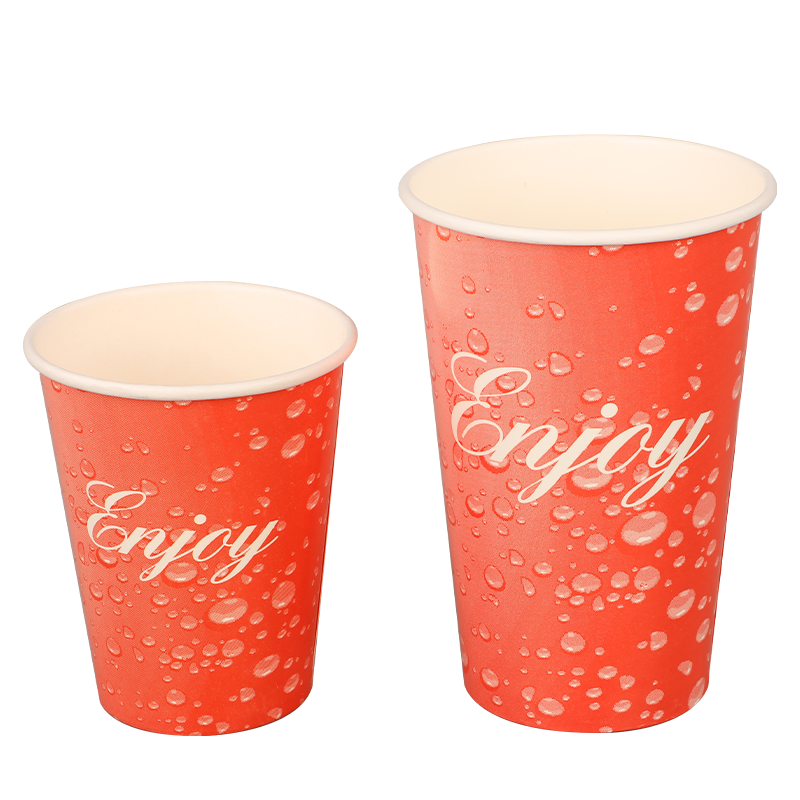 12oz Cold Drinking Paper Cups for Juice and Iced TeaCustom-printed 12 oz cold cups with two-sided coating, high waterproof barrier, and cold-lid compatibility for juice and iced tea.View Product →
12 oz Soup and Takeaway Cups
Foodservice cups in the 12 oz range are wider and shorter than coffee cups, with a rolled rim that holds a lid firmly under steam pressure. Because the wall is short and the rim is rolled, a 12 oz soup cup reads as larger in the hand even though it carries exactly the same 355 ml.
For hot soup and noodle service, the practical tasks are leak resistance at the seam, oil resistance on the inner surface and enough rigidity that the cup does not buckle when a customer grips it with one hand. That combination favours a heavier board and a coating applied evenly around the base.
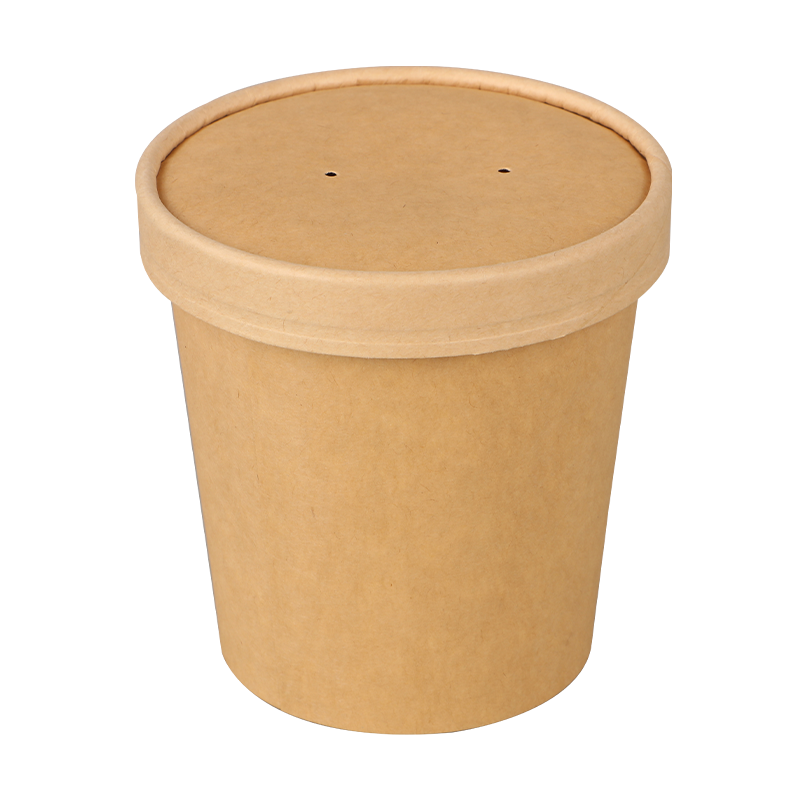 12oz Rolled-Edge Kraft Paper Soup Cups and BowlsThis 12 oz kraft soup cup has a tight rolled rim and PE, PLA, or non-plastic coating options for hot and cold foodservice.View Product →
Materials and Coatings: What They Change and What They Do Not
Coating weight does not change the outer dimensions of a 12 oz cup, but it changes everything about how the cup performs. A PE layer of roughly 15 to 25 g per square metre per side provides the moisture barrier for hot and cold drinks; water-based and PLA coatings serve brands that need recyclable or compostable claims, and they demand tighter control in forming because the barrier is thinner.
Cupstock specification therefore belongs in the same conversation as cup dimensions. Buyers who convert their own cups from PE coated cupstock paper rolls typically fix the board first and then confirm that the finished cup still meets the 90 mm rim tolerance their lids require.
How a 12 oz Cup Compares With Other 12 oz Containers
Twelve ounces is a shared reference point across drinks packaging, which makes it a useful benchmark when a customer asks for "the same size as a can". The shapes, however, are not interchangeable.
| Container | Volume | Typical dimensions |
|---|---|---|
| 12 oz paper cup (hot) | 355 ml | 90 mm rim x 110 mm tall |
| 12 oz paper cup (cold) | 355 ml | 90 mm rim x 112-120 mm tall |
| 12 oz beverage can | 355 ml | About 66 mm diameter x 123 mm tall |
| 12 oz soup cup | 355 ml | Wider rim, shorter body |
A can is taller and narrower than a cup of the same capacity, so it fits a vehicle holder that a paper cup may not, and vice versa. Cup carriers, shelf plans and vending chutes should always be checked against the rim diameter rather than the ounce figure.
Buying Checklist for 12 oz Cups
- Confirm whether the quoted 355 ml refers to the nominal fill line or the overflow capacity, and ask for both values in writing.
- Check rim diameter and tolerance. A 90 mm rim that drifts beyond about 0.3 mm will leak with lids from another supplier.
- Decide between single wall, double wall and embossed wall based on holding comfort and whether a sleeve is acceptable.
- Match the coating to the application: PE for general hot and cold service, water-based or PLA for recyclable and compostable claims.
- Test with the actual product, not water. Soups, syrups and iced drinks behave differently at the seam and the base.
- Confirm case pack, pallet configuration and nesting height, because 12 oz cups from different factories stack to different heights.
- Request samples from the production tooling that will run your order, including a lid fit test on at least ten cups.
The short answer to how big a 12 oz cup is: about 3.5 inches across the rim, 2.4 inches across the base and 4.4 inches tall, holding 355 ml at the fill line and 300 to 320 ml in normal service. Everything beyond that is a decision about taper, wall construction, coating and lid compatibility. Get those four variables aligned before placing an order, and the cup will fit the holder, the lid and the drink it was chosen for.
Your email address will not be published. Required fields are marked *
We're Here To Help.

Copyright © HANGZHOU RENMIN ECO-TECH CO.,LTD. All Rights Reserved
Eco Friendly Food Packaging Solution Food Paper Packaging Manufacturer
