

-
Products
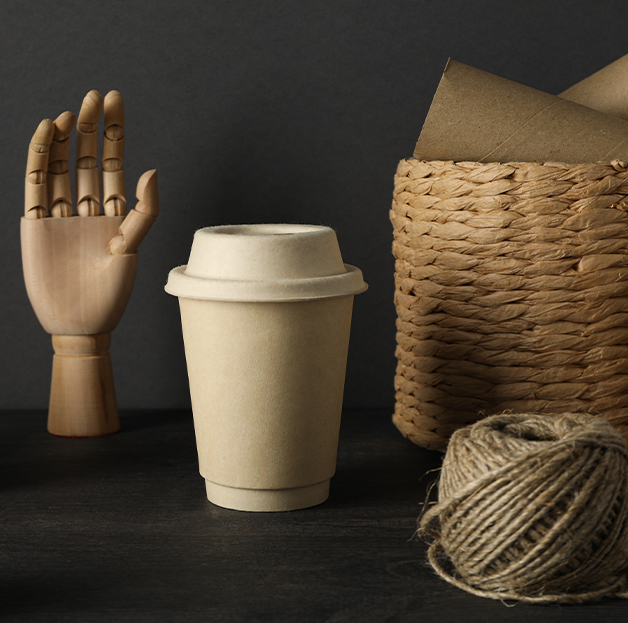
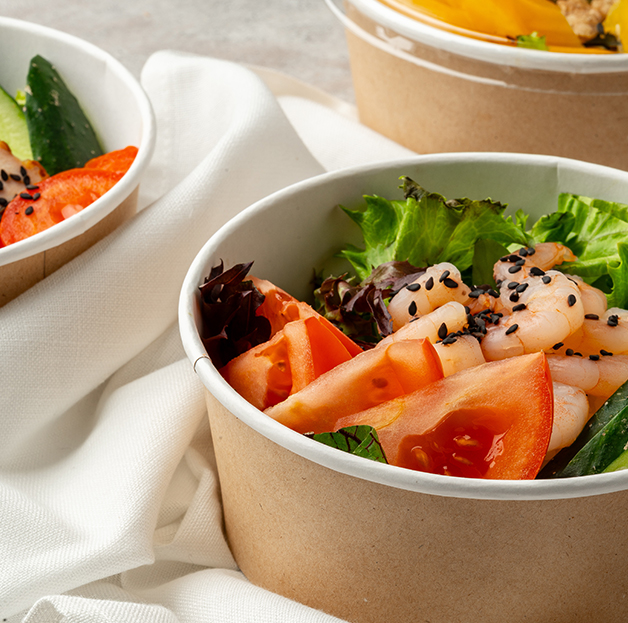
-
Food Packaging Solution
Mission & PhilosophyRenmin Eco-Tech adheres to the philosophy of green, innovation, and responsibility, placing customers at the center and valuing dedicated professionals. We aim to integrate sustainability and eco-consciousness into every product.
 Green Innovation Leading the Future
 -
Our Story
Why Choose Us?Hangzhou Renmin Eco-tech Co., Ltd, situated in the picturesque city of Hangzhou, Zhejiang, is a leading paper product research, development, and sales company. Established in 2004, we specialize in eco-friendly solutions such as Base Paper Rolls, PE Coated Paper Rolls, Paper Cup Fans, Paper Bowl and Box Fans, Die-cut Sheets, etc, for food packaging, and Aluminum Foil Film laminated paper.
 Coming From China, Marketing To The World.
 -
News
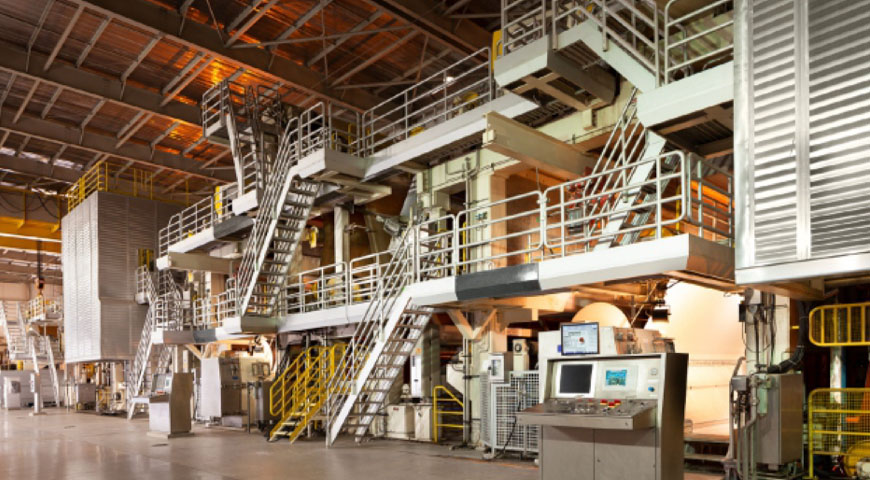 Aluminum Foil Paper Bowls: Structure, Performance & Foodservice Applications
What Aluminum Foil Paper Bowls Actually Are — And Why the Laminate Structure Matters Aluminum foil paper bowls are composite containers built from two bonded materials: a structural paperboard base t...
 English
 中文简体
中文简体 Français
 Español
 عربى
عربىIndustry News
Eco To Go Containers: A Practical Buyer's Guide for Foodservice Operators
A 12-litre pot of curry leaves the kitchen at 11:40 and reaches the customer at 12:25. By then, a 1400 ml paper deli box has been sitting in a hot bag for 45 minutes, and the folded corner seam is the first thing to give. That is the moment most operators start looking seriously at eco to go containers, and also the moment they find out that the word "eco" on a product page says very little about whether the box will hold.
The short answer: for most food service menus the container that works is paper-based, and the decision comes down to two things, the coating on the board and the geometry of the rim. Coating decides whether the container survives hot, wet or greasy food, and whether it can be composted or recycled at all. Rim geometry decides whether the lid stays on through a delivery run.
Everything else, including the marketing language, is secondary. The sections below cover material choices, capacity decisions, the specifications worth pinning down, supplier questions, and a test routine you can run in one afternoon.
Content
Compostable, Recyclable and Biodegradable Are Not the Same Claim
"Biodegradable" describes a material property with no fixed deadline attached. "Compostable" means the item breaks down under defined industrial conditions, usually within twelve weeks, to a recognised standard such as EN 13432 or ASTM D6400. "Recyclable" means a paper mill will actually accept the item, and for a coated cup that depends almost entirely on what the coating is made of.
A standard polyethylene cup is moisture-resistant, cheap, and in most regions destined for landfill. Replace the PE film with PLA and the cup becomes industrially compostable while keeping similar heat and moisture performance, though it will not break down in a garden heap. Replace it with a water-based or plastic-free dispersion coating and the cup can enter the recycling streams that accept coated board, at the cost of some grease resistance.
| Coating | Best for | Grease resistance | End of life |
|---|---|---|---|
| PE film | Hot and cold drinks, short holds | Moderate | Landfill in most regions; hard to repulp |
| PLA film | Hot drinks, cold drinks, ice cream | Moderate | Industrially compostable to EN 13432 or ASTM D6400 |
| Water-based dispersion | Hot drinks, dry and low-fat foods | Low to moderate | Recyclable where mills accept coated cupstock |
| No coating, unbleached kraft | Dry bakery, sandwiches, cold items | Low unless lined | Compostable and recyclable where facilities exist |
| Aluminium foil laminate | High heat, long holds, foil bowls | Very high | Depends on the composite; usually landfill |
The board is nearly identical in every row: 210 to 350 gsm cupstock behaves the same way whether it carries PE or PLA. What changes is the surface, and the surface is exactly what your customer's waste bin, or your local hauler, will judge you on.
For coffee and tea lines, a 12 oz PLA single-wall cup is the usual starting point, because it takes the same 90 mm lid and the same sleeve as the PE version it replaces, so nothing else in your service setup has to change.
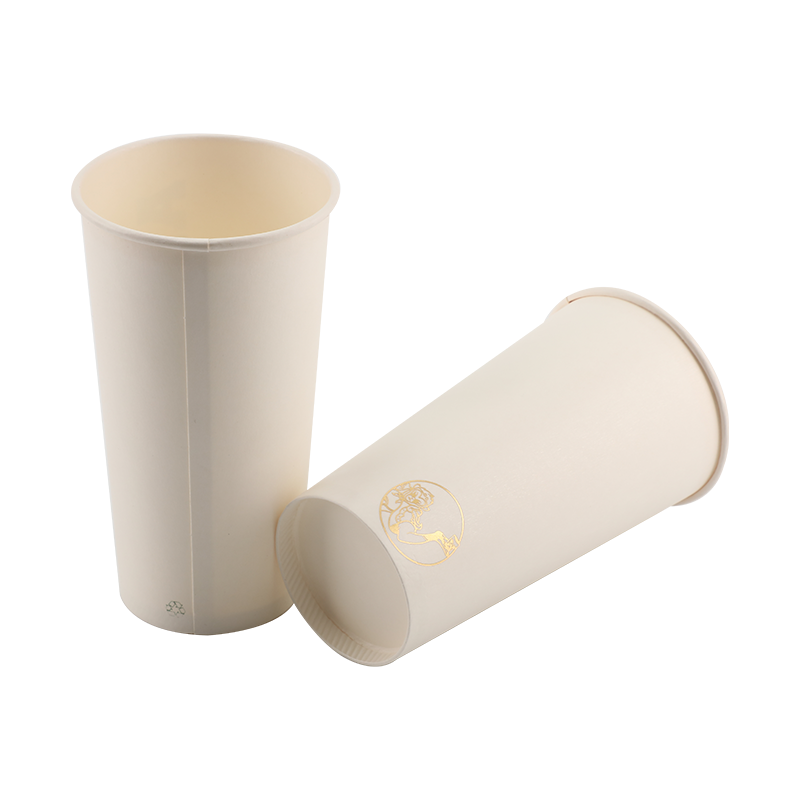 12oz Compostable PLA Single Wall Paper CupsA 12oz compostable PLA single-wall cup for espresso and small tastings, designed to fit standard 90 mm lids and sleeves while resisting heat and leaks.View Product →
Match the Container to the Food, Not the Other Way Around
The most expensive mistake in packaging is choosing a container because the material story sounds good, then finding out it cannot hold the product for the length of a delivery run. Work from the food outward.
Hot drinks, soups and noodles
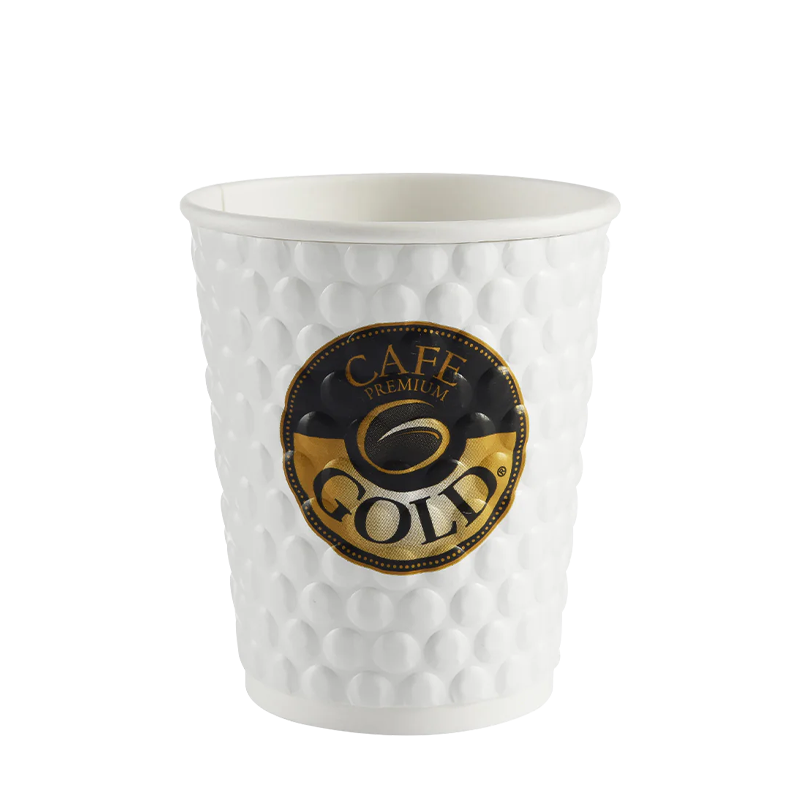
Single-wall cups handle espresso through 8 oz well. From 12 oz upward, a second wall, a ripple wrap or an embossed surface does more for customer comfort than any change of material. Soup and noodle bowls are a different problem: they are wider, heavier and often sit in a bag for twenty minutes or more. A rolled rim resists deformation better than a straight rim, and a 32 oz bowl needs a base wide enough that it does not tip in a cup holder or on a car seat.
Volume testing matters more than the label on the carton. If soup or noodles are a real part of your menu, this paper soup bowl buyer's guide walks through wall thickness, rim types and fill levels worth checking before you order a pallet.
Cold, acidic and greasy items
Salad bowls run from 500 ml for a side to 1500 ml for a sharing portion. Dressing is the variable that decides the board: a vinegar-and-oil dressing will find its way through an uncoated kraft wall surprisingly fast, so oil-proof board or a liner is not optional. For wraps, sandwiches and fried items that sit for a while before they are eaten, the barrier often sits in a separate sheet rather than in the box itself, and grease-proof wrapping paper stops oil wicking through a kraft board within minutes.
A 1300 ml oil-proof kraft bowl covers the range most salad-focused menus need, from grain bowls to pasta salad, without moving to a heavier moulded fibre format.
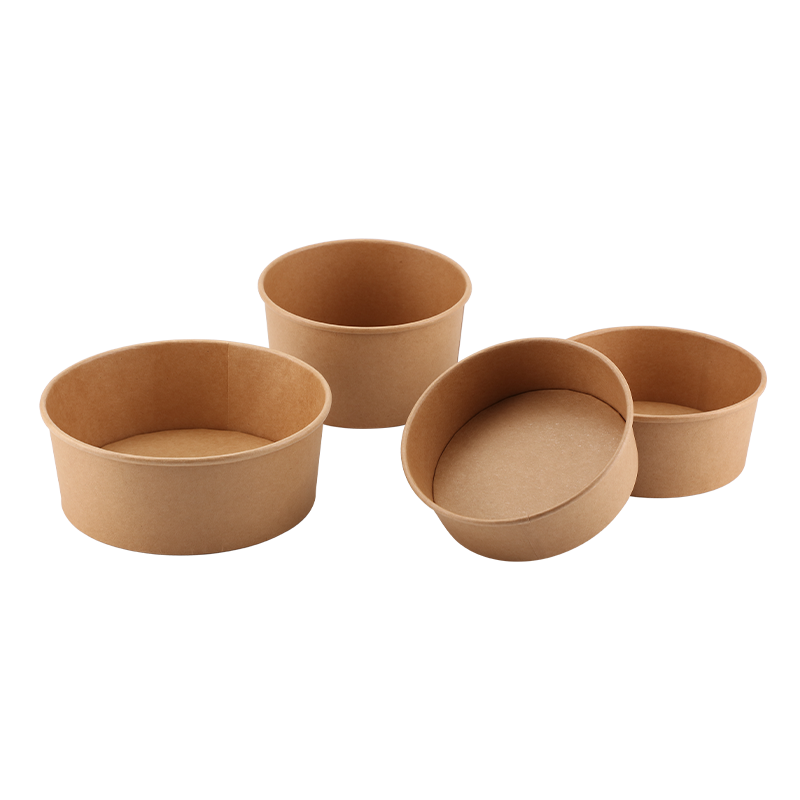 1300ml Oil Proof Kraft Salad BowlA 1300 ml oil-proof kraft bowl for grain bowls and pasta salad, with coating options and a rigid rim for secure lid fit.View Product →
Deli, bakery and mixed hot boxes
Deli boxes are chosen by volume: 800 ml for a single portion, 1400 ml for a main with sides, 2000 ml for sharing formats. Uncoated kraft works for dry bakery and sandwiches. Once sauce, gravy or a hot protein is involved, the board needs a coating or a laminated liner, because the failure mode is almost always a corner seam rather than the base.
The Specifications That Actually Decide a Purchase
Two suppliers can quote the same "16 oz bowl" and deliver products that behave completely differently. These are the numbers worth pinning down in writing.
- Nominal versus brimful capacity: a 16 oz bowl may hold 16 oz only to the rim, with 12 to 13 oz usable once a lid is fitted.
- Rim diameter: 62 mm for espresso, 90 mm for 12 to 16 oz cups, 95 mm for 20 to 22 oz, 107 mm for large cold lids, 115 mm for 32 oz bowls. A 2 mm difference is enough to make a lid fail.
- Board weight: 210 to 280 gsm for cups, 280 to 350 gsm for bowls and boxes. Lighter board lowers cost and lowers rigidity with it.
- Coating weight: 15 to 25 gsm is typical for PE or PLA. Too little and the seam fails, too much and the board cracks when folded.
- Wall construction: single, double, ripple or embossed, each with a different effect on heat transfer, storage volume and price.
- Case pack and pallet configuration: 500, 1000 or 2000 units per carton changes both freight cost and how often staff restock.
The most common and most expensive error is a lid that does not match. Order lids and containers as a tested pair, and ask for the tolerance on rim diameter, usually around plus or minus 0.3 mm on well-controlled tooling.
Questions to Put to a Supplier Before You Commit
Paper packaging carries compliance obligations that are easy to overlook until a customer or a buyer asks. Ask for documents, not assurances.
- Food-contact compliance: FDA 21 CFR 176.170 for the United States, EU 10/2011 for Europe, with the matching migration test reports.
- Compostability certificates with reference numbers, such as EN 13432 or ASTM D6400 with a BPI listing, rather than the word "compostable" on a spec sheet.
- Pulp sourcing documents such as FSC or PEFC chain-of-custody certificates.
- Sample lead time, production lead time and minimum order quantity per size and per print design.
- Whether the coating is applied in-house and whether it can be changed without altering the rim tooling.
A supplier who answers those five questions in writing is usually also the one who will tell you when a container is wrong for your food, which is worth more than a lower quote.
Test in One Afternoon Before You Roll Out
Bench tests catch most failures at a fraction of the cost of a bad delivery week. Run them on samples, not on production stock.
- Fill to the stated working capacity with your hottest product and leave it 30 minutes. Check the seam and base for softening.
- Repeat with a 24-hour hold at room temperature for cold and acidic items, which fail more slowly than hot ones.
- Fit the lid, invert the container and shake it for 30 seconds to simulate scooter delivery.
- Stack three filled containers for an hour and see whether the bottom one deforms under load.
- Leave a filled container in a closed delivery bag for 20 minutes and look for condensation inside the lid, where sogginess starts.
- If you microwave the food in the container, test that separately; most coated board is not designed for it.
What Changes Operationally
Unit price is only part of the picture. A double-wall cup occupies noticeably more shelf space than a single-wall cup, and switching a whole menu at once can mean rebuilding storage. Phasing works better: start with the item customers see most, get the lids and volumes right, then extend the change to the rest of the line.
Contamination is the other operational issue. Compostable containers only compost if they are collected separately and the bin is not full of PE-lined cups and plastic cutlery. If your site has no separate collection, a recyclable water-based coated cup may be the more honest claim.
For most takeaway menus, a 1400 ml kraft deli box is the volume that covers a main course with sides, and it is the item worth switching first when you test a new supplier.
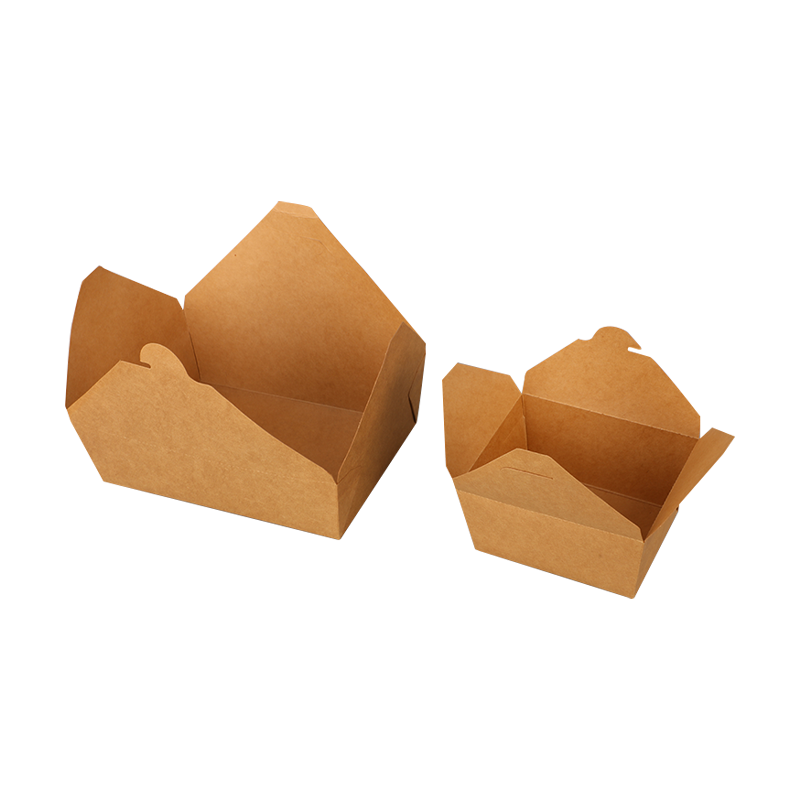 1400ml Natural Kraft Deli Paper BoxA 1400 ml natural kraft deli box that covers a main with sides, with snap-fit lid, coating options, and sturdy construction for takeaway transport.View Product →
Communicate the change plainly. A short line on the lid or the menu explaining what the container is made of, and where it should go, does more for customer perception than a recycled logo, and it gives staff a script when someone asks.
Eco to go containers are a specification decision before they are a sustainability statement. Get the coating right for the food, match the rim diameter to the lid, confirm every claim your supplier makes with certificates, and test the whole set for a week before you commit to a pallet. Paper-based cups, bowls and boxes cover the large majority of takeaway menus, and they are genuinely lighter on disposal than polystyrene, provided the coating behind them is chosen for the job.
Your email address will not be published. Required fields are marked *
We're Here To Help.

Copyright © HANGZHOU RENMIN ECO-TECH CO.,LTD. All Rights Reserved
Eco Friendly Food Packaging Solution Food Paper Packaging Manufacturer
