

-
Products
-
Food Packaging Solution
Mission & PhilosophyRenmin Eco-Tech adheres to the philosophy of green, innovation, and responsibility, placing customers at the center and valuing dedicated professionals. We aim to integrate sustainability and eco-consciousness into every product.
 Green Innovation Leading the Future
-
Our Story
Why Choose Us?Hangzhou Renmin Eco-tech Co., Ltd, situated in the picturesque city of Hangzhou, Zhejiang, is a leading paper product research, development, and sales company. Established in 2004, we specialize in eco-friendly solutions such as Base Paper Rolls, PE Coated Paper Rolls, Paper Cup Fans, Paper Bowl and Box Fans, Die-cut Sheets, etc, for food packaging, and Aluminum Foil Film laminated paper.
 Coming From China, Marketing To The World.
-
News
 Aluminum Foil Paper Bowls: Structure, Performance & Foodservice Applications
What Aluminum Foil Paper Bowls Actually Are — And Why the Laminate Structure Matters Aluminum foil paper bowls are composite containers built from two bonded materials: a structural paperboard base t...
 English
 中文简体
 Français
 Español
 عربى
Industry News
How Big Is a 12 Ounce Cup? Real Dimensions, Fill Volume, and Lid Sizes
A standard 12 ounce paper cup is roughly 4.25 to 4.4 inches tall, about 3.5 inches across the rim, and 2.3 to 2.4 inches across the base. Its nominal capacity is 355 ml, which is 12 US fluid ounces, but a cup that is actually filled for service holds closer to 300 to 330 ml, because the top 10 to 15 mm has to stay clear for the lid, the sleeve, and whatever foam or ice sits on top of the drink.
Those four numbers, height, rim diameter, base diameter, and usable fill volume, are what decide whether a cup works with your lids, your cup holders, your carriers, and your menu board. The "12 oz" printed on the carton tells you almost none of them, which is why two 12 oz cups from two suppliers can behave like completely different products at the counter.
Content
What the "12 Ounce" Label Actually Measures
The 12 in 12 oz is a volume rating. It is not a weight, and it is not a fill line. The cup is rated at 355 ml, measured either to the very top edge of the rim or to a molded line a few millimetres below it. In real service almost nobody fills to the rim, because liquid at the rim spills the moment the cup is tilted into a carrier tray.
Leave 10 to 15 mm of headroom and a 12 oz cup delivers roughly 300 to 330 ml. That gap explains a complaint that comes up constantly in packaging reviews: "the new 12 oz cup looks smaller than the one we used before." Rim diameter, taper, and base can all be identical while usable volume differs by around 10 percent, depending on where the manufacturer sets the internal fill line and how much of the height is lost to the rolled rim.
Fluid ounces versus weight ounces
Twelve US fluid ounces of water weighs 355 grams, which is where most of the confusion starts. In a recipe, a 12 oz bag of coffee beans is a weight measure. In a paper cup, 12 oz is a volume measure. They are not interchangeable, and neither one tells you the physical size of the cup in your hand.
| Dimension | Metric | Imperial | Why it matters |
|---|---|---|---|
| Nominal capacity | 355 ml | 12 fl oz | Menu naming and size charts |
| Rim outer diameter | 90 mm | 3.54 inches | Determines which lid you must buy |
| Base diameter | 59 to 60 mm | 2.33 to 2.36 inches | Cup holders, dispensers, sleeve fit |
| Overall height | 108 to 112 mm | 4.25 to 4.4 inches | Carrier trays and vending clearance |
| Practical fill volume | 300 to 330 ml | 10 to 11 fl oz | Headroom for lid, foam, and ice |
| Board weight | 210 to 300 gsm | Not applicable | Rigidity, heat transfer, print quality |
Hot, Cold, and Double Wall: Same Capacity, Different Outer Size
Capacity is a volume; geometry is a shape. Two cups can both be 12 oz and still differ by 4 to 6 mm at the rim, which is more than enough to make a lid leak or pop off under pressure.
A single-wall 12 oz hot cup is the baseline: one board layer, straight taper, 90 mm rim. It is cheap, stacks tightly, and takes a standard 90 mm lid. It is also the cup most likely to need a sleeve, because a single layer of 210 to 260 gsm board transfers heat quickly to the fingers.
A double-wall 12 oz cup wraps a second outer layer around the body for insulation. The inner cup keeps the 12 oz form and usually keeps the 90 mm rim so standard lids still fit, but some designs push the outer diameter to 92 or 95 mm. If you switch from single wall to double wall, re-check the lid rather than assuming the old one still works.
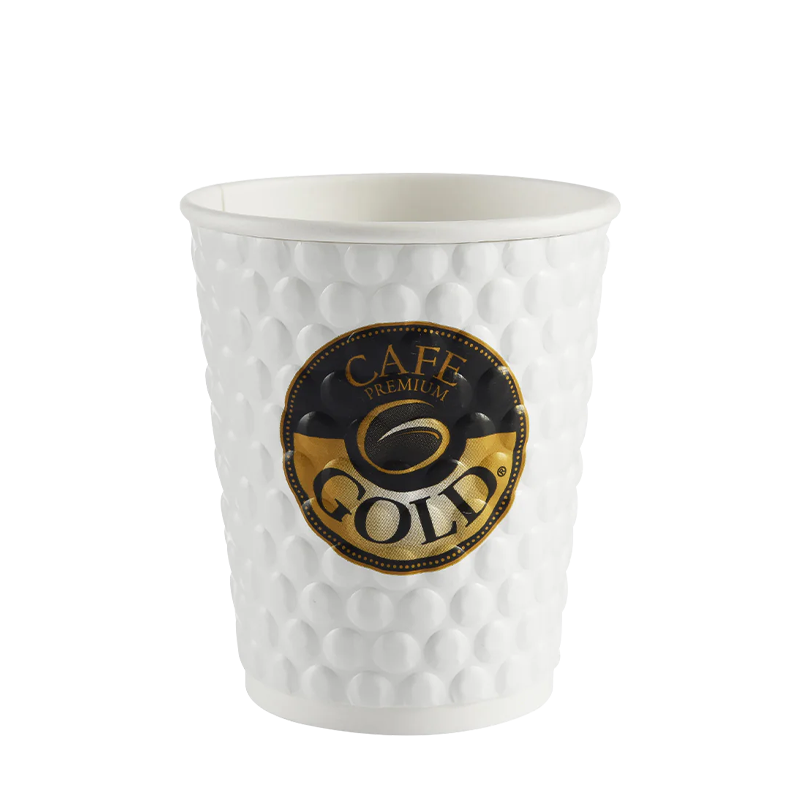
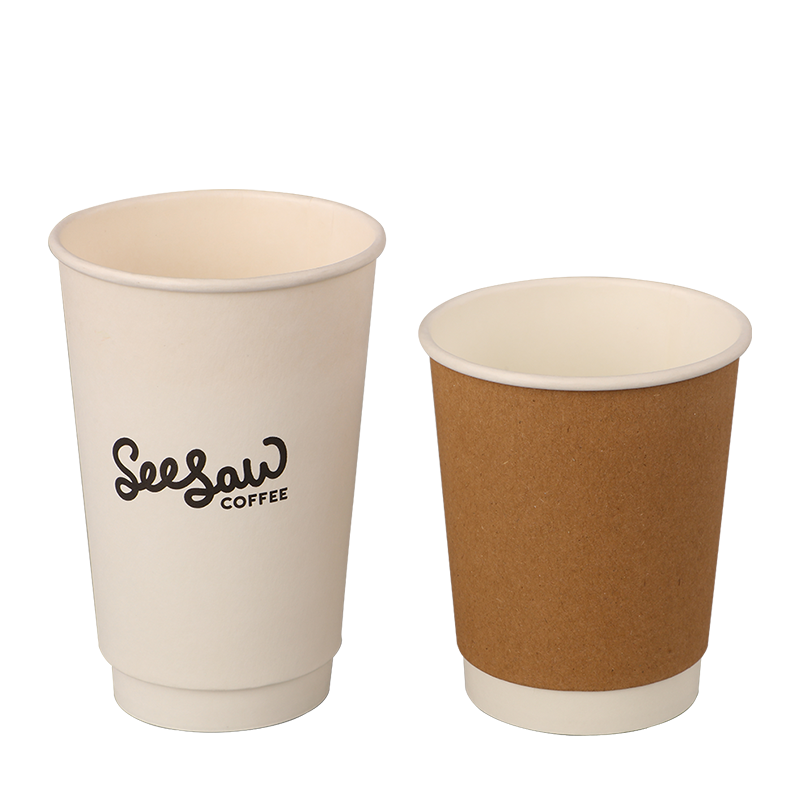 12 oz Double Wall Insulated Hot Paper CupsDouble-wall 12 oz hot cups add an insulating air layer for coffee and tea, keeping drinks hot and hands cooler.View Product →
Embossed or ripple cups follow the same logic: the embossing creates air gaps that reduce heat transfer, and the outer diameter grows slightly, which can also mean you no longer need a sleeve at all.
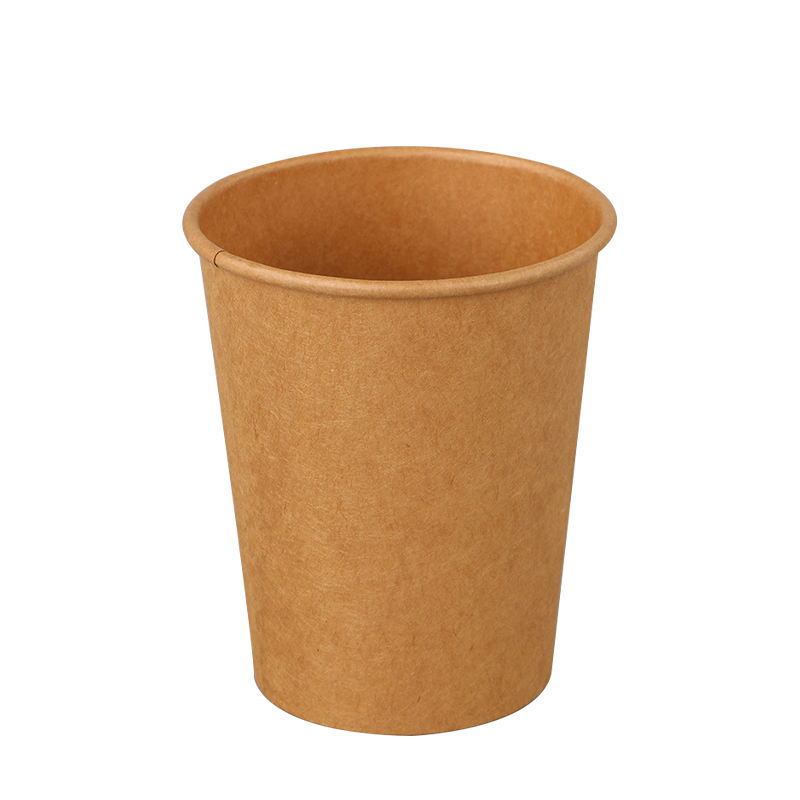
 12 oz PE Single Wall Hot Paper CupsSingle-wall 12 oz PE cups provide a baseline hot-drink option; compare with double-wall and embossed cups before cold cups.View Product →
Cold cups are a different animal. A 12 oz cold cup is often taller, closer to 4.5 to 5 inches, with a slimmer base and more headroom above the fill line to absorb ice. Coatings change the picture too: PE works well for hot liquids and long shelf life, while water-based and PLA coatings support recycling and composting claims but behave differently under heat and condensation. Our cold drinking paper cup materials and sizes guide walks through those trade-offs in more detail.
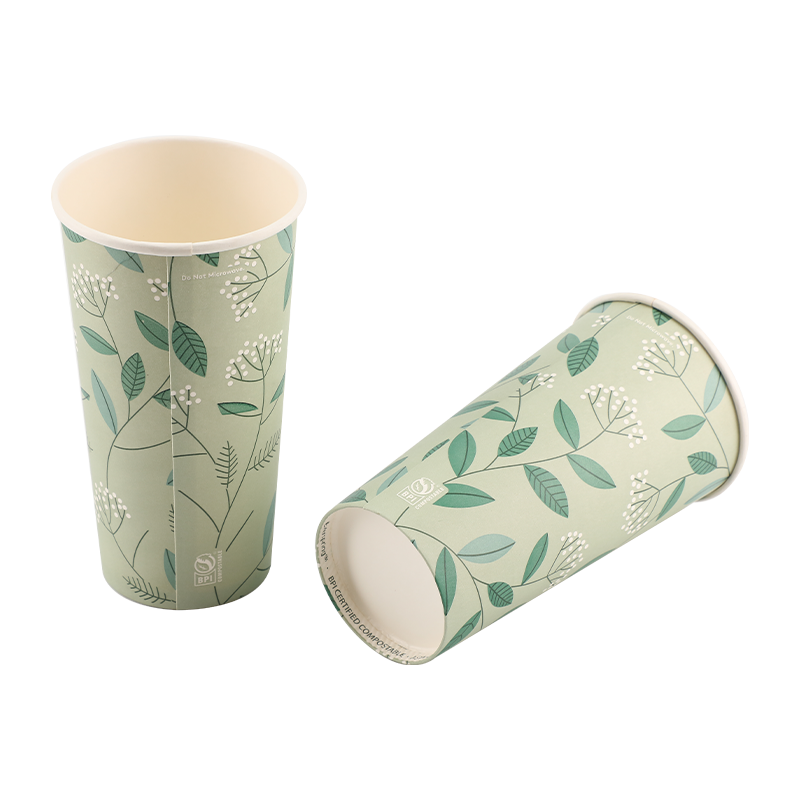
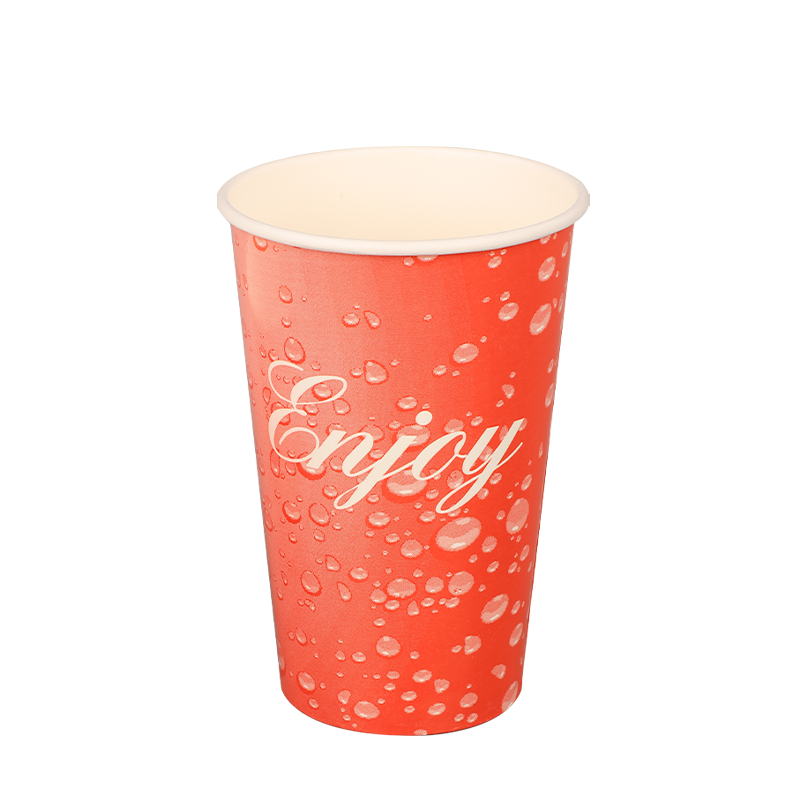
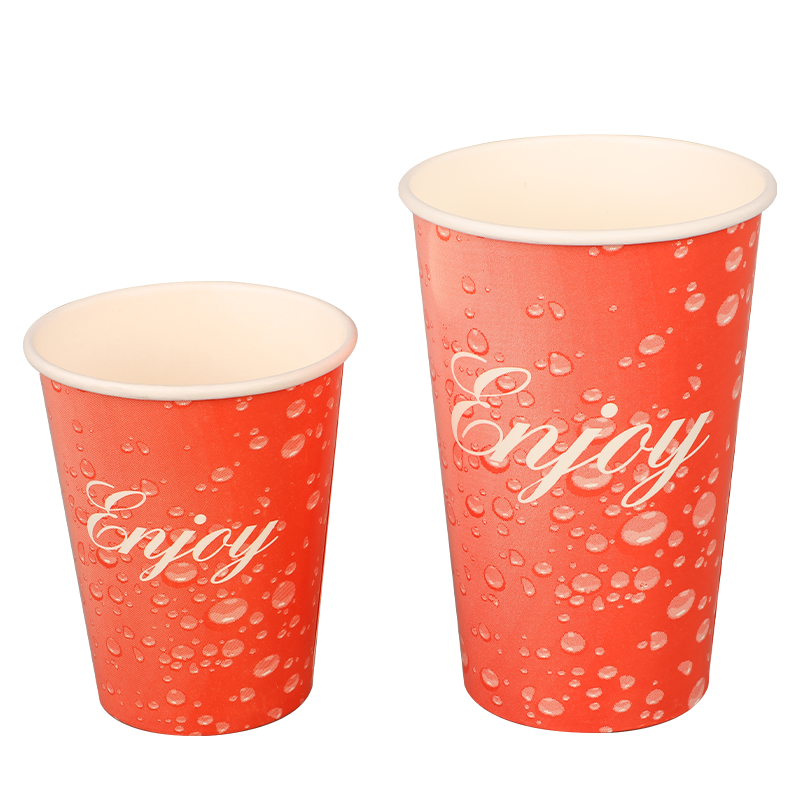 12 oz Cold Drinking Paper Cups for Juice12 oz cold paper cups with two-sided coating suit juice, cola, and iced tea, a cold-drink option before capacity trade-offs are explained.View Product →
What Fits in 12 Ounces in Real Service
The honest answer is less drink than the label suggests, because every category loses volume somewhere:
- Coffee and lattes: a 12 oz cup takes a two-shot latte with about 10 oz of milk, or a regular drip coffee poured with roughly an inch of headroom.
- Iced drinks: ice typically occupies 25 to 35 percent of the cup, so a 12 oz iced latte delivers only about 7 to 9 oz of liquid.
- Bubble tea: tapioca pearls and syrup displace 1.5 to 2 oz, which is why most bubble tea operators start at 16 oz rather than 12 oz.
- Soda and cola: a 12 oz can is 355 ml, so a 12 oz cup and a can hold the same volume when both are filled to the top.
- Soup and sides: 12 oz soup cups hold a single serving with room for a lid, and the same rim size works with flat and domed lids.
12 oz vs 8 oz vs 16 oz: Where the Jump Happens
The useful comparison is not the volume number, it is the rim. Lid diameter follows the rim, which is why a 12 oz and a 16 oz cup frequently share one lid size while an 8 oz cup needs a completely different one. That single detail drives how many SKUs you keep in the storeroom.
| Cup size | Typical rim | Typical lid | Typical height | Common use |
|---|---|---|---|---|
| 8 oz | 80 mm | 80 mm | 92 to 95 mm | Small coffee, kids' drinks |
| 12 oz | 90 mm | 90 mm | 108 to 112 mm | Regular coffee, medium soda, soup |
| 16 oz | 90 mm | 90 mm | 135 to 140 mm | Large coffee, iced drinks, bubble tea |
| 20 to 22 oz | 95 mm | 95 mm | 150 to 165 mm | Jumbo drinks, iced tea |
Where the Dimensions Are Set: Cup Blank Geometry
A paper cup is not molded into shape; it is rolled from a flat fan-shaped blank, and the blank decides almost everything. The outer arc of the fan sets the rim circumference, so a 90 mm rim means an arc of roughly 283 mm before the side seam is formed. Change the arc and the rim changes. Change the blank height and the cup's overall height changes without touching the taper.
This is why custom sizes are rarely free. A dimension change means a new cutting die, new forming setup, and a fresh round of lid compatibility testing. It also explains why paper cup fans are specified by arc length, blank height, and board grade rather than by the finished ounce rating of the cup they will become.
Before You Order: A Twelve-Ounce Checklist
Buying the wrong 12 oz cup is usually not a capacity problem. It is a 1 mm problem discovered after the first pallet arrives. Run this list before you commit to volume:
- Measure the rim outer diameter on at least 10 sample cups with calipers; expect a tolerance of plus or minus 0.5 mm, and reject lots that drift beyond it.
- Fit the lid on a filled cup at real serving temperature. Hot liquid softens the rim, and a lid that clicks cold can weep when the cup is squeezed.
- Check the base diameter against your cup holders, dispensers, and carrier trays, because a 2 mm difference in base size is enough to make a cup sit crooked.
- Confirm the practical fill volume, not just the nominal capacity, and make sure the number on your menu matches what the cup actually pours.
- Match the coating to the end use: PE for hot liquids and long shelf life, water-based or PLA for recycling and compostability claims.
- Ask for nesting height and case pack counts, since a taller stack can quietly cut how many sleeves fit on a shelf.
So how big is a 12 ounce cup? Plan on 355 ml of rated volume, roughly 4.3 inches of height, a 3.5 inch rim that almost always takes a 90 mm lid, and about 300 to 330 ml of drink you can actually hand to a customer without spilling it. Treat those figures as a starting point, then verify them against a physical sample, because the difference between a cup that works and one that leaks is measured in millimetres, not ounces.
Your email address will not be published. Required fields are marked *
We're Here To Help.

Copyright © HANGZHOU RENMIN ECO-TECH CO.,LTD. All Rights Reserved
Eco Friendly Food Packaging Solution Food Paper Packaging Manufacturer
