

-
Products
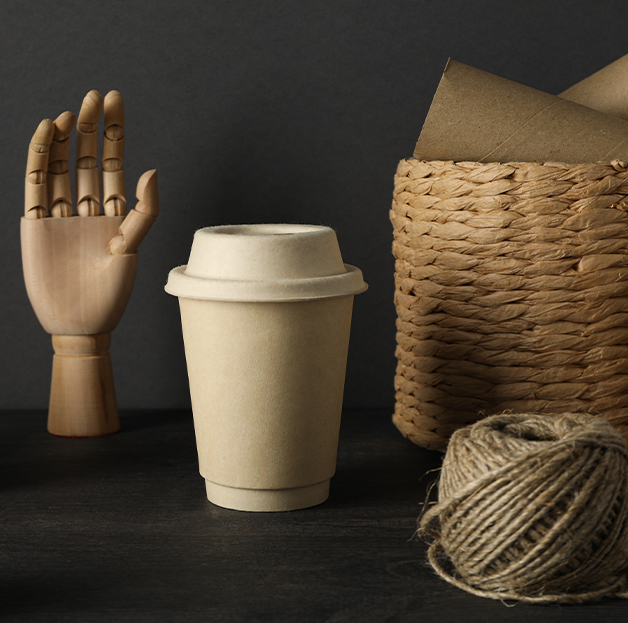
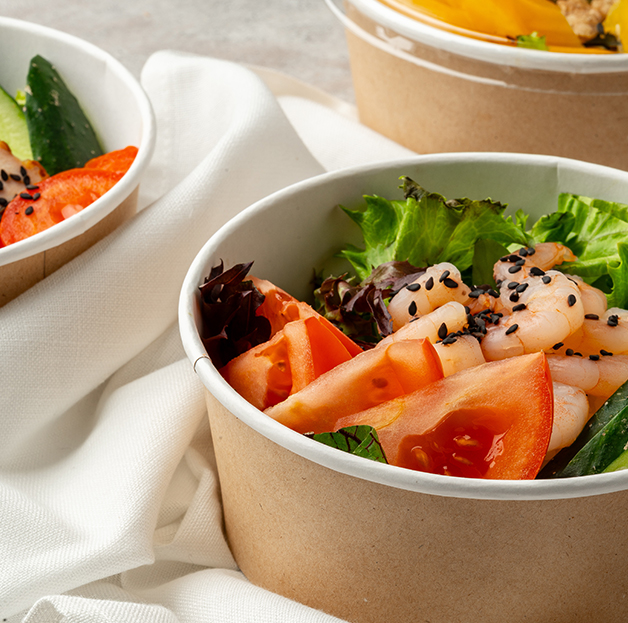
-
Food Packaging Solution
Mission & PhilosophyRenmin Eco-Tech adheres to the philosophy of green, innovation, and responsibility, placing customers at the center and valuing dedicated professionals. We aim to integrate sustainability and eco-consciousness into every product.
 Green Innovation Leading the Future
 -
Our Story
Why Choose Us?Hangzhou Renmin Eco-tech Co., Ltd, situated in the picturesque city of Hangzhou, Zhejiang, is a leading paper product research, development, and sales company. Established in 2004, we specialize in eco-friendly solutions such as Base Paper Rolls, PE Coated Paper Rolls, Paper Cup Fans, Paper Bowl and Box Fans, Die-cut Sheets, etc, for food packaging, and Aluminum Foil Film laminated paper.
 Coming From China, Marketing To The World.
 -
News
 Aluminum Foil Paper Bowls: Structure, Performance & Foodservice Applications
What Aluminum Foil Paper Bowls Actually Are — And Why the Laminate Structure Matters Aluminum foil paper bowls are composite containers built from two bonded materials: a structural paperboard base t...
 English
 中文简体
中文简体 Français
 Español
 عربى
عربىIndustry News
Drinking Cup Sizes Chart: Standard Oz, mL, Dimensions and Buying Guide
Walk into a busy cafe and you will notice a quiet battle taking place: baristas reach for a cup, customers ask for a "small" or "large," and the actual volume of the drink stays hidden under the lid. The confusion turns into cost when you order a season's supply of cups and discover that the 12 oz version you planned for hot tea shares a lid size with a 10 oz cold cup. A drinking cup sizes chart clears up that confusion by putting volume, dimensions, and typical use in one place.
Here is the simple version: hot drinks usually sit in the 4 to 12 oz range, while cold drinks need extra space for ice and mostly run from 12 to 22 oz. The exact number depends on your menu, your customers, and the headspace you need. Below is the chart most buyers start with before adjusting it to their own service style.
Content
The Standard Drinking Cup Sizes at a Glance
Most paper cup suppliers categorize sizes by ounces, then provide a metric equivalent. One fluid ounce is about 29.6 mL, so a 12 oz cup holds roughly 355 mL and a 22 oz cup holds around 650 mL. The chart below shows the commonly used ranges and the drinks that fit them.
| Cup Size (oz) | Capacity (mL) | Typical Use | Menu Examples |
|---|---|---|---|
| 2.5-3.5 | 74-104 | Espresso and tasting samples | Single shots, degustation menus |
| 4-6 | 118-177 | Small hot drinks | Small tea, kids' hot chocolate |
| 8 | 237 | Small coffee or flat white | Cappuccino, small latte |
| 10-12 | 296-355 | Regular hot drinks and medium cold drinks | Drip coffee, tea, regular soda |
| 16 | 473 | Large iced drinks and juice | Iced coffee, lemonade, water |
| 20-22 | 591-650 | Jumbo cold drinks | Large sodas, iced teas, smoothies |
The numbers printed on a cup refer to its rated capacity to the rim, not the practical fill level. A 12 oz cup can be listed as 12 oz on the side, but once you add a lid and leave a little space, the actual liquid you serve drops by 10 to 15 percent. Keep that in mind before you build a menu price around the stated size.
Rated Capacity vs. Practical Fill
When a manufacturer says a cup is 12 oz, that is the flush fill volume: the cup is completely full to the top. Nobody serves a drink that way, especially with a lid, because the liquid would spill or push the lid loose. In real service you need headroom for the lid, for foam, for ice, or simply to make the cup comfortable to carry.
Consider a flat white. A 6 oz cup holds exactly 6 oz of liquid, but after steaming the milk, the foam takes up space. If you want to serve a 6 oz finished drink, an 8 oz cup gives you enough room without making the portion look small. That is why many cafes use 8 oz cups for drinks sold as "small" that contain about 6 oz of coffee.
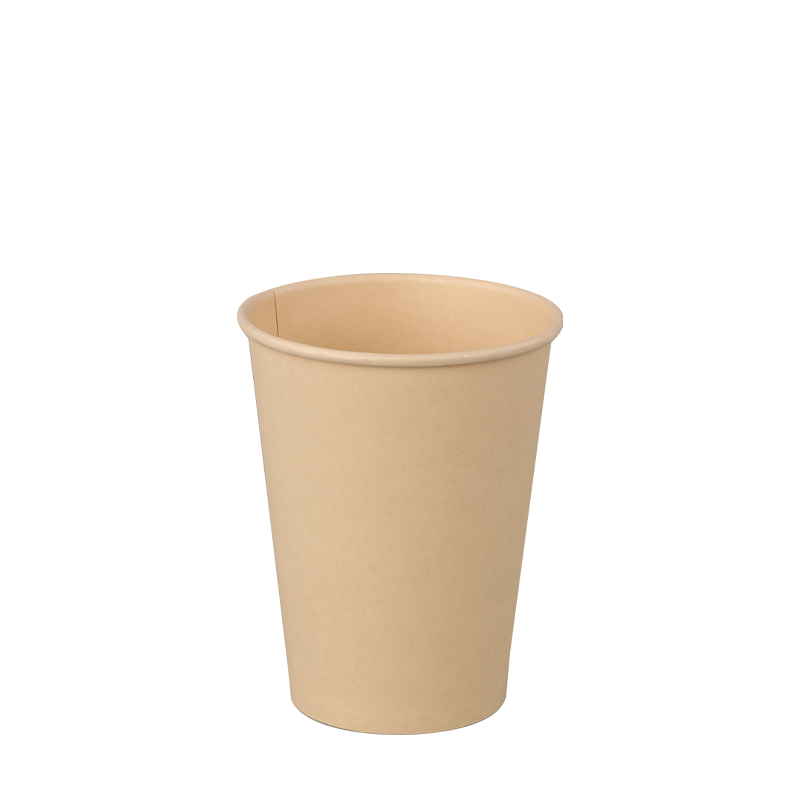
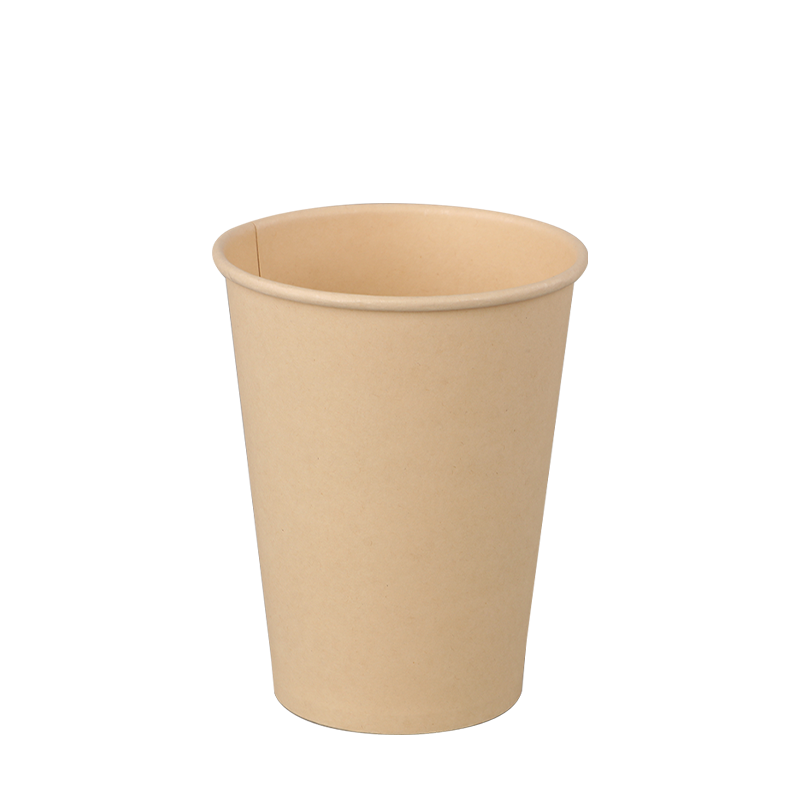
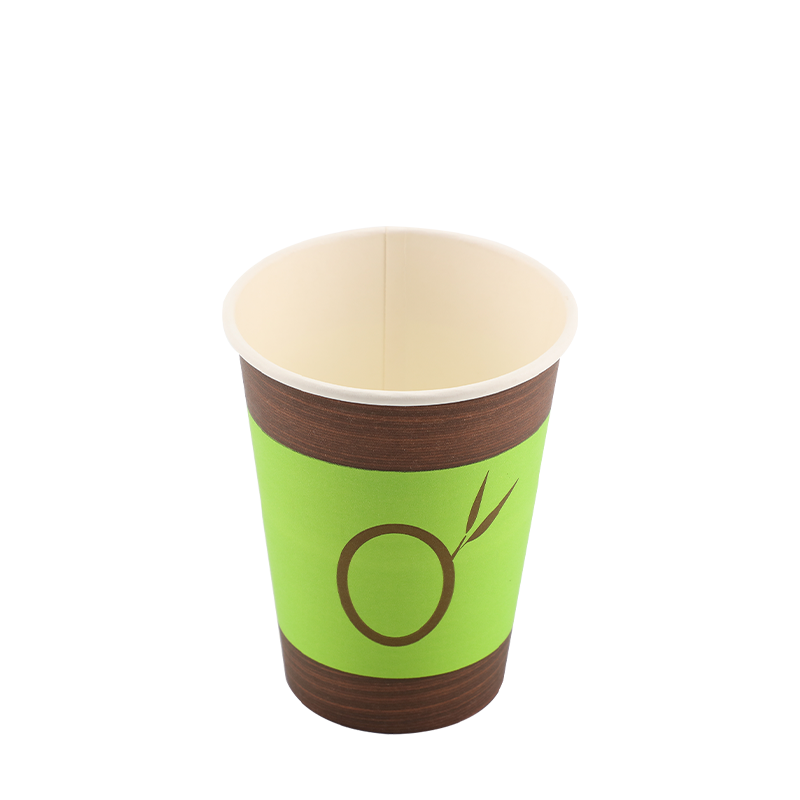 8 oz Biodegradable Single Wall Paper CupsThis 8 oz biodegradable cup suits hot drinks like flat whites that need extra headroom after milk foam, helping cafes serve accurate portions without oversizing.View Product →
On the cold side, ice changes the calculation completely. A 16 oz cup filled with ice can hold 12 oz or less of liquid. If your menu promises a 16 oz iced tea, you need to decide whether that means total cup volume or liquid volume before you finalize the size. This is where a drinking cup sizes chart becomes a business tool rather than a technical table.
Lid Diameters and Cup Dimensions
Capacity tells you how much the cup can hold, but the top diameter tells you which lid fits. A 12 oz cup from one supplier may use an 80 mm lid, while another 12 oz cup with the same capacity uses a 90 mm lid. The difference comes from the taper of the cup walls and the design of the rolled rim.
Hot cups commonly use rim sizes around 80 mm and 90 mm. Cold cups, which need to accommodate ice cubes and straws, often move up to 90 mm, 95 mm, or even 115 mm. You cannot simply order "lids for 12 oz cups." You must order lids by the rim measurement that matches the specific cup you select.
The cup height matters too. A 12 oz cup with a wider base sits more securely in a car cup holder, but it may not fit the same lid or the same storage dispenser as a taller 12 oz cup. If you want to simplify supply, standardize on one lid diameter across a few capacities that you use often.
Matching Cup Sizes to Real Drinks
Once the basic chart is clear, the next step is mapping it to your beverage lineup. You do not need every size in a catalog. Most quick-service operations can cover their menu with three or four sizes.
- 2.5 to 4 oz: espresso shots, mini samples, and tasting flights.
- 6 to 8 oz: cappuccinos, flat whites, hot chocolate, and other foam-topped drinks.
- 10 to 12 oz: standard hot coffee, tea, Americanos, and "regular" takeaway drinks.
- 12 to 16 oz: iced coffee, cold brew, juice, and water in a medium portion.
- 18 to 22 oz: large sodas, iced teas, smoothies, and shareable takeaway drinks.
The 12 oz single-wall hot cup is often the first purchase for a new cafe because it fits comfortably in one hand and still has enough capacity for a classic latte or drip coffee. It is a balanced middle size that works for both hot and cold service when your menu is simple.
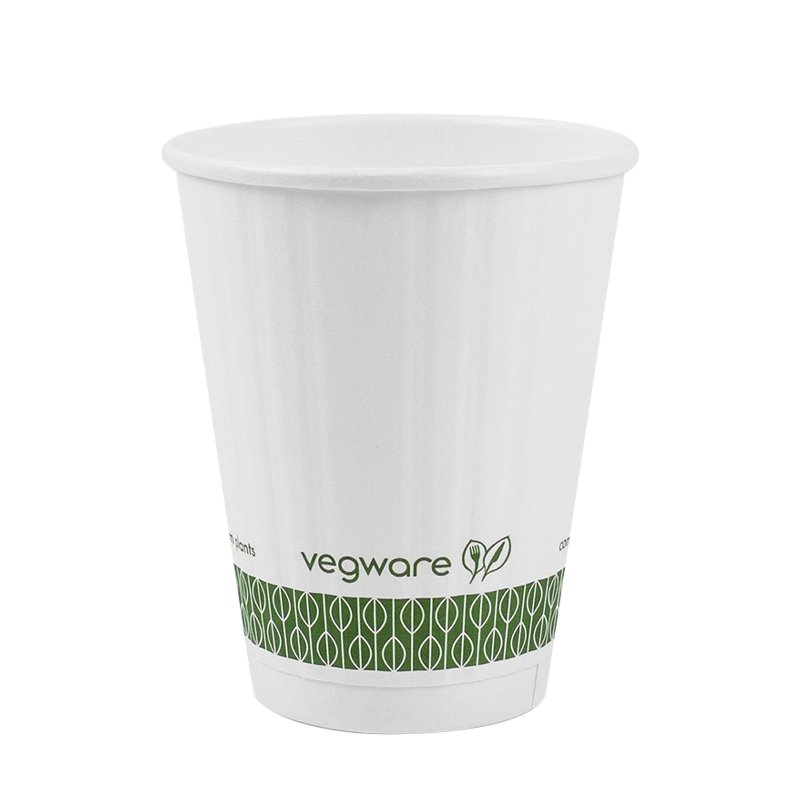
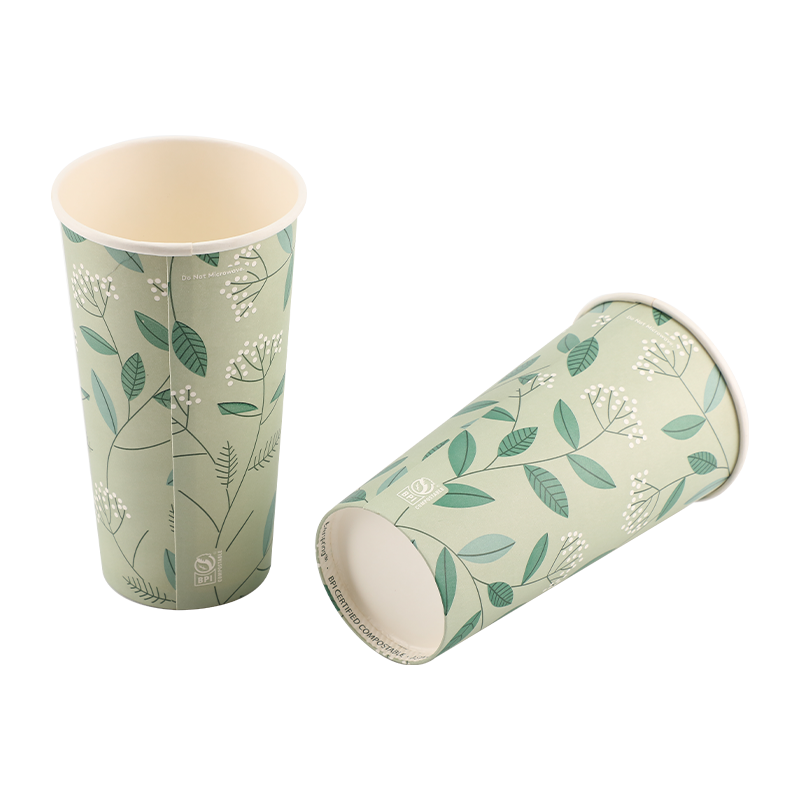 12 oz PE Paper Single Wall Hot Paper CupsA balanced 12 oz hot cup that fits one hand comfortably and handles classic lattes or drip coffee, making it a practical starter size for new cafes.View Product →
For cold drinks, the 16 oz size bridges the gap between a standard glass and a large restaurant cup. It handles iced coffee, soft drinks, and freshly squeezed juice well, which makes it a practical addition to almost any order set.
What to Check Before You Order in Bulk
After you settle on sizes, ordering becomes about material, consistency, and compatibility. The cup wall coating matters just as much as the volume, because it decides how the cup behaves with hot liquids, cold liquids, and grease.
- Check the coating: PE gives strong water resistance but is not compostable; PLA and water-based coatings are designed for compostable or recyclable programs.
- Confirm the fill line: ask the supplier for the brim capacity and the recommended serving capacity so your menu portion matches the cup.
- Test the lid fit: a lid that feels tight on a dry cup may fail when the cup becomes hot and softens slightly.
- Review the base and height: a tall, narrow cup may be less stable on a counter or in a takeaway bag.
- Order samples of the actual cup before committing to a large quantity.
If your menu leans heavily on iced drinks, this guide to cold drink paper cup sizes and materials covers coating choices, size ranges, and purchasing factors worth reviewing before you commit.
For operators who work directly with a manufacturer, the cup shape starts as a paper cup fan blank. Knowing how the fan size maps to the final cup helps you order custom dimensions without guesswork.
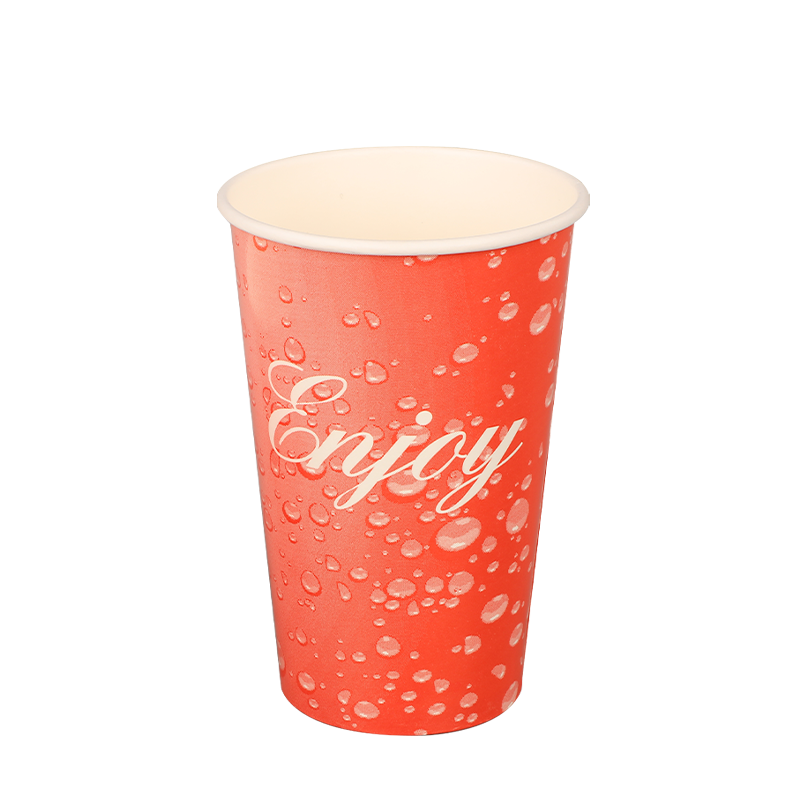
For the upper end of your cold menu, a 16 oz recyclable cold drink cup gives customers a generous portion without forcing you into a 22 oz cup that can feel oversized for a medium drink.
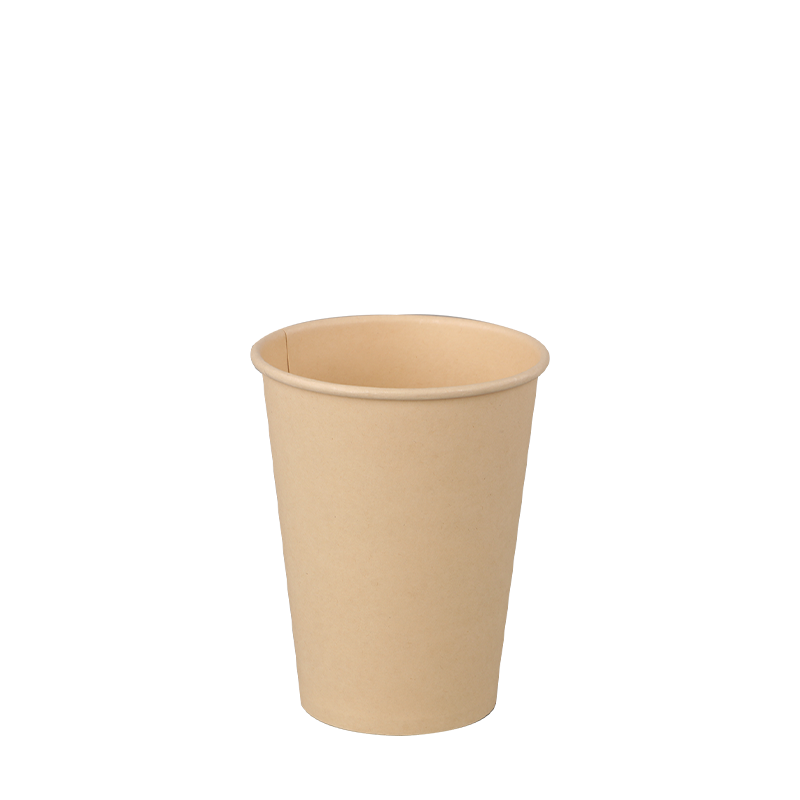
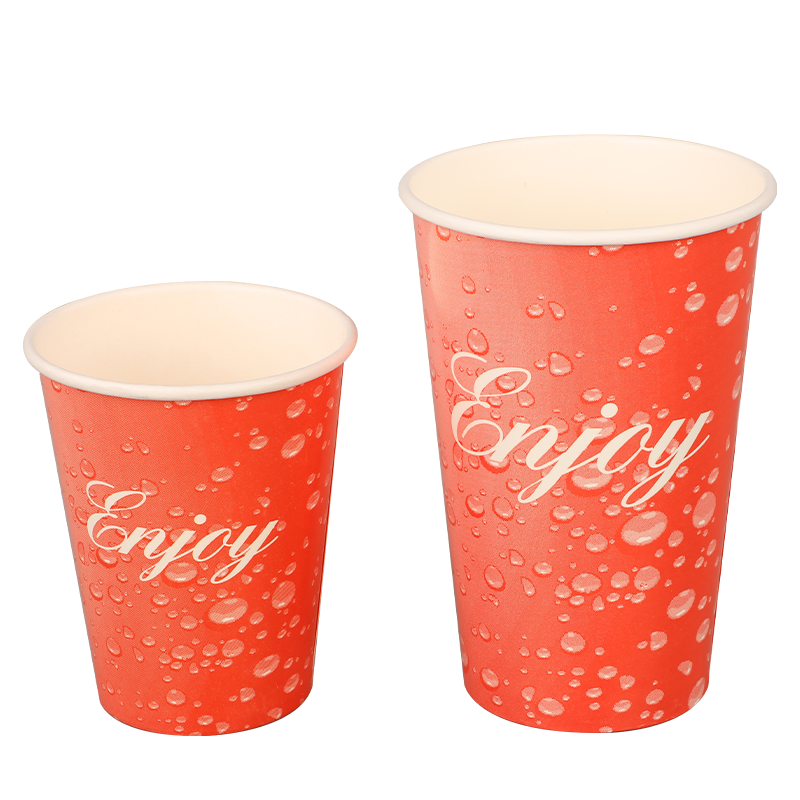 16 oz Recyclable Cold Drinking Paper CupsThis 16 oz recyclable cold cup offers a generous portion for iced coffee, juice, or soft drinks while staying smaller than an oversized 22 oz option.View Product →
Common Mistakes to Avoid
Even with a size chart in front of you, buyers repeat a few predictable errors. These are the ones worth avoiding:
- Choosing one size for everything. A 12 oz cup may suit hot coffee, but it is too small for iced drinks and too large for an espresso.
- Forgetting headspace. If you serve whipped cream or need a dome lid, the rated capacity is not your actual serving size.
- Ignoring the rim diameter. A mismatched lid is one of the most common sources of leaks and customer complaints.
- Measuring by ounce alone. A tall, skinny 12 oz cup feels very different from a short, wide 12 oz cup in the hand.
- Skipping a trial order. Samples are cheap compared with a box of cups that your staff dislikes or your customers cannot handle.
A drinking cup sizes chart is not a collection of unrelated numbers. It connects your menu portions, your lid inventory, and the physical experience your customer feels when they pick up the cup. Start with the standard size ranges, add headspace for the way you actually serve drinks, and test the pairings before you order in bulk.
The right size is the one that fits your drink, your operation, and the expectations of the people who buy from you. Once you know how the chart works, that choice becomes simpler than you expect.
Your email address will not be published. Required fields are marked *
We're Here To Help.

Copyright © HANGZHOU RENMIN ECO-TECH CO.,LTD. All Rights Reserved
Eco Friendly Food Packaging Solution Food Paper Packaging Manufacturer
