

-
Products
-
Food Packaging Solution
Mission & PhilosophyRenmin Eco-Tech adheres to the philosophy of green, innovation, and responsibility, placing customers at the center and valuing dedicated professionals. We aim to integrate sustainability and eco-consciousness into every product.
 Green Innovation Leading the Future
 -
Our Story
Why Choose Us?Hangzhou Renmin Eco-tech Co., Ltd, situated in the picturesque city of Hangzhou, Zhejiang, is a leading paper product research, development, and sales company. Established in 2004, we specialize in eco-friendly solutions such as Base Paper Rolls, PE Coated Paper Rolls, Paper Cup Fans, Paper Bowl and Box Fans, Die-cut Sheets, etc, for food packaging, and Aluminum Foil Film laminated paper.
 Coming From China, Marketing To The World.
 -
News
 Aluminum Foil Paper Bowls: Structure, Performance & Foodservice Applications
What Aluminum Foil Paper Bowls Actually Are — And Why the Laminate Structure Matters Aluminum foil paper bowls are composite containers built from two bonded materials: a structural paperboard base t...
 English
 中文简体
中文简体 Français
 Español
 عربى
عربىIndustry News
Drink Cup Sizes: oz to mL Guide and How to Pick the Right Cup for Your Menu
Before you order another batch of cups for your café, food truck, or takeaway kitchen, it helps to understand the system behind drink cup sizes. They are not arbitrary numbers on a packaging list. They follow a consistent volume ladder measured in ounces and milliliters, and the same sizes appear again and again across hot cups, cold cups, and bowl-style containers. Once you learn the ladder, choosing the correct cup for each drink becomes a simple matching exercise instead of a guessing game.
Content
The standard drink cup size system
All drink cup sizes in the United States and most international markets are expressed in fluid ounces or milliliters. One US fluid ounce equals approximately 29.57 mL, and one US cup equals 8 fluid ounces. In practice, paper cup manufacturers build their size ranges around round ounce numbers, which means the conversion is easy to memorize: a 12 oz cup holds about 355 mL, a 16 oz cup holds about 473 mL, and a 22 oz cup holds about 650 mL.
The table below shows the most common drink cup sizes you will encounter when sourcing paper cups for retail, takeaway, or catering use.
| Size (oz) | Volume (mL) | Typical use |
|---|---|---|
| 2.5 | 74 | Espresso shot |
| 4 | 118 | Short espresso drink, tasting cup |
| 6 | 177 | Cortado, small tea, vending machines |
| 8 | 237 | Small coffee, hot chocolate |
| 10 | 296 | Flat white, large tea |
| 12 | 355 | Most popular coffee and soft drink size |
| 16 | 473 | Large iced coffee, regular soft drink |
| 20 | 591 | Large takeaway coffee or soda |
| 22 | 650 | Large milk tea, cola, slushies |
| 32 | 946 | Soup, noodle bowls, shareable cold drinks |
The pattern is consistent: every leap of 2 oz adds roughly 59 mL, and every leap of 4 oz adds roughly 118 mL. That predictability makes it easier to plan inventory because the same cup size can serve both hot and cold drinks depending on the drink recipe.
Hot drink cup sizes
Hot drink cups are built around the way coffee and tea are actually served. Espresso is the anchor point: a standard single or double shot occupies about 60 to 75 mL, which is why the 2.5 oz espresso cup exists. From there, the size ladder follows the addition of milk, water, or foam. A 4 oz cup suits a short macchiato; 6 oz works for cortado or flat white; 8 oz and 10 oz cover small to regular filter coffee; and 12 oz cups serve the majority of takeaway cappuccinos and lattes.
For most café operators, 12 oz is the workhorse size. It holds roughly 355 mL, which is large enough to feel like a proper takeaway coffee but compact enough to keep espresso flavor dominant. Above 12 oz, 16 oz cups accommodate long blacks, large lattes, and tea-based drinks; 20 oz and 22 oz cups are usually reserved for extra-large orders, and they work best in high-traffic locations where customers consistently ask for the biggest option.
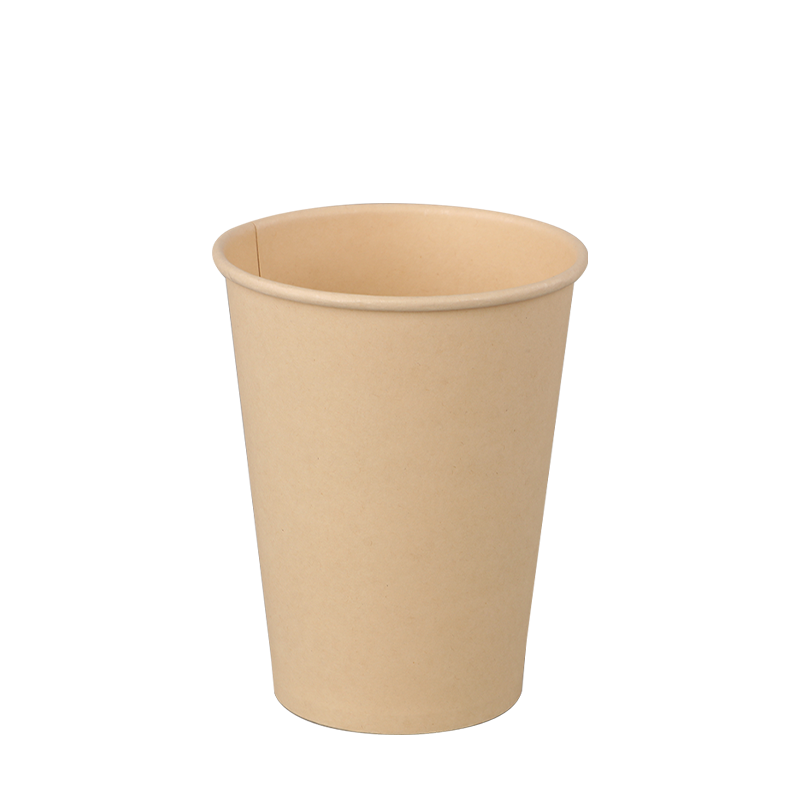
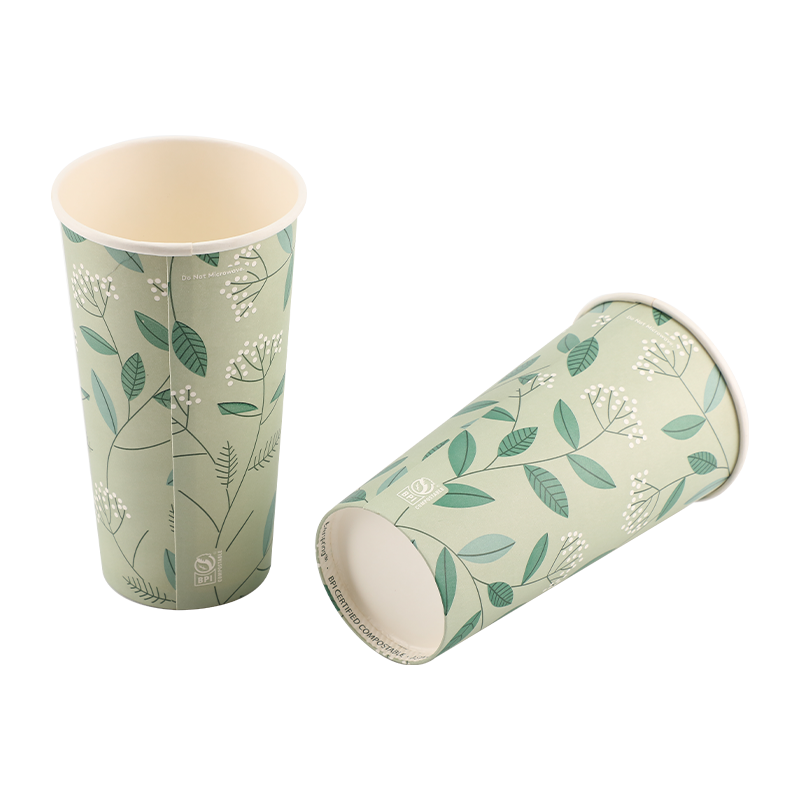 12oz PE Paper Single Wall Hot paper cups2.5oz Espresso Coffee CupView Product →
Heat resistance and insulation also matter, not just volume. A single wall 12 oz paper cup works fine for most hot drinks because the liquid is below boiling point and the cup is held briefly. If your menu includes extra-hot drinks or you serve in drive-through settings, double wall cups add a second paper layer for insulation. Double wall 6 oz, 8 oz, 12 oz, 16 oz, and 20 oz versions are available from suppliers that stock complete hot cup size ranges.
Cold drink cup sizes
Cold drink cups start larger than hot cups because ice occupies a meaningful portion of the container. A 12 oz cold cup is a common small-size soft drink or a small iced latte; after adding ice, the remaining liquid volume is around 8 to 10 oz. The 16 oz cold cup is the most widely used size for iced coffee, fruit juice, and standard fountain drinks, and it doubles as a convenient container for ice cream at 16 oz.
The next step up, 22 oz, covers large cola orders, milk tea chains, and slushie programs. Some operators move to 24 oz or 32 oz cups for frozen drinks or for large iced tea refill programs. The 32 oz size is also used for paper soup cups and noodle bowls, which is why it appears in both the drink and food packaging categories. Cold cups are manufactured with a PE or water-based coating on the inside to resist condensation, and recyclable or compostable cold cup options are widely available today.
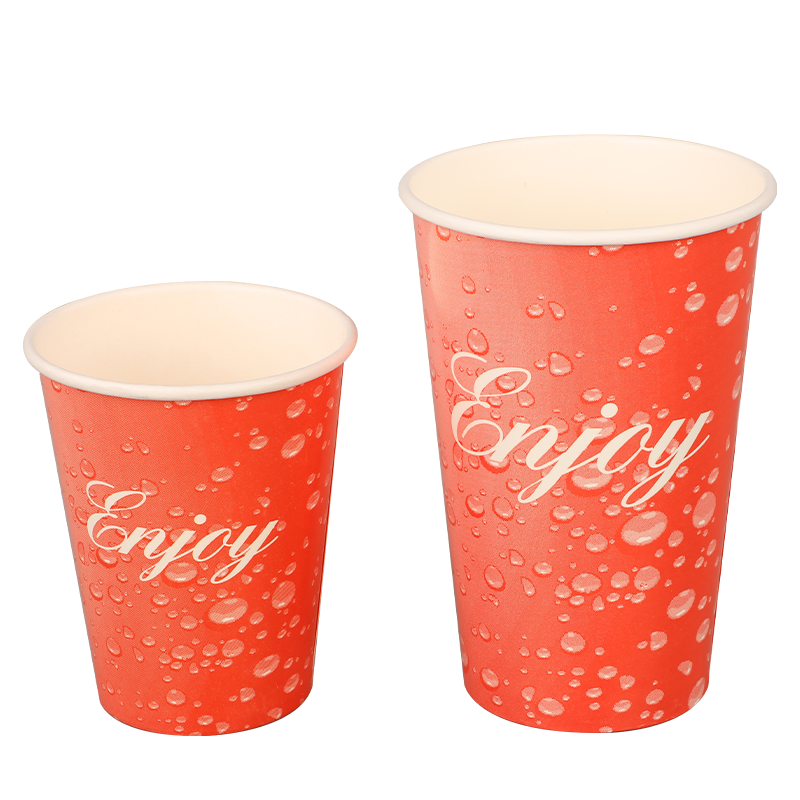 16oz Recyclable Cold Drinking Paper Cups12oz Cold Drinking Paper Cups Juice cupsView Product →
If you are building a cold drink program from scratch, the cold drinking paper cups buying guide explains how coating, material, and size interact in real operating conditions.
Start from your drink recipes, not from the biggest cup you can find. For each beverage, measure the final volume after ice, milk, and syrup. Then add at least 1/4 inch of headspace from the rim to prevent spilling and to leave room for lids. A cup rated 16 oz will only take about 15 oz of liquid when you leave that practical fill margin, so your portion control system should be set to the practical fill volume rather than the theoretical brim volume.
Offering two or three sizes is usually enough: a small at 8 or 12 oz, a medium at 12 or 16 oz, and a large at 16 or 22 oz. Adding a fourth size rarely increases incremental sales enough to justify another SKU in your storage area. Match cup diameters to lid sizes as well: hot and cold lids are built to fit specific rim diameters, commonly 90 mm, 95 mm, 107 mm, and 115 mm, so verify the lid spec before committing to a cup model.
Sourcing considerations when buying drink cups
Once you settle on the sizes, the next decision is the cup specification itself. Three factors matter most: the paperboard material, the coating, and the wall structure.
- Material: virgin wood pulp cupstock gives a clean white look and consistent stiffness; kraft paper adds a natural brown finish; bamboo pulp is an alternative for brands that want a renewable plant-based story.
- Coating: PE coating is the standard water barrier, PLA coating supports industrial composting, and water-based or plastic-free coatings support recyclability. Choose a coating that matches your local waste infrastructure and your sustainability claims.
- Wall structure: single wall cups are economical, double wall cups add insulation, and embossed cups improve grip. For hot drinks served on the go, double wall is the safest choice for customer comfort.
Before you place a bulk order, ask the supplier for the exact dimensions: top diameter, bottom diameter, height, and wall thickness. These tolerances determine whether the cups sit properly in dispensers, whether lids snap on cleanly, and whether the stack height fits your storage racks.
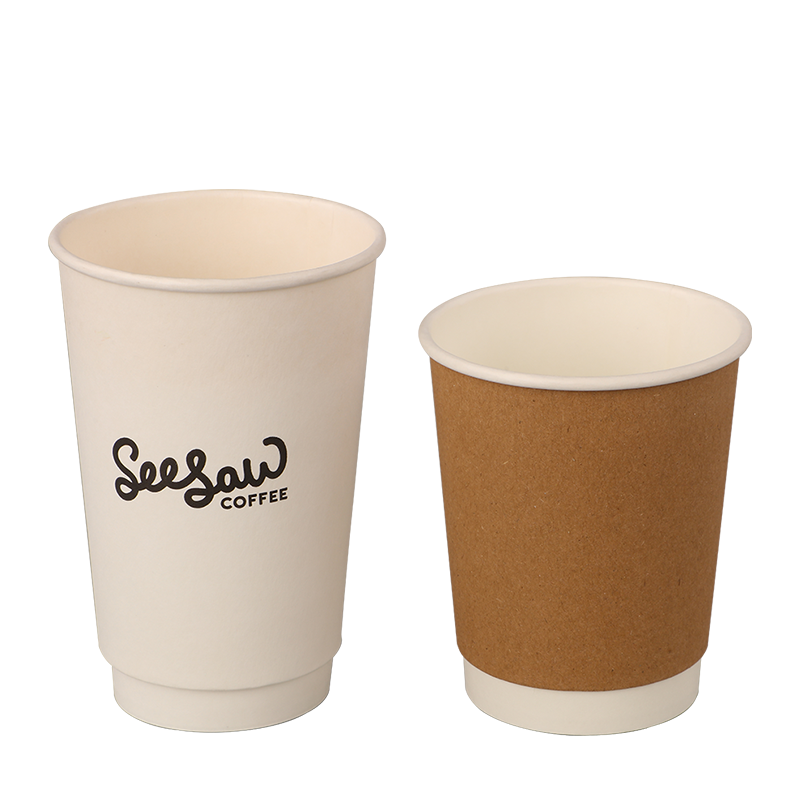 16oz Scald Proof Double Wall Hot Paper Cups6oz Double Wall Hot Coffee Paper CupsView Product →
The raw material quality affects cup rigidity and leak resistance. If you are sourcing large volumes, it is worth understanding how PE-coated cupstock paper rolls are produced, because cupstock weight and coating weight are the two variables that determine whether a 12 oz cup holds up against a hot, oily drink or a long iced tea service.
The final tip is simple: buy a sample of every size you plan to stock, fill each cup with the exact beverage you intend to serve, and let it sit for 30 minutes. Check for leaks, condensation on the outside, rim collapse, and lid fit. That 30-minute test reveals more than any specification sheet, and it is the fastest way to confirm that your cup size decisions are the right ones.
Your email address will not be published. Required fields are marked *
We're Here To Help.

Copyright © HANGZHOU RENMIN ECO-TECH CO.,LTD. All Rights Reserved
Eco Friendly Food Packaging Solution Food Paper Packaging Manufacturer
